Get Full Government Meeting Transcripts, Videos, & Alerts Forever!
Get email alerts on the Infrastructure topic
No spam. Unsubscribe anytime.
Commission schedules focused workshop series on wastewater, stormwater and water infrastructure needs
Summary
Commissioners agreed to schedule briefings and workshops on major infrastructure priorities — including two new wastewater treatment plants, potable/reclaimed water, stormwater creek and pond remediation, and long‑term maintenance funding and financing options.
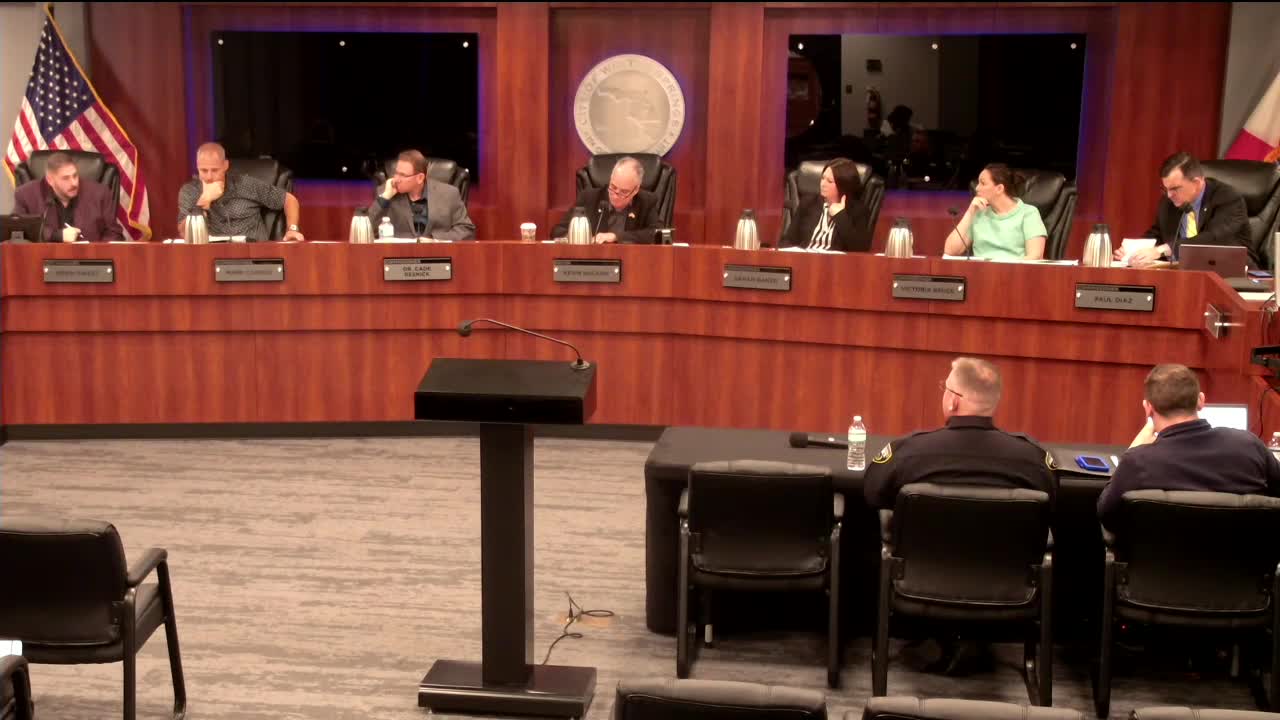
The Jan. 15 workshop turned to infrastructure as one of the city’s top strategic priorities. City staff outlined ongoing projects and asked the commission to schedule topic‑specific workshops to give commissioners and residents more detailed briefings.
City Manager Sweet and staff described work on two replacement wastewater treatment plants (east and west) that are in design and moving toward hiring a construction manager at risk (CMAR). Sweet said design engineers have been selected and negotiations for a CMAR would advance the schedule; staff emphasized the projects are in motion but complex and lengthy.
Stormwater, creeks and neighborhood ponds were described as a separate, long‑running and resource‑intensive problem. Staff said pond and creek work involves many stakeholders (city, county, state water managers, private property owners) and that some ponds are privately owned. Consultants are preparing studies and priority lists to identify where work should begin; staff recommended a series of focused workshops on drinking water, stormwater/creeks and wastewater, timed to consultant availability.
Staff and commissioners raised financing and maintenance questions for each infrastructure area. NRCS (National Resources Conservation Service) reimbursements, FEMA reimbursements after storms, and state funding streams were discussed as partial funding sources, but staff warned uncertainty around federal and administrative grant priorities could affect future funding. Staff said the city had recently contracted a vendor for pond/creek maintenance (noted as a recent step), and commissioners repeatedly raised the need to budget for ongoing operations and maintenance (O&M) rather than only capital construction.
Commissioners asked for better communications with residents about timelines, funding and responsibilities for private versus public features. Multiple speakers urged the commission to explain who owns or is responsible for a given pond or creek before promising remediation; staff and the city attorney were cited as working to clarify deeded responsibilities and easements.
The commission directed staff to work with consultants to schedule dedicated workshops (suggested March–May) to brief the commission and the public on (1) stormwater and creek/pond remediation, (2) potable and reclaimed water issues, and (3) wastewater plant design/financing. Staff said they would coordinate consultant availability and provide follow‑up materials on costs and funding options.