Get Full Government Meeting Transcripts, Videos, & Alerts Forever!
Get email alerts on the Alcohol Regulation topic
No spam. Unsubscribe anytime.
Cherokee County amends alcohol ordinances to add caterer, brewery and winery rules
Summary
After a public hearing, the Cherokee County Board of Commissioners unanimously adopted amendments to Chapters 4, 6 and 7 of county code to add definitions and align local rules with Georgia law for alcohol beverage caterers, breweries, farm and non‑farm wineries and retail categories.
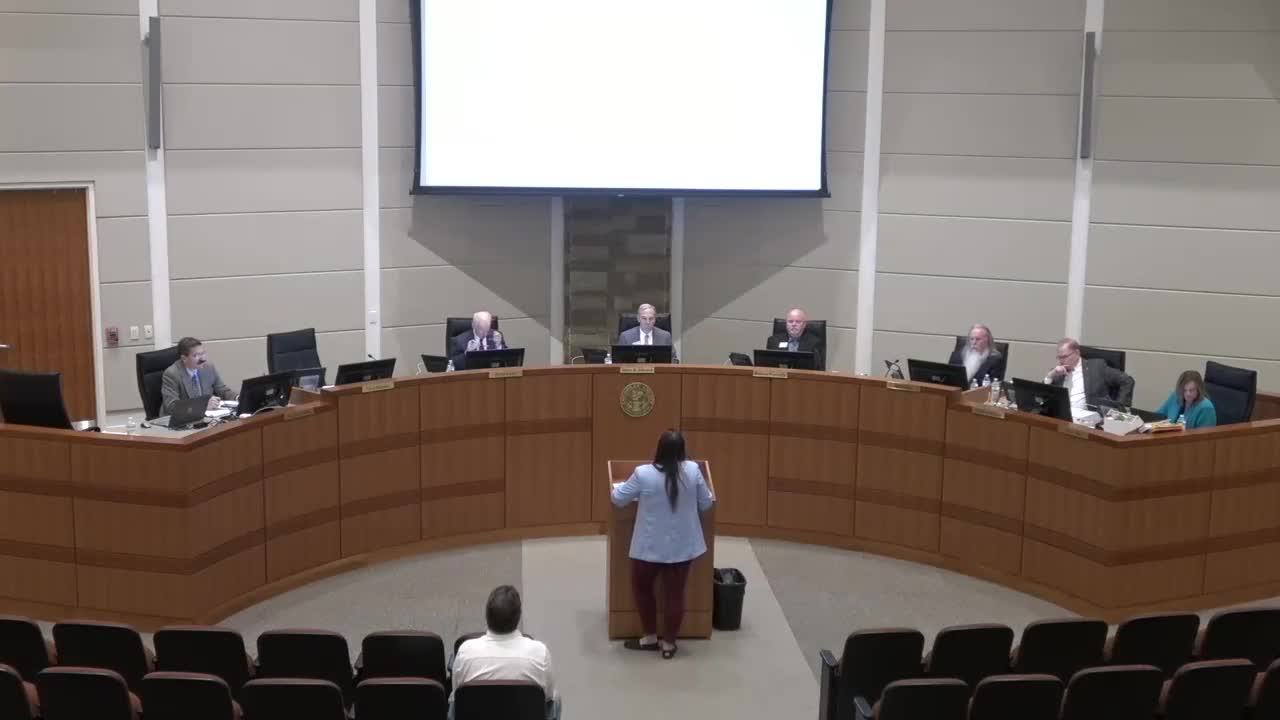
Cherokee County commissioners on March 18 unanimously adopted changes to the county's alcohol ordinance and related zoning code to add new definitions and implement state law provisions for alcohol beverage caterers, breweries and wineries.
The amendments, applied to Chapter 6 (alcohol), Article IV and Article VII of the zoning ordinance, add an "alcohol beverage caterer" classification, define convenience and general merchandise stores, distinguish farm and non‑farm wineries, align package store and manufacturer definitions with state law, and add provisions to permit on‑premises consumption at breweries under state limits. The vote to adopt the amendments was moved by Commissioner Carter and seconded by Commissioner West; the motion carried unanimously.
County staff said the changes were intended largely to create consistent definitions across the county's Code of Ordinances and zoning regulations and to incorporate provisions already present in Georgia law. "This is going to allow any retail dealer or restaurant that already has a license with the county to obtain an add‑on license that will allow them to transport and sell alcohol off premises at authorized events or functions," said a county staff presenter during the public hearing, summarizing the new alcohol beverage caterer language.
Key provisions added or clarified
- Alcohol beverage caterer: Licensed restaurants or retail dealers may obtain a local add‑on license to transport and sell alcohol for approved catered events directly from their on‑site stock, rather than relying on a distributor, provided they sell only the types of alcohol authorized at their licensed premises. Caterers must provide staff age 21 or older with required alcohol sales permits and must notify the Georgia Department of Revenue in writing prior to each catered event, consistent with state law.
- Convenience store and general merchandise store definitions: A convenience store is defined as a retail establishment with gross floor area under 10,000 square feet; alcohol sales may not exceed 15% of gross floor area. Grocery stores are defined as over 10,000 square feet and with at least 85% of sales from food items.
- Farm winery vs. non‑farm winery: The amendments distinguish farm wineries (subject to a 40% in‑state or on‑premises production requirement drawn from Georgia statute) from non‑farm wineries; farm wineries remain a special use in agricultural zoning.
- Brewery/brewer provisions: The ordinance incorporates state limits allowing brewers to sell malt beverages for on‑premises consumption and to wholesalers/consumers as an exception to the three‑tier distribution system, but only for brands the brewery owns. The county incorporated the state limits cited by staff: sales for off‑premises consumption may not exceed 288 ounces per individual per day, and a brewery's annual direct‑sales cap is 6,000 barrels. On‑premises sales must occur while the purchaser is physically present at the licensed premises, and sales times must conform to the county's retail sale hours.
Commission discussion and technical edits
Commissioners asked staff to clean up a small typographical item in the proposed language (removal of an inadvertent extra "to" in the caterer section) and confirmed the county would mirror the state's statutory language where applicable. Commissioners noted those numeric limits and the 40% farm production rule came from Georgia law rather than county policy.
The ordinance amendments were presented in a public hearing with no members of the public registered to speak on the matter; the board opened and closed the hearing before taking the adoption vote.
The county attorney or implementing staff will finalize the edited ordinance language to remove the small typographical errors noted during the meeting before publishing the amended chapters.