Get Full Government Meeting Transcripts, Videos, & Alerts Forever!
Get email alerts on the School Safety Special Education topic
No spam. Unsubscribe anytime.
Board holds first reading on policy revising use of building crisis teams and peace officers for students with IEPs
Summary
The Roseville board conducted a first reading of proposed changes to Policy 5.76, clarifying the role of building‑level crisis teams and updating gendered language; staff described training and quarterly monitoring of restrictive procedures.
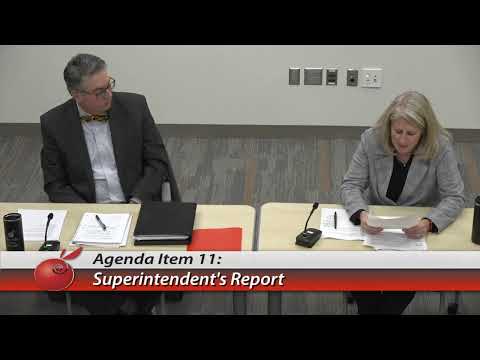
The Roseville Public School District board on Jan. 14 held a first reading of proposed revisions to Policy 5.76, “Use of peace officers and building crisis teams to remove students with IEPs from school grounds.” Director Nacita Thomas presented the changes and answered board questions.
Thomas said most edits are to the policy’s accompanying regulations. The two changes in the policy itself are the insertion of the word “building” before “crisis team” to distinguish building‑level teams from district teams, and replacement of gendered language (himself/herself) with “themselves.”
Board members asked for clarity on what constitutes a “restrictive procedure” and how staff are trained. Thomas said restrictive procedures refer to holds used with students who have IEPs based on behavior challenges. She said special education staff receive MVCI training, which the district is transitioning to NBI; staff also receive two hours of de‑escalation training and four to six hours of holds training that cover proper holds for students in crisis.
When asked how often restrictive procedures are used, Thomas said district teams meet quarterly to review incidents; in the most recent quarter there were four instances. The reviews look at race, school level and whether a student has recurring incidents, she said.
Because this was a first reading, the board did not vote on the policy. Thomas noted the substantive procedural elements are in regulations, and the board will return for a subsequent reading and potential action.
Why it matters: The proposed revision clarifies which crisis teams respond to incidents and updates language for inclusivity while providing the board a chance to review training levels and the quarterly review process for restrictive procedures affecting students with IEPs.