Get Full Government Meeting Transcripts, Videos, & Alerts Forever!
Get email alerts on the Housing Finance topic
No spam. Unsubscribe anytime.
Santa Rosa Housing Authority reports strong Q1 finances; impact fees, loan repayments and disaster funds noted
Summary
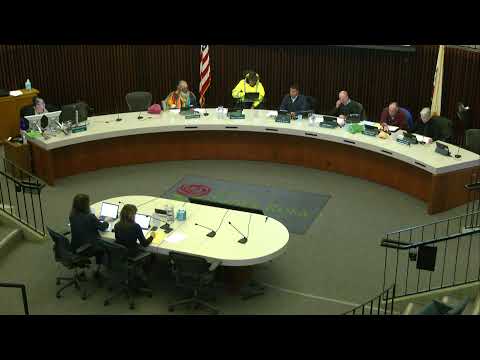
At its Dec. 16 meeting the Santa Rosa City Housing Authority heard a quarterly financial report showing higher-than-expected housing impact fee receipts, sizable loan repayments and designated state and federal disaster-recovery funds committed to specific projects.
Kate Goldfein, administrative services officer for the Housing and Community Services Department, told the Santa Rosa City Housing Authority at its Dec. 16 meeting that the authority’s finances for the first quarter of fiscal year 2024–25 are “trending well in all categories.”
Goldfein said the authority had expended $8,800,000 in housing assistance payments so far in the fiscal year, averaging “over $2,900,000 per month across all our programs.” She told commissioners the authority shows $20,200,000 remaining in project funding but that “all of that funding is designated for specific projects and programs,” and that about $17,500,000 of that total is one-time state infill infrastructure grant (IIG) money pledged to named developments.
The quarterly briefing highlighted three financing items that staff said underlie the stronger position: higher-than-expected housing impact fee collections; unusually large, one-time loan repayments; and committed disaster-recovery grant awards.
On impact fees, Goldfein said the authority budgeted $1,300,000 and had already collected 42% ($584,000) by the end of the first quarter. She added that, by Nov. 30, collections had grown to $827,063. On loan repayments she said the authority budgeted conservatively but had received “nearly $473,000 through the Q1” from residual loan repayments and occasional property sales; such repayments are counted as residual cash receipts and are reloaned.
Vice Chair Downey and other commissioners asked about the authority’s disaster-recovery funding. Downey noted that the authority’s reporting showed $8,000,000 remaining from Community Development Block Grant — Disaster Recovery (CDBG-DR) dollars tied to the 2017 fires and said that the authority had received roughly 40% of that allocation, leaving about $5,000,000 outstanding from federal reimbursements. Goldfein and staff said the CDBG-DR funds had been committed to five replacement-housing projects that meet state requirements and that reimbursements from the state are done on a reimbursement basis as developers submit eligible expenses.
Commissioners also asked about city transfers based on the real property transfer tax (RPTT). Goldfein explained the housing authority’s annual budget assumes the city will transfer the budgeted share (55% of the city’s RPTT budget this year, which the city budgeted at $2.2 million total) on July 1 and that there is not a recent routine “true up” if actual transfer-tax receipts differ from the budgeted number.
Executive Director Megan Nahn updated commissioners that a property formerly operated by Social Advocates for Youth (SAY) with a housing authority loan is expected to close this week; the authority expects to receive repayment of the principal on that loan once the sale closes.
Goldfein and staff also told commissioners that some subrecipients (for example, the nonprofit Face to Face) had slower initial drawdowns this year because of contract and insurance timing, but staff reported the provider had expended $150,000 in the weeks after the quarter closed and was on track to use its award by year-end.
Commissioners asked multiple questions about uncertainty at the federal level and possible effects on reimbursements; staff said they are monitoring HUD and state contacts and will report back as new information becomes available.
Less-critical details: Goldfein said the authority had budgeted only modest expectation for loan repayments in part because those payments are unpredictable year to year; the authority uses repayments to cover administrative expenses and to reloan funds. There were no public comments on the financial report.
The authority did not take formal action on the financial briefing; commissioners received the report and asked staff follow-up questions.