Get Full Government Meeting Transcripts, Videos, & Alerts Forever!
Get email alerts on the Homelessness Shelter Safety topic
No spam. Unsubscribe anytime.
Residents and advocates press Richmond officials on shelter safety and emergency aid after multiple incidents
Summary
Public commenters and city staff discussed safety lapses, staffing and protocols at overflow shelters, a security guard’s removal after a confrontation, and ongoing reviews of emergency family assistance tied to the recent water outage.
Public commenters and nonprofit partners urged Richmond officials on Friday to improve safety and staffing at city-operated and contracted shelters after a series of incidents they said included threats by a security guard and families being told they would face child protective services if they did not enter overnight shelter.
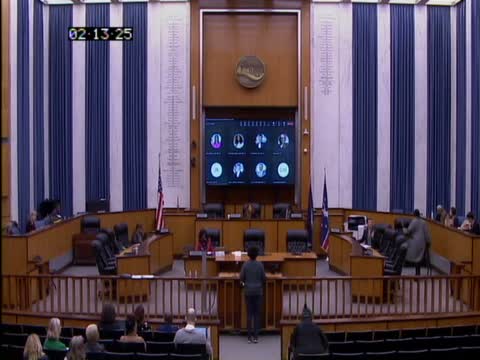
The comments, submitted during the Education and Human Services standing committee’s public comment period, were followed by a staff update describing operational changes at the city’s inclement weather overflow shelter and next steps on a citywide family crisis fund created to assist residents affected by a multi-day water outage.
Advocates said city shelter procedures and private security contractors are not consistently equipped to handle guests with high rates of mental illness and substance use. Rhonda Sneed of Blessings Warriors said a woman and her six children were effectively turned away from an overflow shelter during a storm after staff told them they must stay overnight or risk reporting to Child Protective Services. “She will never come because her kids are gonna be taken from her,” Sneed said, speaking during public comment. She also said she has video of a security guard threatening to use her firearm while a guest brought food into a shelter.
Bridget Whitaker, who identified herself as a security officer, told the committee she had reviewed video of the same incident and warned of a “powder keg situation” if training and staffing do not improve. “You cannot put those children in these environments, untrained, unskilled, and a hot plate,” Whitaker said, urging the city to strengthen screening, training and the skill mix of shelter staff.
Tiffany Ford, director of the Department of Neighborhood and Community Services, addressed those concerns during the committee’s staff updates. Ford said the current iteration of the inclement weather overflow shelter—standing up this week with a capacity of 60 beds and peaking at about 50—has better standard operating procedures and shift-based debriefings. She said volunteers and regional partners from Hanover, Henrico and Chesterfield counties had provided additional staffing and that internal training and SOPs had been improved.
Ford said staff immediately removed the security guard involved in the earlier confrontation and asked the contractor not to assign her to Richmond shifts. “She will not be working with us in that capacity again,” Ford said. Ford declined to discuss personnel details beyond that statement.
Ford and committee members also described operational lessons: volunteers and some security staff have improved through repeated iterations of the overflow shelter, but the city still relies heavily on staff who are performing these duties on top of regular assignments. Council members and staff repeatedly said the problem requires regional cooperation and sustainable funding beyond what the city alone can provide.
On emergency financial assistance, staff reported that the city used its existing family crisis fund to process requests from residents affected by the recent water outage. Applications opened Jan. 31 and closed Feb. 3; staff told the committee that they had received a large volume of requests and were still verifying eligibility and creditor information before disbursing payments. A staff member said each application requires phone interviews and documentation verification, which lengthens processing time.
Committee chair and council members pressed staff for follow-up data: they asked the Department of Social Services to provide counts of children ages 0–5 connected to DSS caseloads (TANF or similar) as a baseline for service penetration, and they requested the number of active CCSP (child care subsidy) vouchers and year-to-date applications. Staff said they would provide those numbers and confirmed additional coordination with regional partners.
The committee also scheduled a public stakeholders roundtable on March 20 to solicit broader input on regional shelter models, service gaps and potential solutions. Chair Lynch (committee role referenced in meeting) said the session will compare models used by jurisdictions such as Washington, D.C., Massachusetts and Philadelphia and invite providers, shelter operators and residents to react.
Why it matters: Shelter safety and the availability of emergency supports affect people living unsheltered, families seeking temporary refuge, and the staff and volunteers who operate shelters. Committee members said local responses are constrained by limited city resources and that sustained regional funding and partnerships will be necessary to expand year-round shelter capacity and professionalize shelter staff.
What’s next: Staff will return with requested DSS and program penetration data; the city will continue operating the inclement weather shelter for the current week and pursue improved SOPs, training, and regional staffing agreements. The March 20 stakeholders meeting will gather community feedback and explore national models for shelter and emergency services.