Get Full Government Meeting Transcripts, Videos, & Alerts Forever!
Get email alerts on the Fueling Station Development topic
No spam. Unsubscribe anytime.
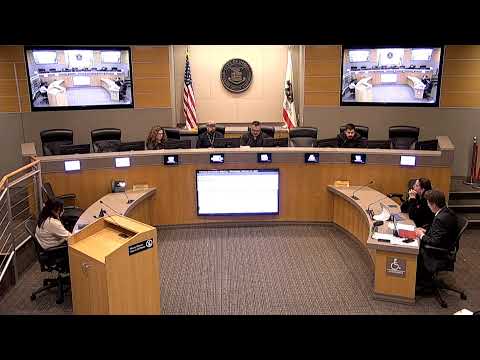
Indio planning commissioners deny Maverick fueling station amid traffic and environmental-justice concerns
Summary
The Indio City Planning Commission voted 3-2 to deny four connected resolutions (Nos. 2103–2106) that would have approved a Maverick fueling station and related parcel map and permits at the northeast corner of Avenue 45 and Golf Center Parkway.
The Indio City Planning Commission voted 3-2 to deny four connected resolutions (Nos. 2103–2106) that would have approved a tenant parcel map, conditional use permit and environmental review for a proposed Maverick fueling station at the northeast corner of Avenue 45 and Golf Center Parkway.
The project would have subdivided an existing 8.62-acre lot into two parcels — a 3.37-acre lot for the Maverick fueling station and a 5.26-acre parcel intended for future development — and would have included a roughly 6,000-square-foot convenience store, a fueling canopy (approximately 7,200 square feet), 10 dispenser pumps (20 fueling positions) and additional diesel/commercial fueling areas. Staff recommended approval, presenting the project as consistent with the General Plan’s workplace and employment designation and noting an initial study and mitigated negative declaration (MND) concluded that identified impacts could be reduced to less-than-significant levels through 15 mitigation measures.
Jose Luis Jada, assistant planner with the Community Development Department, summarized staff’s recommendation: "staff recommends approval of resolutions number 2103 and 2104, 2105, and 2106, conditionally approving the Maverick fueling station project." The environmental consultant for the applicant, Christina Willis of Willis Environmental Planning, told the commission the initial study evaluated 21 environmental resource areas, included tribal consultation with the Agua Caliente Band of Cahuilla Indians and incorporated monitoring and mitigation, and concluded that "the proposed project would not have a significant effect on the environment" with the identified mitigation.
Applicant Kevin Dice, Maverick site development manager, described operations and design details and emphasized employment and local procurement benefits. Dice said the chain is not a truck stop: "we are not a truck stop," and described store hours, staffing (typically 18 to 20 employees across three shifts), trash enclosures, security cameras and plans for electric-vehicle infrastructure (four EV parking spaces and two chargers required by California code, with site plumbing for up to eight chargers in the future).
Commission discussion focused on several recurring concerns. Commissioners cited near-term traffic disruptions tied to nearby construction (including work on Monroe Bridge and other local projects), the number of existing fuel stations along primary corridors, and the site’s proximity to sensitive receptors: a nearby high school and a low-income housing project were repeatedly named during deliberations. Several commissioners cited Indio’s health-equity policies and raised environmental-justice concerns, noting the census tract is identified on CalEnviroScreen as disadvantaged. Commissioners pressed staff and the consultant on Vehicle Miles Traveled (VMT) screening: Willis explained the traffic analysis used Riverside County’s VMT screening guidelines (the City has not adopted its own VMT thresholds) and said the project qualified to be screened out under the county’s small-project and local-serving retail exemptions. Willis described the GHG calculation the air-quality analysis produced (about 2,029 metric tons CO2e annually, below the South Coast Air Quality Management District threshold of 3,000) and said health-risk screening for construction and operations was below significance thresholds under SCAQMD procedures.
Despite the staff recommendation, commissioners concluded the commission should deny approval. A motion to deny Resolutions 2103, 2104, 2105 and 2106 passed on a 3-2 roll call (Yes: Commissioner Ortiz; Vice Chairperson Rodriguez Ejeda; Chairperson Fajardo. No: Commissioner Santos; Commissioner Frans). The planning commission secretary announced a 15-day appeal period to the City Council for the applicant.
After the vote commissioners and staff agreed to return to the council and to pursue follow-up work: commissioners asked staff to schedule a study of the city’s gap analysis for fuel demand (the Economic Development Department subscribes to a market service staff said projects use), to clarify how many fuel stations are currently permitted or in the pipeline, and to explore adopting local VMT guidelines instead of relying on Riverside County’s screening. Staff also agreed to consider whether to develop a fuller environmental-justice analysis or an environmental-justice element beyond the current health-equity element, and to present options and cost estimates for hiring consultants if necessary.
Votes at a glance
- Resolutions 2103–2106 (tenant parcel map, conditional use permit, environmental review/MND and related approvals for Maverick fueling station): Motion to deny carried, 3–2. Appeal period to City Council: 15 days.
Next steps
Staff agreed to return with additional materials at a future meeting: a more detailed gap-analysis presentation from Economic Development, an inventory of existing and approved-but-not-built fuel stations, options/costs for local VMT guidelines, and potential next steps to strengthen the city’s approach to projects in disadvantaged areas.