Get Full Government Meeting Transcripts, Videos, & Alerts Forever!
Get email alerts on the Preference Policy Programs topic
No spam. Unsubscribe anytime.
Preference-policy update: home repairs and homeownership gains; security-deposit pilot serves 43 families; wait-list changes proposed
Summary
Staff reported home repair and homeownership progress under the preference policy, summarized a security-deposit pilot that has assisted 43 families to date, and outlined planned wait-list-management changes intended to speed leasing and reduce administrative burden.
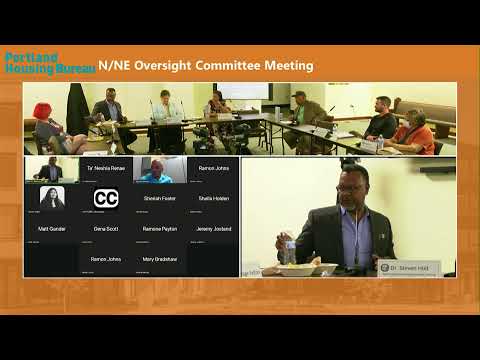
Portland Housing Bureau staff and program partners updated the oversight committee on several ongoing elements of the North Northeast preference policy: home repair loan activity, homeownership outcomes, a security-deposit pilot, and planned changes to wait-list management for preference-policy applicants.
John Chien, neighborhood housing preservation manager, said the bureau recently hired an additional housing construction coordinator to manage home repair loan projects. He reported three completed home repair projects this year, five projects ready to start and about 13 projects in process. Chien described the loan product as a 0% interest, 0-payment loan forgiven if the homeowner remains in place (he described the lien being forgiven after a continued residency period), with the maximum loan amount tied to a homeowner’s equity up to $40,000.
Ira Bailey (homeownership update) said the preference-policy-related homeownership pipeline reached about 119 total purchases to date. Bailey said two recent buyers purchased in March and that three purchases since late last year occurred in the Interstate Corridor; both of the March purchasers used Prosper Portland down-payment assistance. Bailey also said the program had successes across AMI bands, and that some purchases were achieved through Down Payment Assistance (DPA) and community land-trust partners such as Proud Ground and Habitat. Bailey noted market conditions — especially higher mortgage rates — constrained purchases but that housing prices are “starting to come down.”
On the security-deposit pilot, Daivisha (housing program coordinator) told the committee the pilot launched in February 2024 to remove moving barriers for tenants entering preference-policy buildings. The bureau authorized payments of $1,000 per family; most early referrals came from a building managed by Albina's Alberta Alive (the Dr. Daryl Milner building). Daivisha said 25 families received assistance in the first quarter, 15 in the second quarter, and three in the third quarter to date, for a total of 43 families served; the program’s available funding is expected to be used by about July 1. She said some applications were submitted retroactively at lease signing, which limited upfront moving assistance, and staff are exploring administrative fixes so providers can submit referrals earlier.
The committee also reviewed proposed changes to wait-list management and leasing procedures intended to reduce lease-up time for developers and leasing teams. Leslie Goodlow (staff lead) described changes being piloted with development partners: send targeted vacancy notices by bedroom size and building rather than broad lists; require a pre-application returned electronically (proposed QR-code form) to reduce manual data entry; reduce frequency of list transfers from biweekly to monthly to reduce maintenance workload; and formalize a more transparent purge process for applicants who do not respond. The bureau said it will create a standard partner request form for lists and provide quality-assurance follow-up calls to applicants to improve response rates.
Committee members praised results while asking for additional details. Members asked for a breakdown of purchasers by assistance type; staff committed to provide a detailed breakdown of DPA, land trust, and new-construction purchases. A staff summary provided at the meeting indicated, for example, new-construction purchases included households across AMI ranges with the lowest at approximately 34% AMI, and DPA-assisted purchases included households as low as 15% AMI. The committee did not take any formal votes; staff will continue outreach to applicants and partners as the bureau implements the proposed wait-list changes.