Get Full Government Meeting Transcripts, Videos, & Alerts Forever!
Get email alerts on the School Device Policy topic
No spam. Unsubscribe anytime.
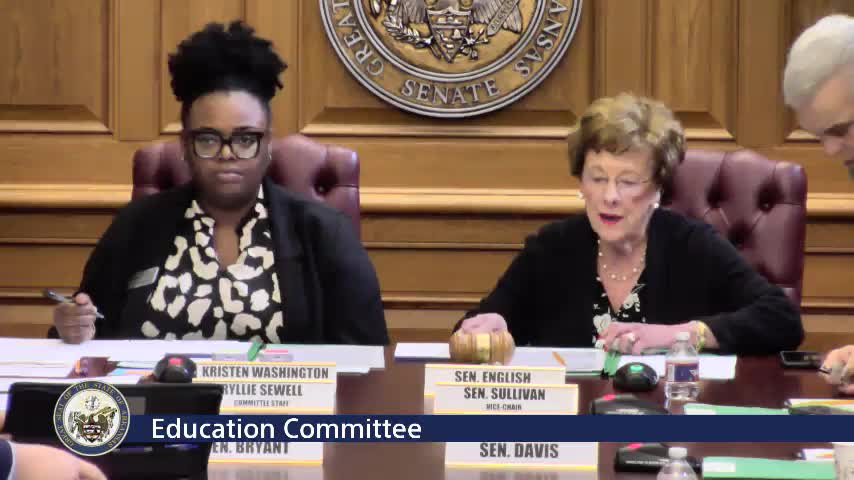
Senate committee approves 'Bell to Bell No Cell' bill to restrict personal devices during school day
Summary
The Senate Education Committee voted to pass Senate Bill 142, the "Bell to Bell No Cell Act," which would limit students' use of personal electronic devices during the school day while preserving local school districts' flexibility for implementation and specified exceptions.
The Senate Education Committee voted to pass Senate Bill 142, the "Bell to Bell No Cell Act," which would bar personal cell phone use during the school day while allowing each school district to choose how to implement that restriction.
Senator Tyler Deese, sponsor of the bill, said the measure aims to give school districts clarity and confidence while allowing local control over how devices are handled. "This bill is an important bill," Deese said, adding the law would let districts decide whether to use pouches, lockers, backpacks or classroom cubbies to satisfy a bell-to-bell restriction.
Supporters said research and a recent state pilot program show benefits for discipline, attendance and classroom engagement. Eric Bertholdt, a Siloam Springs school board member and parent of four, told the committee the district's phone policy introduced last summer brought positive feedback from teachers, parents and students: "I've had positive feedback from teachers, parents, and students about the effectiveness of that policy." Deese cited studies and summaries from groups such as the Manhattan Institute and Pew Research showing high notification rates and in-class texting tied to distracted learning and poorer sleep.
The bill sets statewide parameters — a bell-to-bell limit on personal devices — but delegates the mechanics and disciplinary details to local school districts. Deese noted the measure also builds in exceptions for documented medical needs, Individualized Education Program (IEP) accommodations, emergency situations and extracurricular activities when appropriate. He told senators that classroom technology provided by the school would remain permitted for instruction: "This is not an anti-tech bill. ... We're just trying to protect the students engaging with their personal devices."
Committee members pressed for details on implementation and enforcement. Senator Sullivan asked whether the bill leaves the definition of "possession" to local districts; Deese confirmed that districts will set specifics on possession and storage. Senator Bryant raised questions about the role of the state education agency, noting the bill gives the Department of Elementary and Secondary Education (DESE) review authority and rulemaking power for approval or disapproval of district policies; Deese said the legislative process provides avenues for lawmakers to intervene if DESE's rules create problems.
Opponents said the bill risks state overreach and that local control already allows districts to set phone policies. Steve Grab of Stand Up Arkansas, who identified his organization as a direct-democracy group, said rural districts have fewer resources and asked why the bill would not apply to private schools that accept public funds. "This seems like a general assembly overreach," Grab said, urging reconsideration on equity across schools that receive public money.
Supporters pointed to pilot results Deese described as "amazing," saying schools that participated reported reductions in disciplinary incidents, fewer missed assignments and improved attendance. Some witnesses also raised implementation concerns such as liability for confiscated devices; Bertholdt noted the high cost of some phones and welcomed provisions in the bill that address that concern.
On a voice vote, the committee approved the bill. The record shows the committee chair called for the vote and concluded, "All opposed? Thank you very much. Pass your bill." The measure will move forward from committee according to the chamber's legislative process.
The committee adjourned and plans to reconvene Wednesday.