Get Full Government Meeting Transcripts, Videos, & Alerts Forever!
Get email alerts on the Budget And Finance topic
No spam. Unsubscribe anytime.
Litchfield Elementary District approves first budget revision; bond proceeds earmarked for new School 17 and safety work
Summary
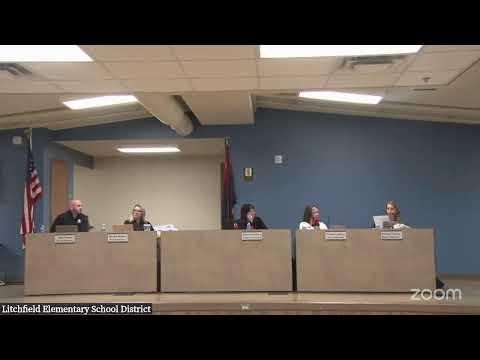
Litchfield Elementary School District CFO Vaughn presented the district's first budget revision at the Dec. 10 governing board meeting, saying state law requires certain budget updates and noting enrollment and funding-formula changes that modestly altered M&O and capital projections.
Litchfield Elementary School District CFO Vaughn presented the district's first budget revision at the board's Dec. 10 meeting, saying state law requires districts to update budgets in certain circumstances and that the district has made several technical adjustments ahead of year-end.
"State statute requires districts to revise their budget by Dec. 15 in certain situations," CFO Vaughn said, explaining the timing of the board's review. He told the board the district's average daily membership estimate was revised down by 18 students while weighted student counts rose because of increased special-education needs, and that those changes drove an increase in the district's revenue control limit.
The nut of the revision is modest program-level shifts rather than large new spending. Vaughn said 71.3% of the district's maintenance and operations (M&O) budget remains dedicated to classroom-support areas. The revision shifts some funds from purchased professional services to salaries and benefits because the district has filled more transportation positions with in-house employees rather than relying on external contractors. Vaughn also pointed to changes in carryover figures after the state recalculated last year's M&O budget and differences between June estimates and the October close-out.
Board members asked clarifying questions during the public hearing; no substantive amendments were offered. After the presentation the board voted to adjourn the public hearing and later voted to approve Expenditure Budget Revision No. 1 as presented.
The presentation also summarized capital-related funds. Vaughn described the unrestricted capital outlay fund (used for construction, remodels, equipment and textbooks) and said those resources are calculated using a prior-year student count. He said most of the increase in that fund resulted from carryover adjustments tied to construction projects and orders that were anticipated before June 30 but were not completed until later.
On bonds and planned construction, Vaughn told the board the district has sold $30,000,000 of voter-approved bonds to date and expects to bring a request to the board next calendar year to sell an additional $20,000,000 consistent with the bond program. He said those proceeds will support School 17 and certain school-safety improvements during the current fiscal year. Vaughn also described the adjacent ways fund, which can finance street and sewer work that makes entering and exiting district property possible, and warned that School 17's site will require additional adjacent-ways work, including burying an irrigation ditch and a longer sewer connection than typical.
Vaughn noted the district's Energy Water Savings Fund and its private partner Verigee, which is finalizing building-envelope improvements, LED lighting upgrades and HVAC replacements; those measures are intended to be paid through lease or savings payments from that fund.
The board approved the budget revision in a recorded motion; the vote passed unanimously.
Looking ahead, district staff said they will bring the requested bond sale authorization and related project details to the board in the new calendar year once permitting and final estimates are complete.
The board adjourned the meeting at the end of the agenda.