Get Full Government Meeting Transcripts, Videos, & Alerts Forever!
Get email alerts on the Bond Referendum topic
No spam. Unsubscribe anytime.
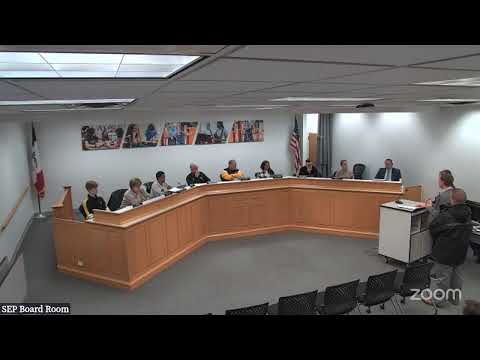
Southeast Polk hears plan for $51 million bond referendum, aims for November 2025 ballot
Summary
Consultant Suzanne Gerlach of Public Financial Management presented a financing plan that would ask voters for roughly $51 million in general obligation bonds in November 2025, with an estimated debt service levy change from $2.14 to $2.55 and options to use district SAVE and PEPL funds to manage the overall tax rate.
The Southeast Polk Community School District board heard a finance presentation from Public Financial Management that laid out a scenario for roughly $51 million in general obligation (GO) bonds to appear on the November 2025 ballot and a proposed issuance in May 2026. Suzanne Gerlach of PFM told the board the $51 million figure is a working estimate designed to produce about $50 million of project funding after issuance costs and contingencies.
PFM outlined a timeline and financing assumptions the board would need to meet the November ballot deadline: identify projects and finalize a petition by mid‑May 2025, circulate petition signatures over the summer (25% of the last board election voters required for signatures, per the presented plan), file materials with Polk County by the August 28, 2025 county deadline and hold the vote on Nov. 4, 2025. Gerlach said the firm used conservative coupon-rate assumptions of 4–5% for modeling and structured the schedule to “wrap around” the district’s existing debt so the total debt service is level year to year.
Under PFM’s scenario the debt service levy would move from about $2.14 to $2.55 under the proposed issuance; Gerlach and district staff said the district could use SAVE and PEPL balances and other budget levers to avoid increasing the district’s overall tax rate. PFM estimated average annual debt service at roughly $5 million and total principal and interest over 20 years at about $81 million for the modeled issue, and noted the district’s statutory legal debt limit would remain well above the projected outstanding debt (PFM cited a legal limit near $312 million and current GO/sales tax bonds outstanding of about $102 million before the proposed issuance). PFM modeled 5% valuation growth as a conservative baseline.
Kevin (business services staff member) and board members discussed practical options for the budget and emphasized flexibility: using SAVE cash to buy down early levy impacts, choosing which projects to fund from bond proceeds versus pay‑as‑you‑go funds, and monitoring legislative or market changes. PFM highlighted that the August 28 filing deadline is earlier than in some previous cycles and recommended the board begin project identification and petition preparation in the spring.
Board members asked clarifying questions about timing, the wrap‑around debt schedule and the role of SAVE and PEPL monies. One board member summarized the presentation by saying, in essence, that the modeled $50–51 million scenario was designed to allow the district to finance prioritized capital projects without raising the district’s overall tax rate if staff and the board use the levers described in the presentation.
Next steps described in the meeting: the board will identify and rank candidate projects through its capital improvement process, consider a petition for the May board meeting to begin signature circulation, and return for formal resolutions and ballot language later in the summer.