Get Full Government Meeting Transcripts, Videos, & Alerts Forever!
Get email alerts on the Social Services Workfirst topic
No spam. Unsubscribe anytime.
Wilson County adopts three-year Work First plan, staff say it unlocks about $1.2 million in federal funds
Summary
The Board of Commissioners adopted an electing Work First plan for 2026—2028 that county social services staff say will allow Wilson County to access additional TANF funds for services supporting families with children.
The Wilson County Board of Commissioners voted Jan. 6 to adopt the county—s Work First electing county plan for 2026—2028, a program staff said will expand locally available services for low-income families and allow the county to obtain additional federal funds.
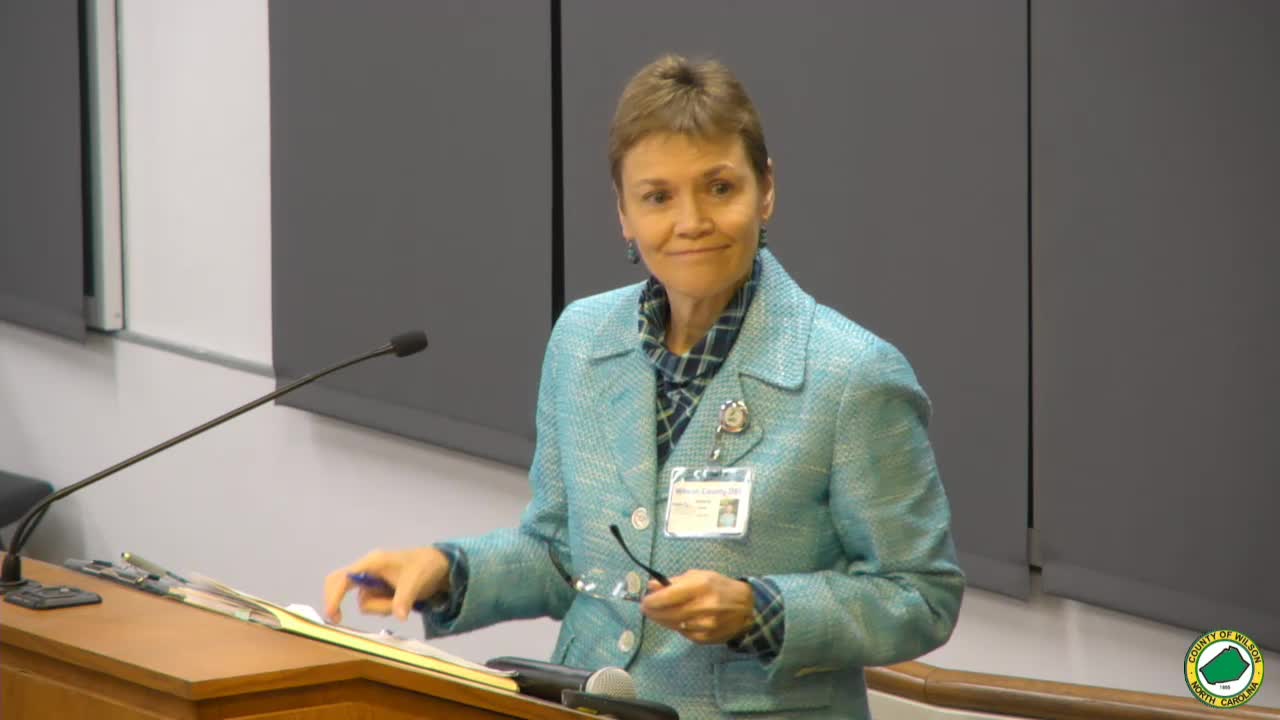
"The funding for this plan comes from the federal block grant for Temporary Assistance to Needy Families, or TANF for short," said Kimberly Irvin, director of the Wilson County Department of Social Services. "A benefit of having an electing plan allows us to obtain additional federal revenues. So this year, for example, we will receive over $1,200,000 in additional federal funds to benefit our citizens."
Nut graf: The electing county option lets Wilson County tailor services beyond basic cash assistance and requires state review and legislative approval. County staff said the plan focuses on keeping children safe and families together and includes services such as mental-health and substance-abuse supports, crisis resolution, employment services, parenting education and kinship-care assistance.
Irvin described the difference between the two options available to North Carolina counties: "The standard option offers the minimum requirements, which is primarily a cash assistance program ... The electing county plan is what Wilson has had for over 20 years. An electing county plan allows flexibility in designing a plan that meets the needs of a specific community." She added that cash assistance is limited by federal rules to a maximum of five years per family.
Board members moved and seconded the motion; the recorded transcript shows the motion carried by voice vote. Irvin said that after the board—s action the plan will go to the state for review.
Ending: With adoption, county staff will proceed with state submission and implementation steps described by the department; county officials said they would continue to work with community partners to deliver mental-health, substance-abuse and employment services under the plan.