Get Full Government Meeting Transcripts, Videos, & Alerts Forever!
Get email alerts on the Solid Waste topic
No spam. Unsubscribe anytime.
Mableton holds public hearing on proposed solid waste ordinance as small haulers, residents raise concerns
Summary
At a Jan. 7 public hearing, residents and small haulers urged the Mableton City Council to change proposed Chapter 12 provisions they say would drive local carriers out of business, while city officials said reporting and fees can be adjusted before final adoption.
Mableton — The Mableton City Council held a public hearing Jan. 7 on a proposed ordinance to create Chapter 12 of the City of Mableton Code of Ordinances, establishing procedures for the collection, disposal and recycling of solid waste. Council members heard roughly a dozen public commenters — including owners of small local haulers and representatives of the Cobb County Haulers Association — who warned some requirements and fees would force neighborhood-scale businesses to stop operating within city limits.
The hearing drew repeated objections to proposed information and fee requirements that commenters described as onerous for small operators. Brian Warren, president of the Cobb County Haulers Association and owner of Custom Disposal Service, told the council he could work with staff to “massage” the draft but warned about reporting and auditing requirements and the cost burden on smaller firms. Jeff Franklin, owner-operator of Quality Sanitation, said his company is a one-owner, family-run service that could be regulated out of existence by bond, licensing and reporting costs and asked the council to avoid measures that would force seniors and the disabled to lose door‑to‑door service.
Why it matters: Solid-waste contracting affects pricing, service options and whether longtime neighborhood haulers can continue door‑to‑door pickup for seniors and disabled residents. The city is creating the ordinance as part of taking on municipal services after incorporation; Council members repeatedly framed the hearing as an initial step, saying the ordinance will be revised before a final vote.
Most commenters urged the council to limit reporting and fee burdens on small carriers. Several residents, including Brenda Nash and Becky Flaherty, described multi‑decade relationships with Quality Sanitation and told the council the company provides essential service for older or disabled neighbors who cannot bring cans to the curb. Other residents, including Denny Wilson, supported the city’s move to regulate solid waste, saying the model would protect low‑income seniors from price spikes. Craig Feaman said the draft ordinance could reduce the number of eligible haulers from a dozen to two or three and that lack of competition would lead to higher prices.
Small haulers and association representatives raised specific objections: daily route logs requested in the draft; a requirement to provide a full customer database and monthly revenues; tonnage and landfill ticket reporting; vehicle identification numbers; a proposed performance bond equal to 30 days of service to fund temporary replacement pickups; and proposed environmental management fees that speakers said had been presented to them as 6.5% for residential revenues and 13.5% for commercial revenues. Commenters also criticized a draft provision that would limit how much of the fee can be shown on customer invoices.
City staff and the mayor said several provisions were adopted from other municipal models and could be adjusted. Community Development Director Juliana Njoku told the council the reporting requirements in the current draft were based on Alpharetta’s ordinance but that Milton’s lighter-touch approach could be substituted: under Milton’s model, routine reporting is limited and the city can request additional data as needed. The city attorney and staff said vehicle identification would be retained because it helps settle damage and route disputes; daily route sheets, landfill tickets and some other reporting items could be converted to "as needed" reporting rather than mandatory daily submissions.
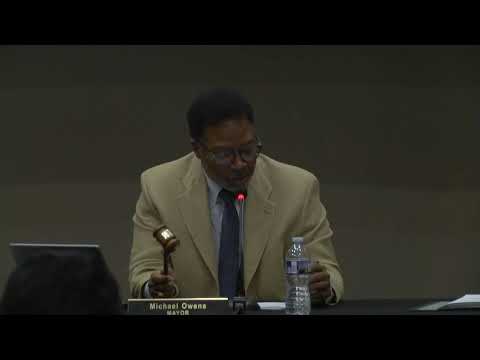
Mayor Joshua Owens emphasized the ordinance is not final and urged more meetings and follow‑up with haulers. Staff said they will meet with the haulers association and other subject-matter experts and return a revised draft to council. The mayor also said the ordinance includes a requirement that every household have service and that funds collected would be used in part for beautification, recycling goals and potential future recycling infrastructure.
Quotes: "We're grateful that you are moving in this direction where each of us can...maintain our customer base," Brian Warren said, offering to work with staff ahead of final action. Jeff Franklin of Quality Sanitation said, "I'm the owner...I'm the cook, the bottle washer. I'm the whole 9 yards. We started this business in 1990....I don't wanna be regulated out of business." Community Development Director Juliana Njoku told the council she planned to meet with administration and haulers to pare back reporting and to propose Milton-style "as needed" reporting for several items.
Next steps: Staff said they will revise the draft ordinance to reduce upfront reporting burdens, explore grandfathering or a small‑hauler tier, and consider whether to waive performance bonds for very small carriers. The council scheduled further review and a planned vote at a future meeting (the mayor said a vote is anticipated on Jan. 22). The public record will also include written comments submitted to the city and staff-supplied comparators from Milton and Alpharetta.
Ending: The hearing closed after roughly 20 minutes of public comment and a wider council discussion; council members and staff said they would continue to solicit input, hold work sessions and return a revised ordinance for second reading and a vote.