Get Full Government Meeting Transcripts, Videos, & Alerts Forever!
Get email alerts on the Snow Removal topic
No spam. Unsubscribe anytime.
Prince George's County vows operational fixes after widespread snow-removal and trash complaints
Summary
Prince George's County Council members on Jan. 21 heard repeated public complaints about missed plowing and delayed trash pickup after a prolonged winter storm, and Department of Public Works and Transportation (DPW&T) leaders acknowledged the department's response “fell short.”
Prince George's County Council members on Jan. 21 heard repeated public complaints about missed plowing and delayed trash pickup after a prolonged winter storm, and Department of Public Works and Transportation (DPW&T) leaders acknowledged the department's response “fell short.”
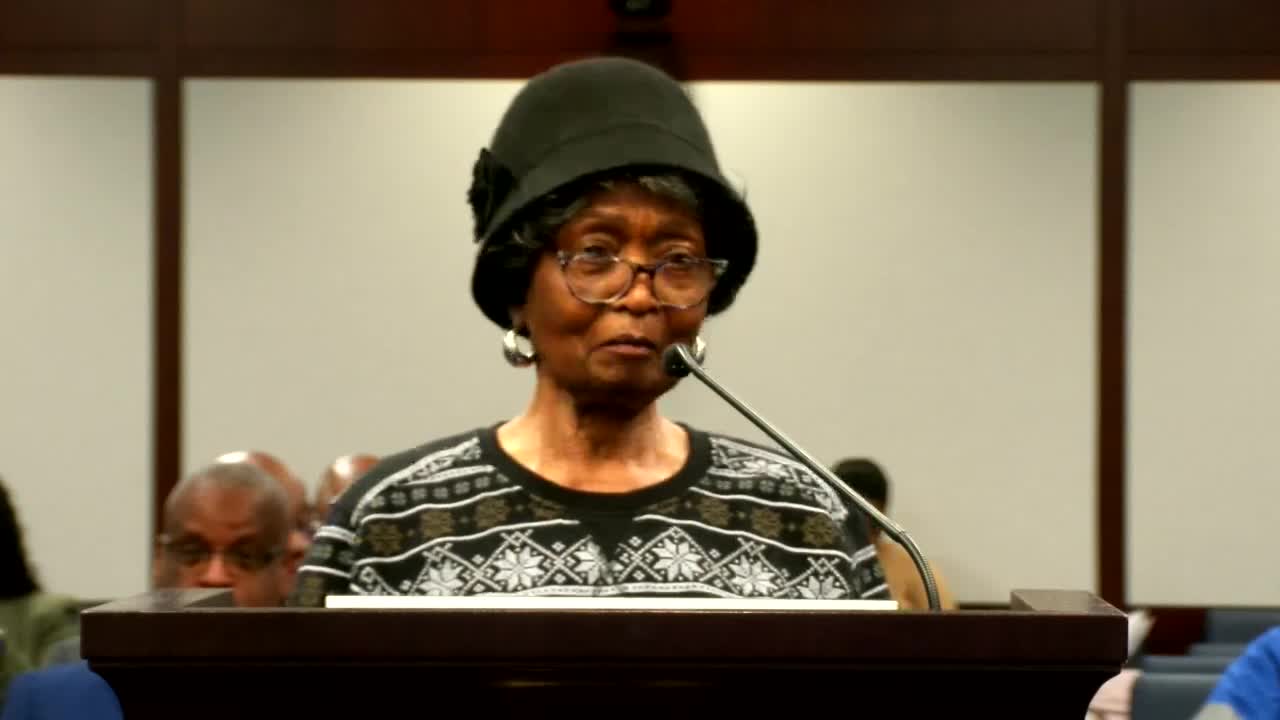
In public comment, Juanita Williams of Upper Marlboro said she called 311 twice after the first snowfall and that "Kettering Drive was never shoveled until Friday night," despite a county website that indicated the street had already been plowed. Cynthia MacArthur Parker of Fort Washington told the council she could not get out of her driveway for days, that deliveries were canceled and that a snow plow "didn't come until 10 days later."
"Our snow response fell short of the high standards we strive to maintain as a department," Michael Johnson, DPW&T director, told the council. He said the storm's long duration and extended sub‑20°F temperatures reduced the effectiveness of ordinary road salt, complicated operations and turned packed snow into ice that required multiple passes and different pretreatment strategies.
DPW&T described a phased operating model that prioritizes primary and collector roads before residential streets. Johnson said the department lacked capacity to treat primary and residential streets concurrently and that during the long, slow storm people driving on untreated snow compacted it into ice, which made residential cleanup slower and more difficult. "We must do primaries and secondaries first," he said, adding that the department needs more six‑ and ten‑wheel trucks to avoid leaving windrows on wide, multi‑lane roads and to free smaller vehicles to serve narrow residential streets.
Officials listed immediate fixes already under way: repairing an automated vehicle locator (AVL) system used to track plows, clarifying deployment strategy for different storm types, expanding pretreatment options beyond salt brine and adding language‑access supports for contractors who have limited English. Midterm steps (six to 12 months) include recruiting additional heavy equipment operators and increasing contracts for well‑capitalized snow contractors; long‑term plans (18–24 months) call for building capacity to handle slow‑moving, icy storms.
Johnson said the department began the storm with substantial salt reserves and has procured magnesium‑ or calcium‑based products that work at lower temperatures, though he cautioned they are more corrosive and costly. He also said DPW&T is refining quality assurance in its command center and will work more closely with the Office of Emergency Management and other county agencies on messaging and operations.
Council members across the chamber pressed for better communication to residents and council offices. "I want to make a public apology," Council member Sydney Harrison said, apologizing to residents and adding that the legislative body must do better at conveying expectations and responding to constituent requests. Several council members said 311 ticketing and public web updates sent conflicting messages, including advisories that streets would be cleared within 48 hours that did not match the reality in many neighborhoods.
Council members and DPW&T staff discussed local patterns that complicated operations: hilly neighborhoods and narrow streets where parked cars prevent large trucks from passing, and five DPW&T snow districts that do not align with councilmanic districts, which complicates communication with constituents. DPW&T said it could provide maps and consider better alignment or cross‑referencing between snow districts and council districts for public clarity.
Residents and several council members urged clearer guidance about private roads and homeowners associations. DPW&T reiterated that it clears county‑owned roads only; state numbered routes are the responsibility of the Maryland State Highway Administration (SHA), and private or not‑yet‑dedicated developer roads are not plowed by the county.
The briefing concluded with DPW&T saying it would implement immediate software and deployment fixes, continue outreach, and return with follow‑up information on pretreatment lists, a review of snow routes and recommended procurement changes. Council members requested a publicly accessible list of priority roads and additional detail about how 311 tickets will be handled during future events.
Ending: Council members praised the crews' effort while stressing the need for operational and communicative improvements. DPW&T said it will present more detailed follow‑up materials to council offices and residents as the department implements the changes it outlined.