Get Full Government Meeting Transcripts, Videos, & Alerts Forever!
Get email alerts on the Staff Affordable Housing topic
No spam. Unsubscribe anytime.
Steamboat Springs board discusses 22-unit staff housing plan, weighing rentals, sales and financing
Summary
Board members discussed options for 22 proposed staff housing units on the Sleeping Giant parcel, including whether the district should purchase units to rent, sell deed‑restricted units, pursue a certificate of participation debt structure, or seek short‑term rental (STR) grant funding.
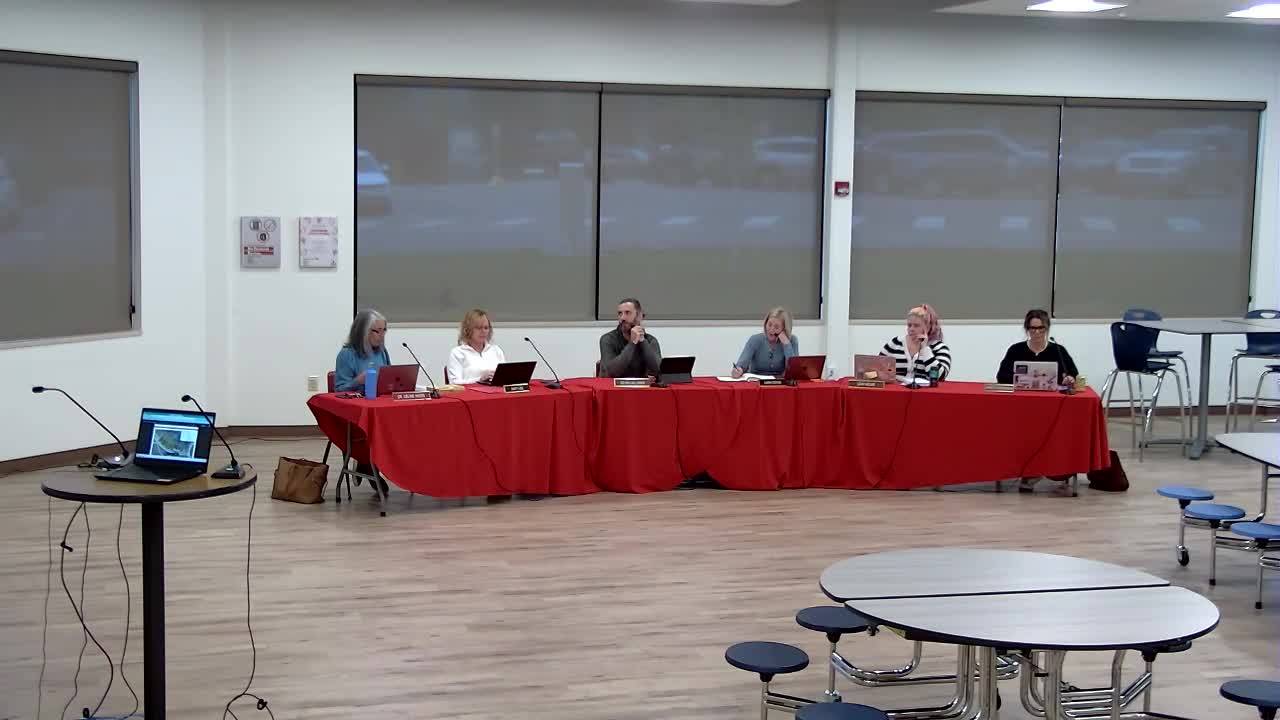
Steamboat Springs School District No. Re 2 board members spent more than 30 minutes on Sept. 22 debating how to proceed with a proposed 22‑unit staff housing development on the Sleeping Giant parcel, including whether the district should buy and operate rental units, sell units with deed restrictions, or pursue other financing.
Superintendent Celine Wicks told the board the original plan was for the district to purchase 10 units and for 12 units to be sold. Wicks said a legal review raised a constraint under the Fair Housing Act: “we are not able to put into that agreement that if they leave the district… we cannot put in there that they have to sell within any amount of days. Because according to the Fair Housing Act, you absolutely cannot do that.”
The Fair Housing Act limitation prompted a broader discussion of options: keep all 22 units as rentals; preserve a mix of rentals and units for sale; use deed restrictions where allowable; or pursue financing that lets the district retain ownership. Stephanie (district staff) explained a common financing tool: “a certificate of participation… it does not go in front of the voters like a general obligation bond and then the rent proceeds repay the debt repayments.”
Why it matters: district officials said the housing is intended to attract and retain staff in a tight local market. Board members repeatedly referenced a district survey showing strong interest in ownership: “if we have…it was like 80 something teachers that responded to 89,” a board member said; the district agreed to update the survey to collect fresh data on renting versus buying preferences.
What the board discussed and asked staff to do - Ownership vs. rental: Several members, including Cresta and Laura, said retaining units as rentals may better meet near‑term needs for housing availability, while others noted selling some units could help fund construction. - Financing and timing: Stephanie said district staff will pursue analyses and an RFP for financing options, including certificates of participation and other debt structures, and noted some school districts use debt repaid with rental income. Board members asked for scenario modeling showing the fiscal impact of different mixes (e.g., selling 2, selling 12, owning all 22). - Costs: A board member recalled earlier estimates that 10 units cost about $5,000,000 and that the additional 12 could cost roughly another $6,000,000; staff confirmed the district needs a detailed cost analysis and that the numbers are preliminary. - Developer, committee and owner’s representative: Board members asked to convene a project committee and consider hiring an owner’s representative to protect district interests during entitlements and construction. The board discussed the role of the developer previously selected by the district’s RFP committee (referred to in meeting materials as Bridal Homes) and asked staff to clarify developer roles and next steps. - Accessibility, unit mix and parking: Staff said conceptual plans include a mix of 2‑ and 3‑bedroom units and that in one concept 2 units would be accessible from the first floor; in another concept 4 units would be first‑floor accessible. Board members emphasized providing as much parking as feasible and asked for plans to show green space and pathway connectivity. - Short‑term rental (STR) funding: Wicks said staff will submit an STR grant application by the end of the month and expects to hear back in roughly six weeks to three months, depending on the program; staff agreed to confirm timelines with the city’s Brad Calvert.
Next steps and follow up: The board directed staff to 1) circulate a fresh staff survey to clarify how many employees prefer to rent versus buy, 2) convene a project committee (including interested potential residents), 3) explore hiring an owner’s representative, and 4) return with financing scenarios and a refined cost estimate. Wicks summarized the tasks and said staff would follow up with Rural Homes, Bridal Homes and potential lenders for more detailed proposals.
Board members and staff emphasized that no final decision was made at the meeting and that additional meetings and data will inform whether the district purchases and operates units, sells deed‑restricted units, or adopts a mixed approach.