Get Full Government Meeting Transcripts, Videos, & Alerts Forever!
Get email alerts on the Right Of Way Fees topic
No spam. Unsubscribe anytime.
Syracuse DPW committee backs new right-of-way fines, refundable escrow to enforce restorations after utility and contractor work
Summary
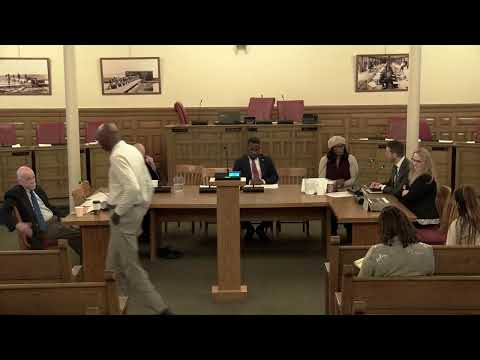
Syracuse City Department of Public Works engineering staff presented a proposed right-of-way violations fee schedule and a refundable escrow at a DPW committee meeting, saying the changes are intended to hold contractors and utilities accountable when they cut into streets or install sidewalks without required permits.
Syracuse City Department of Public Works engineering staff presented a proposed right-of-way violations fee schedule and a refundable escrow at a DPW committee meeting, saying the changes are intended to hold contractors and utilities accountable when they cut into streets or install sidewalks without required permits.
Engineering presenter Mirza said the city currently charges $100 for a roll-cut permit — the permit to do work in the public right of way — but that amount does not cover review, inspection and restoration costs. “The current fee for a roll cut permit is hundred dollars and that covers, review for all city departments… So as you guys can see right off the bat, hundred dollars is not enough,” Mirza said.
The presentation showed six completed projects that, staff said, either proceeded without an approved right-of-way (ROCA) permit or did not follow approved site plans or Syracuse specifications. For those six examples staff estimated the city would have to spend roughly $40,000 to $80,000 per project to correct deficiencies — sidewalk alignment, curb work, tree pits, and pavement restoration — totaling about a quarter‑million dollars across the six cases. In some examples the contractor had obtained a building permit but performed on‑street work without submitting the separate ROCA permit required for right-of-way work.
Why it matters: staff said the city cannot collect a permanent maintenance fee based on square footage unless a permit is applied for, so unpermitted work both creates safety and quality problems and reduces the revenue available to pay for long‑term pavement maintenance. To change incentives, staff proposed a schedule of violation fines, a refundable holdback tied to the value of promised right-of-way work, and a one‑year retention period in which the city can withhold funds if repairs fail.
Staff described the refundable holdback as the mechanism that would ensure contractors complete restoration work; if the contractor does not meet the city’s standards the city would use the escrow to pay for corrective construction. In one example staff listed a corrective estimate of about $75,000 for a single project that had not completed promised sidewalk and tree‑planting work.
Permit intake, medallions and enforcement: staff also showed a new intake form that contractors must complete when applying for right-of-way permits. The form will be used to calculate nonrefundable administrative fees and a refundable deposit sized to the scope and quality of the promised work. Staff said the city already requires National Grid to use a recessed “medallion” marker where it repaves a cut and that the medallion requirement could be extended to other utilities or contractors as the ordinance is implemented.
Coordination shortcomings were a recurring theme. Jessica Brandt, director of the City’s Permit Office, described the current intake process for building permits and said conditional language in building permits requires applicants to obtain a separate ROCA permit before doing right-of-way work. “When they apply for a building permit, there are conditional approvals…any work that is done in the right of way certainly would require those types of permits,” Brandt said. Staff and councilors discussed instances where contractors or utility crews began or completed work in the right of way without the ROCA permit being issued or reviewed by DPW, leaving the city to pay later for corrections.
No vote was recorded on the ordinance during the meeting. Committee members asked for an updated fee schedule and for procedures that better tie building‑permit approvals and site‑plan reviews to right‑of‑way permits.
What’s next: staff said they will return with a final ordinance and a refined fee schedule; the intake form and medallion practice were presented as operational steps that can begin once the ordinance gives the city authority to hold refundable funds and assess fines.
Ending: Councilors and staff emphasized enforcement and interdepartmental coordination as the keys to preventing future unpermitted work and to protecting the city’s infrastructure and finances.