Get Full Government Meeting Transcripts, Videos, & Alerts Forever!
Get email alerts on the Economic Development topic
No spam. Unsubscribe anytime.
Sugar Foods pitches 105 jobs, $40M investment; asks Whiteland for 7-year personal property tax abatement
Summary
Sugar Foods representatives described plans to lease a 617,000‑square‑foot Gateway Drive facility, invest approximately $40 million and create about 105 jobs, and asked the Whiteland Town Council for a seven‑year personal property tax abatement on roughly $25 million in equipment.
Sugar Foods representatives told the Whiteland Town Council they plan to lease the vacant Gateway Drive building, invest roughly $40 million and create about 105 jobs if the company secures local incentives.
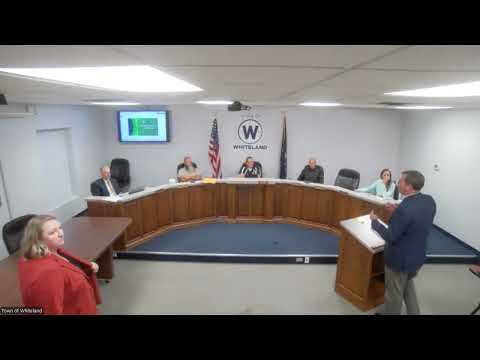
At a council meeting, Michael Harrison, representing Sugar Foods, described the proposal as a 20‑year lease of a 617,000‑square‑foot facility that would begin with light manufacturing (a fry line for crispy vegetables), packaging and distribution. Jessica (site selector) of Infensus Group said the company expects to invest about $40,000,000 in the site; roughly $15,000,000 would be tenant improvements and about $25,000,000 would be production and distribution equipment.
The company and its consultant sought a personal property tax abatement on the $25,000,000 of equipment using a standard seven‑year, declining schedule (100% in year one down to 14% in year seven). Jessica said the first round of investment would support about 105 jobs (about 60 production and 40 distribution roles plus five CDL drivers) with an average wage of roughly $62,800, excluding benefits. Harrison described full benefits — medical, dental and a 401(k) match — for full‑time employees.
The Sugar Foods team proposed an annual payment in lieu of taxes to the local fire district: $10,000 per year for the first five years of the abatement, then $5,000 in years six and seven. Town staff and the council clarified that the company would still pay real property taxes subject to the existing real‑estate abatement on the site; the personal property abatement request would apply only to the new equipment investment.
Town and redevelopment staff and the council discussed how the tax revenues would flow. Adam (Aspire) and other staff explained that the site sits in a TIF allocation area (referred to in the discussion as “patch phase 1 allocation area”), and that capturing personal property taxes in the TIF district would require amending the redevelopment plan and a multi‑step approval process by the redevelopment commission, planning commission and council. Staff noted that if the redevelopment commission does not capture personal property, the town’s incremental revenue gain from any personal property abatement would be limited because those dollars would flow to underlying taxing units unless formally captured.
Council members debated the length and scale of the abatement. Some councilors said prior abatements had been shorter (five years) and warned that longer schedules create precedents. Others said the scale of Sugar Foods’ proposed initial investment and the projected wages could justify a longer term. Multiple members asked for more detailed, written application materials they could evaluate alongside staff scoring criteria.
No vote was taken. Council members instructed Sugar Foods and town staff to formalize an application and asked staff to prepare a resolution based on that application for the council to consider at the November meeting. Staff also said they would research and report back on the redevelopment commission process needed to capture personal property taxes within the TIF allocation area.
The council discussed timing: Sugar Foods representatives said they hope to begin distribution by the end of 2025 and start production (the fry line) in mid‑2026, so the town and company agreed to expedite the written application and supporting documents for the November packet.
Ending: Council members who spoke said they were generally favorable to the company moving to Whiteland but wanted a formal application, staff recommendation and legal/financial detail before approving any abatement or incentives.