Get Full Government Meeting Transcripts, Videos, & Alerts Forever!
Get email alerts on the Facilities Maintenance topic
No spam. Unsubscribe anytime.
GDOE outlines plan for 10-person maintenance teams after $5 million supplemental appropriation
Summary
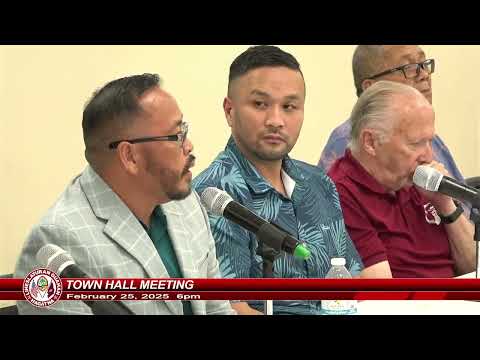
Guam Department of Education plans to station 10-person maintenance teams at schools and hire about 80 trades staff after the 30th Guam Legislature appropriated roughly $5 million; department officials laid out staffing, equipment and timeline details at a Feb. 25 town hall at Southern High School.
The Guam Department of Education on Feb. 25 said it will create district-based 10-person maintenance teams to return maintenance capacity to school campuses after the 30th Guam Legislature provided a supplemental appropriation of about $5,000,000.
Deputy for Finance and Administrative Services Wade Paul, who presented the plan at a town hall at Southern High School, said the model calls for eight 10-person teams (80 maintenance positions) each assigned to a stationing campus and responsible for three to five nearby schools. “The goal is to try to have each team assigned to their stationing campus,” Paul said. He told the audience he expects the first two teams, including one at Southern High School, to be in place by June and additional teams phased in by Sept. 30.
The plan follows department staffing estimates that showed about 47 “wrench turners” servicing 41 campuses—roughly 1.1 maintainers per school—an arrangement Paul called insufficient. The proposed team composition includes a building maintenance supervisor, carpenter, plumber, electrician, HVAC technician, welder, two maintenance workers and two trades helpers; that mix is intended to give each team the range of skills needed to address common school repairs.
Why it matters: Department officials and legislators at the meeting said returning maintenance capacity to campuses is intended to reduce recurring emergency repairs, improve readiness for public-health inspections and limit spending on outside contracts that they said are more expensive over time.
Details and funding: Paul gave a breakdown of near-term costs the department expects: about $1.2 million for personnel to staff the initial hires, roughly $900,000 for a one-time procurement of tools and equipment, and roughly $1 million a year for recurring maintenance materials. He also said about $900,000 is budgeted to prepare team stationing locations—security cages, internet, phones and furniture—so teams can manage work orders on site. Paul said the legislature’s appropriation will cover about $4–5 million of those near-term needs, noting an estimated $2 million a year in savings if the GEF contract (an outside maintenance contract covering several campuses) phases out.
Staffing and training: Paul said GDOE has started hiring trades helpers, maintenance workers and HVAC personnel and plans an apprenticeship program with Guam Community College to train lower-level hires and promote them into skilled roles as vacancies occur. He also listed current hiring shortfalls the department faces (refrigeration/HVAC, plumbers, electricians, welders, maintenance workers and trades helpers) and said management plans to reassign existing facilities staff where appropriate rather than involuntarily remove positions.
Implementation, oversight and risks: Paul emphasized leadership and accountability at team level. He said team members would sign for tools, that teams would be evaluated in part using input from the principals of the schools they serve, and that he intends to make regular site visits. Superintendent Dr. Eric Swanson and facilities manager Jim Pangolinan participated in the discussion and affirmed that weekly meetings are in place to prioritize readiness for public-health inspections while the teams are formed.
What remains unresolved: Paul and others acknowledged procurement and staffing bottlenecks. They said some tools are currently personal property of maintainers and that procurement timelines and a national shortage of certain trades skills could delay the full schedule. Paul also noted the plan assumes supplemental local funding and stable procurement timelines to meet the June target.
Next steps: GDOE has begun hiring and says it will station the first two teams by June, equip them and establish secured tool cages at stationing campuses. The department said it will continue weekly project meetings and report progress to legislators and school leadership.