Get Full Government Meeting Transcripts, Videos, & Alerts Forever!
Get email alerts on the Education topic
No spam. Unsubscribe anytime.
Committee approves literacy measure aligning early screening and banning "three-cueing" practices
Summary
The committee passed LC492249S, a literacy bill that streamlines reading-difficulty and dyslexia screening, adds dyslexia to the Georgia Early Literacy Act, and specifies that "three-cueing" methods are not to be included in high-quality instructional materials.
The House Education Committee approved LC492249S, a bill described by its sponsor as a continuation of prior literacy priorities and a further alignment of existing law to the science of reading.
The sponsor said the measure "removes some outdated language of programs that do not align with the science of reading standards" and "prevents three-cueing from being used in Georgia," adding dyslexia to the Georgia Early Literacy Act and clarifying screening requirements.
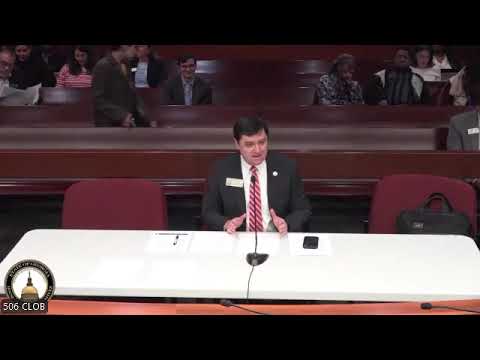
Witnesses and stakeholders provided legislative and classroom context. Scott Johnson, chair of the Georgia Council on Literacy, and Sarah Richards, Georgia's literacy coach, said the measure combined and aligned language from prior bills (House Bill 538 and Senate Bill 48) to clarify screening and reduce duplication for schools. The committee heard that an approved list of vetted screeners will be available for the next school year and that the state will offer one free screener to districts.
The bill requires screening for reading difficulties and characteristics of dyslexia on a streamlined schedule: reading difficulties will be screened three times during the school year, and the aligned process aims to reduce the burden of multiple, separate screening instruments on teachers. In committee exchanges, staff and witnesses confirmed the intention that one screener list should cover both reading difficulties and dyslexia characteristics so schools would not have to buy separate products.
Parents, advocates and educators testified in support. Chrissy (Missy) Purcell and Beth Haynes (state leader for Decoding Dyslexia) described classroom consequences of using three-cueing and urged the committee to adopt the ban. A first-grade teacher quoted in testimony described switching to structured literacy and said the change "transformed" teachers' lives and student outcomes.
During questioning, members asked about implementation capacity and training. Department of Education representatives and advocates said training and teacher-preparation changes were underway and that a free screener would be provided to school districts; additional approved screeners would be on a vetted list if districts choose to purchase them.
The committee voted to pass the committee substitute. Sponsors and witnesses emphasized alignment across prior measures, streamlined screening, support for dyslexia identification, and removing instructional approaches inconsistent with structured literacy.
Votes at a glance: LC492249S (committee substitute) ' Committee action: passed by voice vote; mover/second not specified in transcript.