Get Full Government Meeting Transcripts, Videos, & Alerts Forever!
Get email alerts on the Education topic
No spam. Unsubscribe anytime.
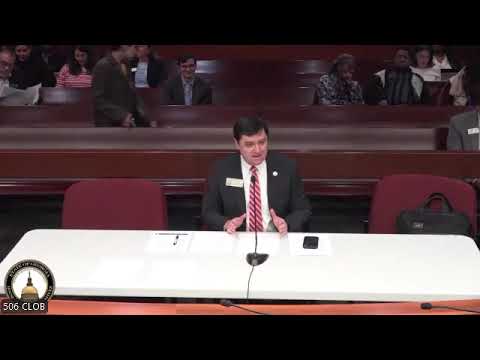
Committee approves "bell to bell, no cell" K-8 bill after extended testimony from educators and superintendent
Summary
The House Education Committee passed HB 340 (LC492272S) directing K-8 schools to restrict student cell-phone use during the school day, with exceptions for IEPs, virtual charter students and school-owned devices; committee heard testimony from state stakeholders and a Marietta superintendent who provided cost and outcome data.
The House Education Committee voted to advance HB 340 (filed as LC492272S) after a broad discussion that included the bill's sponsor, educators, a superintendent and students. Representative Hilton, the bill's sponsor, described the legislation as "bell to bell, no cell" for kindergarten through eighth grade and said it aims to reduce classroom distractions and improve academic performance and safety.
Representative Hilton said the measure is intended for K-8 and aims to establish school-day norms: "If you go beginning of the school day to end of the school day...this is for K through 8." He told the committee he had consulted public safety experts and the Sheriff's Association and argued restricting phones could reduce confusion during emergencies.
The bill text includes exceptions for students with individualized education programs (IEPs) and for virtual charter students, and it clarifies that school-owned devices used for instruction are permitted. During questioning, the sponsor said the legislation intentionally leaves implementation details to local districts and school systems.
Committee testimony included remote and in-person speakers who cited research and local outcome data. Miranda Williams of ExcelinEd said a Texas classroom experiment showed "in 1 45 minute class period, there were 9 disruptions per student" when phones were audible. She also said at least 19 states enacted or funded statewide restrictions in 2024 and that more than half of states were considering similar measures.
Grant Rivera, superintendent of Marietta City Schools (joining remotely), described results after limiting phone access in middle grades: "22 percent of our kids report that their classrooms were better this year than they were a year ago...68% of our middle school teachers...said they're better able to do their job and they're less stressed." Rivera said Marietta used pouches and provided the cost: "They are $25.50 a piece." He also reported improvements in behavior, attendance and extracurricular focus.
Other witnesses echoed these results and urged broader adoption. Sally Stanhope, a Chamblee High School teacher, and Margaret Ciccarelli of PAGE (educator association) urged extending the approach to high school in the future but supported starting with K-8 to build a culture change. Several students spoke: one middle-school-age student supported phone-free periods but asked for access during lunch; a Dunwoody High student raised concerns about high-school logistics and access when students have jobs or extracurricular commitments.
Committee members discussed staged implementation and funding options. Representative Lupton asked whether the bill could include a phased rollout or a later effective date for grades 9-12; the sponsor said a staged implementation could be considered. The sponsor noted districts could use existing safety funds or local resources to purchase storage solutions and suggested the committee could consider amendments for limited funding assistance.
The committee approved the bill on a voice vote. Committee members and witnesses emphasized the local-control approach in the bill text (allowing district-selected storage methods such as pouches or locked boxes) and restated exceptions for IEPs and virtual students.
Key provisions and clarifications from the hearing: - Coverage: K-8 school day ("bell to bell"). - Exceptions: students with IEPs, virtual charter students, and use of school-owned instructional devices. - Local implementation: districts choose how to store/secure phones (pouches, boxes, lockers); bill intentionally avoids prescriptive implementation details. - Reported outcomes cited in testimony: Marietta City Schools reported a 22% share of students saying classrooms were improved and 68% of middle-school teachers reporting reduced stress; outside examples included reported decreases in disciplinary incidents and small increases in attendance and grades.
The committee record shows the bill passed the committee and will proceed to the full House; no roll-call vote was recorded in the committee transcript.