Get Full Government Meeting Transcripts, Videos, & Alerts Forever!
Get email alerts on the Criminal Justice Reform topic
No spam. Unsubscribe anytime.
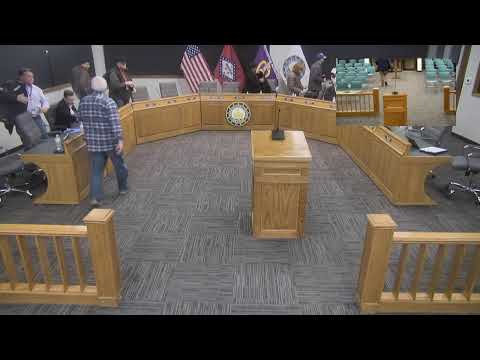
Washington County approves Community Rebuilding Initiative grant after heated debate
Summary
The Washington County Quorum Court on Monday approved an ordinance to create a Community Rebuilding Initiative (CRI) grant fund, funding a 9-month pilot of a residential substance-abuse treatment program tied to returning-home reentry services. Supporters cited past program data; opponents sought delay and alternate investments.
The Washington County Quorum Court approved an ordinance creating the Community Rebuilding Initiative grant fund, funding a near-term pilot to place residents in a 90-day residential substance-abuse treatment program linked to returning-home reentry services.
County Judge Deakins told the court the program builds on existing local efforts and called the moment “very particular” because the county “has a facility, we have a service provider, and we have all the elected officials coming together.” Nick Robbins, the Returning Homes representative who helped design the proposal, urged action and said, “if we wait to do everything, we're gonna do nothing.”
The ordinance (item number 8 on the agenda) was moved for passage by Justice Seque and seconded by Justice Dennis. After public comment and extended discussion on metrics, cost and alternatives, the court voted to approve the ordinance.
Why it matters: supporters described CRI as an extension of Washington County’s existing Community Alternative Program (CAP) and a way to offer residential substance-abuse treatment (RSAT) to people jailed locally. Proponents argued CRI complements specialty courts and reentry partners and could reduce re-arrest and incarceration rates among participants.
Supporters emphasized prior program data. Justice Lyons and others cited statistics presented by Returning Homes and outside reports: among people Returning Homes served, 78% were homeless, 89% lacked full-time employment, 59% were fathers and 73% had employment-retention issues. Lyons said a Baylor University review of CAP showed CAP graduates returned to jail 33% of the time over three years compared with a 65% return rate for non-graduates; he also referenced a 4% prison rate for CAP graduates over three years. Lyons said county audits show the daily cost to house an inmate in the county jail was $94.68 (2020 data) versus roughly $60 per day for the Returning Homes CAP alternative.
Opponents on the court urged caution. Justice Koger moved to table the ordinance to the March meeting, saying the county should first use an existing grant as a pilot and consider other criminal-justice investments such as hiring additional public defenders or creating a pretrial-services program. Koger asked that the court investigate a “county court order and some kind of memorandum agreement” he said he had not seen. The motion to table failed after roll call.
Public comment was mixed. Mac Mayfield and Michael Stewart urged approving the program and helping incarcerated people while they are in custody. Sarah Moore and another commenter asked for more transparency, competitive procurement and clearer metrics; Moore urged the court to avoid a sole-source arrangement and to ensure the county serves the whole population, not only selected providers.
Implementation details and next steps: the program as described will run on an initial nine-month funding period, with Returning Homes committing to provide quarterly status reports to the court. Robbins said quarterly reporting would show “how many people we've interviewed, here's how many qualified, here's how quickly we filled our beds” and pledged to report outcomes frequently. The County Judge warned that delaying appropriation could jeopardize staffing recruitment and grant timelines.
The ordinance language read to the court was titled “An ordinance creating the community rebuilding initiative grant fund, and for other matters pertaining thereto.” The motion to pass prevailed and the item was recorded as approved by the court.
Less urgent details: supporters and some justices framed CRI as one tool among many and urged the quorum court to continue pursuing additional criminal-justice reforms and supports if CRI proceeds.