Get Full Government Meeting Transcripts, Videos, & Alerts Forever!
Get email alerts on the Youth Services topic
No spam. Unsubscribe anytime.
Shaker Heights Youth Center outlines 4–6 week high school pilot, cites transportation and funding as barriers to expansion
Summary
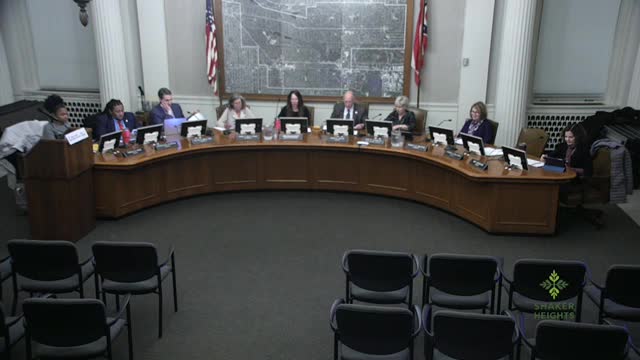
Karen Carter, executive director of the Shaker Heights Youth Center, and Lydia Ward, regional coordinator for MICOM programming, told the Shaker Heights City Council at a Feb. 10 work session that the center will run a 4–6 week pilot this spring aimed at high school students and will use the results to plan expanded out-of-school-time programming in the fall.
Karen Carter, executive director of the Shaker Heights Youth Center, and Lydia Ward, regional coordinator for MICOM programming, told the Shaker Heights City Council at a Feb. 10 work session that the center will run a 4–6 week pilot this spring aimed at high school students and will use the results to plan expanded out-of-school-time programming in the fall.
The pilot will test a mix of structured and unstructured activities—cooking, sewing, music, and leadership projects—hosted either at the Stephanie Tubbs Jones Community Building or at Christ Episcopal Church depending on the program. "We track every youth that is serviced with any of our programs," Carter said, explaining the center measures participation and outcome goals aligned with national prevention standards.
The youth center described its mission as prevention-focused and holistic. It currently places seven licensed social workers in Shaker Heights schools who provide in-school intervention and prevention services and staff summer programs. Core offerings the presenters described include a student assistance program, a youth leadership council (11 students currently), the PEERS six-week summer research-and-resiliency project, and the MOOZ design/build summer program run with Kent State University’s architecture program.
Lydia Ward said enrollment pathways vary. "So the my comm programs are referral based," she said, but added that families also contact the center directly, and staff recruit through school and library partners. Ward said the center maintains a community network that provides quarterly data on program seats and participation and helps match youth to opportunities.
Council members pressed the presenters on practical barriers to expanding programming. Transportation was raised repeatedly: staff said some options under discussion include parent drop-off, student drivers, contracted bus services, Greater Cleveland RTA passes, or potential use of school shuttle vans. Carter said she and Ward had begun conversations with the school district about using existing shuttle resources and were exploring RTA familiarity and subsidized passes for youth.
Council members also asked about funding and staffing. Carter said the youth center’s annual budget is about $630,000: a current ADAMS Board of Cuyahoga County contract provides $400,000 annually; the Shaker Heights City School District contributes about $100,000; the city provides just over $65,000; and the remainder comes from individual donations and other sources. The presenters said the center’s staff includes seven school-based social workers, an agency administrator who handles operations and bookkeeping, and the two leaders presenting; additional hires would be needed if the pilot grows into a permanent expanded program.
The presenters described other community partnerships and supports: the youth leadership council has used the Unitarian Universalist Church for an after-school site; the center partners with local businesses and nonprofits—EDWINS, Wake Up Call Media, Breadwinners Academy, Belfair—and with library youth staff. Carter noted the center had provided a grant for pool passes in a prior year and said they were open to receiving in-kind support such as volunteers to teach skills classes.
On employment, Carter said the youth center is acting as a community partner for the YOU summer jobs program, aiming to place 45 local youth ages 13 and up in Shaker employers this summer.
Council members recommended compiling a vetted volunteer list to match community members’ skills (sewing, cooking, financial counseling) to youth requests, and discussed longer-term facility planning tied to the city’s rec center and potential future use of the Stephanie Tubbs Jones building for mixed youth and senior programming. Carter said the center is planning a strategic planning process in 2025, a new website, and continued program development based on pilot results and partner feedback.
The council did not take any formal action during the presentation; members asked the presenters to continue coordinating with the district, the city’s recreation department and RTA on transportation and to report back as the pilot develops.
Ending: The City Council thanked the presenters for the briefing and for their work with youth in Shaker Heights and adjourned the work session. The presenters said they will use pilot attendance and evaluation data to determine whether to expand the spring pilot into a longer, year-round program.