Get Full Government Meeting Transcripts, Videos, & Alerts Forever!
Get email alerts on the School Tobacco Policy topic
No spam. Unsubscribe anytime.
North Kingstown panel agrees to align school tobacco policy with Rhode Island model
Summary
A North Kingstown School Committee subcommittee began revising the district's tobacco policy to adopt state model language, broaden definitions to include e-cigarettes and smokeless products, clarify coverage of school-sponsored events off campus and buses, and check on signage and enforcement procedures; no formal votes were taken.
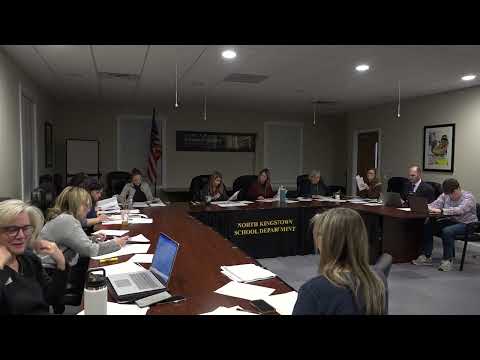
A North Kingstown School Committee policy subcommittee met to revise the district's tobacco policy, deciding to replace local definitions with language from a Rhode Island model policy and to clarify enforcement steps and signage across school buildings and vehicles.
The group agreed to update the district's existing "tobacco products used on school property" policy to match the state model's definitions and to cross-reference the district's broader Chemical Health and Student Safety policy, which covers discipline and student interventions. Members also discussed explicitly adding electronic nicotine delivery systems (ENDS), smokeless products (for example, snuff and chewing tobacco) and new products such as nicotine pouches to the local definition of tobacco products, and to make clear that school-sponsored events are covered even when they occur off campus.
Why it matters: aligning the local policy with the state model will change how the district defines covered products and locations, and will affect signage, staff notifications, and disciplinary language. Committee members said the changes are intended to reduce ambiguity about whether newer products such as vapes and nicotine pouches fall under the prohibition and to ensure consistent enforcement districtwide.
Discussion highlights
- Definitions and scope: Members recommended adopting the state model's definitions for "tobacco products," which explicitly include products derived from tobacco and devices that aerosolize or vaporize substances. The subcommittee also agreed to clarify that the prohibition applies to school buildings, school grounds, buses and vehicles, and any school-sponsored events regardless of where they are held.
- Product examples: Participants noted the need to list examples such as snuff, chewing tobacco, e-cigarettes and devices commonly described as "ENDS" so that the policy cannot be narrowly interpreted to exclude newer products. The group discussed nicotine pouches (referred to in the meeting by participants as a contained, bag-like product) and concluded those should fall within the tobacco-product definition.
- Signage: The committee reviewed state guidance that signs should be posted at building entrances and in every school bus and vehicle. Members asked staff to inventory existing tobacco-free signage and to consider ordering updated Department of Health posters that explicitly reference e-cigarettes and vapor devices or that include imagery that communicates vaping to non-English readers.
- Enforcement and staff consequences: The subcommittee discussed enforcement steps for staff found using tobacco on district property. Under the model language and state statute cited in the meeting, an initial written notice and subsequent steps are prescribed; the group agreed to standardize local language so that an employee would receive written notice, then a verbal warning followed, and repeated violations would be reported to the superintendent and the bargaining-unit representative. Committee members observed that changes affecting staff discipline may require negotiation with the employee union.
- Cross-referencing chemical health policy: Members agreed the student-focused consequences (intervention, prevention and possible suspension) belong in the district's Chemical Health and Student Safety policy, so the tobacco-use policy will reference that document for student disciplinary procedures while keeping staff and visitor provisions in the tobacco policy itself.
Next steps and timeline
The subcommittee asked staff to prepare a redraft incorporating the state model definitions and clarified scope and to circulate the draft for review before the next meeting. Members asked principals to confirm existing signage at each school and to provide examples of current posters; staff will also research available Department of Health signs that depict vaping devices. The group scheduled continued work on the Chemical Health and Student Safety policy (which will address student discipline and vaping) for the next meeting. No formal motions or votes were taken during this session.
Community context
Members noted the health-education emphasis of the policy and said they want consequences for students to include preventive and educational options where appropriate. The panel discussed practical concerns about signage that uses only a cigarette icon and considered replacing or supplementing those signs so parents and visitors understand the prohibition includes vaping.
The subcommittee concluded by asking staff to circulate a typed draft of the revised tobacco policy and the proposed cross-reference to the Chemical Health and Student Safety policy ahead of the next meeting.