Get Full Government Meeting Transcripts, Videos, & Alerts Forever!
Get email alerts on the Food Security topic
No spam. Unsubscribe anytime.
Central Texas Food Bank: assessment finds 15.9% food insecurity in Hays County; calls for county coordination
Summary
A countywide needs assessment led by Central Texas Food Bank finds about 39,000 residents — including nearly 11,000 children — face food insecurity and recommends county-level coordination, infrastructure investments and targeted programs to address the problem.
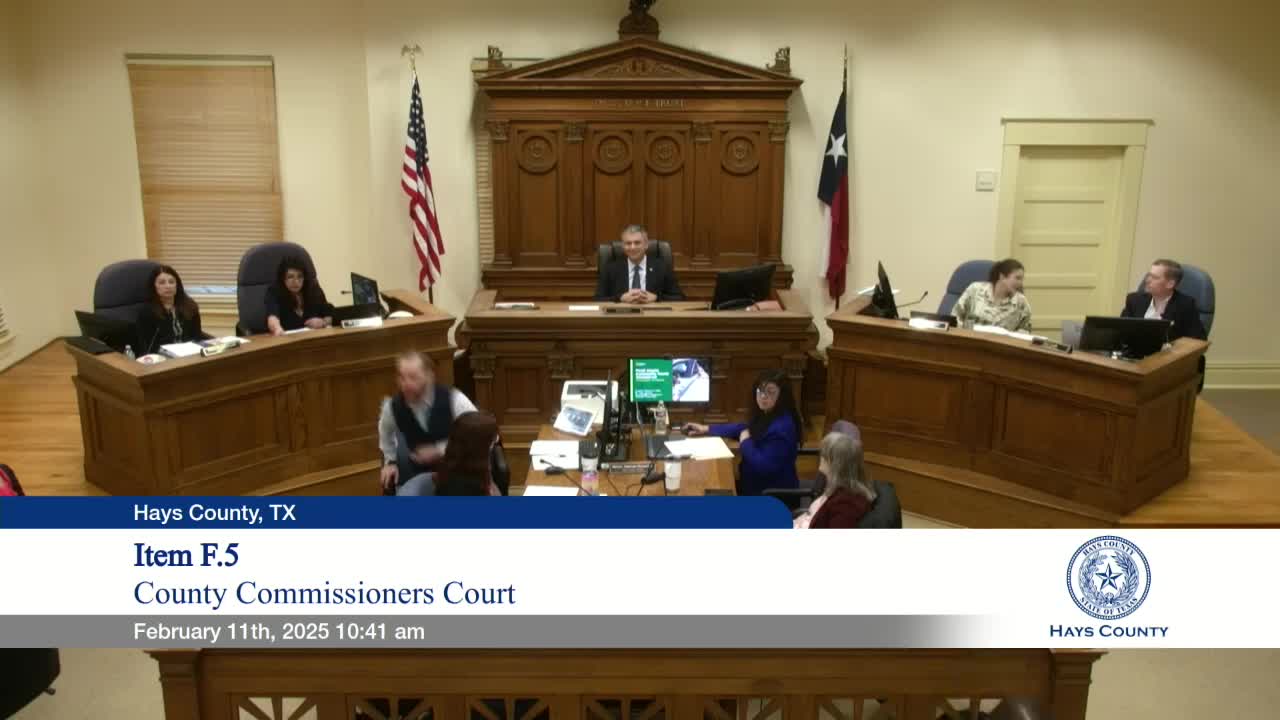
Central Texas Food Bank presented a countywide food needs assessment to the Hays County Commissioners Court on Feb. 11, reporting a 15.9% food insecurity rate in Hays County that translates to roughly 39,000 people without reliable access to food.
The assessment, conducted in partnership with the Hays County Health Department, combined public datasets, stakeholder interviews, focus groups in Kyle, San Marcos and Ueland, and a neighbor survey of 243 people experiencing food access barriers. Dr. Tracy Erhart, vice president of research and strategic partnerships at Central Texas Food Bank, said the study found one in four food-insecure households regularly trade off food for utilities, medicine, housing or transportation.
County leaders described the report as a resource for future policy and program decisions. “One in four food-insecure households in Hays County make trade-offs every single month between food and insurance, utilities, housing or transportation,” Erhart said during the presentation. She also said more than one in three surveyed households could not afford a $400 emergency and more than half had a household member with a chronic illness, increasing the need for medically appropriate food.
Why it matters: the assessment highlights how population growth and rising living costs are outpacing local infrastructure and charitable responses. The food bank and county officials flagged three groups with particular vulnerability: children, residents on the east side of I-35, and older adults. The findings underline both short-term gaps in charitable food delivery and longer-term needs in retail access, public transportation and support for local agriculture.
Key findings, as presented - Estimated food-insecure population: 15.9% (about 39,000 people), including about 11,000 children and more than 5,000 older adults. - One in four food-insecure households make monthly trade-offs between food and other essential bills. - Over half of food-insecure households reported a household member with a chronic health condition. - Transportation: more than one in four surveyed neighbors said they cannot easily access transportation for food; many commute outside the county and spend their transport budget on work commutes. - Retail gaps: limited full-service supermarkets in parts of the county make nutritious food harder to obtain.
Recommendations and opportunities: Erhart and county staff outlined actions that could help reduce need and increase resilience: - County-level coordination to align charitable and municipal programs and reduce duplication. - Investments in infrastructure and food supply resilience that support mid- and small-size farms and protect local agriculture. - Work to streamline federal nutrition enrollment and outreach to reduce confusion and gaps after pandemic-era waivers expired. - Explore partnerships to bring grocery or market-style retail into underserved areas and to leverage regional transportation funding.
County response and next steps: Hays County Health Department Manager Matthew Gonzales and commissioners praised the work and said the county will continue partnering with the food bank. Commissioners asked staff to identify where the county can have direct impact — for example on transportation, zoning or municipal coordination — and to prepare next steps for court consideration.
Ending: Central Texas Food Bank said the full report is available to county staff and community partners and recommended using the assessment as the basis for a multi-sector strategy. The court did not adopt immediate new programs during the meeting but directed staff to use the report in upcoming planning and budget conversations.