Get Full Government Meeting Transcripts, Videos, & Alerts Forever!
Get email alerts on the Transitional Housing Village topic
No spam. Unsubscribe anytime.
Lewiston council approves 50-year lease for youth transitional housing village at East End Park amid neighborhood dispute
Summary
The Lewiston City Council on Dec. 23 approved Resolution 2024-50 to lease a third-acre parcel commonly called East End Park to the LC Valley Youth Resource Center Inc. for a transitional housing village for young adults.
The Lewiston City Council on Dec. 23 approved Resolution 2024-50 to lease a third-acre parcel commonly called East End Park to the LC Valley Youth Resource Center Inc. for a transitional housing village for young adults. The lease authorizes a 50-year ground lease at a rent of $100 per year, with options to extend, and limits use to a transitional housing village tied to an approved conditional use permit (CUP 24-3).
Why it matters: The proposal drew large turnout and sharply divided public comment: neighbors and nearby businesses raised concerns about community outreach, stormwater drainage and long-term use of the city parcel, while resource-center staff, board members and residents who had used the center urged the council to approve the lease to prevent young adults from aging out of care with no housing.
Michelle King, president of the LC Valley Youth Resource Center, told the council the center provided overnight shelter for 28 different young people this year and “865 nights of shelter,” and said many of the center’s interventions come in the two weeks before a youth turns 18. King described the proposed village as 12 tiny-house cottages with shared kitchen and program space, intended mainly for 18-to-20-year-olds who are in high school, exiting foster care or currently served by the center. “The village is 12 tiny house cottages,” King said in her presentation, adding the layout preserves a city stormwater easement the group has informally called “the moat.”
City Attorney Jennifer Tangano explained the city’s legal authority to lease municipal land and outlined key lease terms. Tangano said the lease “explicitly limits the use of the property to this purpose” and noted the CUP (CUP 24-3) tied to the project is final, with the appeal period closed. She described the lease as a ground lease where improvements generally revert to the city at the end of the term (unless the city waives removal) and confirmed the city will be named an additional insured on the lessee’s commercial general liability policy. Tangano also said the lease contains an indemnification clause under which the lessee agrees to defend and hold the city harmless for claims related to the lessee’s use, except where the city’s own gross negligence is at issue.
Supporters said the village fills a service gap for young adults aging out of foster care or youth services. Speakers included current and former residents of the center who credited staff with preventing homelessness and suicide attempts; board members and social-service professionals described the program’s rules, on-site staffing, drug testing and life-skills curriculum. “These are kids when they turn 18, and they have nowhere to go,” said Sarah Walters, who lives near the center. Several council supporters said the property had been unused or used as informal storage or parking for years and argued the village would be an improvement.
Opponents — many living adjacent to the site or owning nearby businesses — criticized the outreach process, the length of the lease and the $100-per-year rent. They raised land-use and procedural concerns, saying surplus-city-property procedures and a public auction should have been pursued; some cited a 2007 resolution (2007-62) in which the property had been discussed as surplus and asked why the parcel was not sold. Jeff Edwardson, a resident, warned the council that the parcel contains a significant stormwater drainage channel and said building on the site could obstruct flood flows. Others expressed fears about crime, property values and the program being inappropriate for the site. Several opponents asked that the city either not lease the land or sell it so local businesses could purchase it.
Council discussion ranged from liability and insurance questions to historic use of the property. Council members asked whether third-party easements (for stormwater maintenance and an Avista easement) had been cleared; Tangano said the legal description in the lease had been confirmed and that the city would retain stormwater access and maintenance rights even if a lease or sale occurred. Tangano also reviewed that the lease term was negotiated with the lessee in part because ground leases generally support lessee-funded improvements, and she noted other city ground leases had nominal rents.
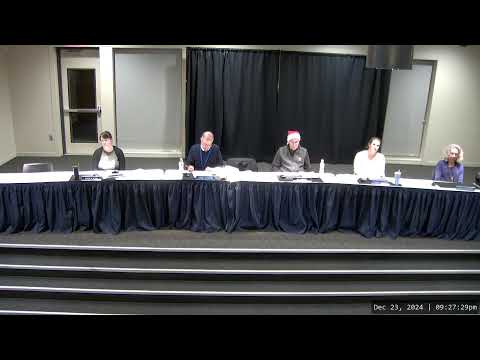
The council voted to approve Resolution 2024-50 (motion by Councilor Schroeder, second by Councilor Forsman). Recorded votes were: Councilor Spickelmeyer — Nay; Councilor Liedtke — Nay; Councilor Klein — Aye; Councilor Schroeder — Aye; Councilor Forsman — Aye; Council President Klieberg — Aye; Mayor Daniel G. Johnson — Aye. The motion carried.
What’s next: The lease requires the lessee to comply with the conditions imposed by CUP 24-3 and to obtain required permits and insurance. The conditional use permit record was part of the public record and, per the city attorney, the appeal period has closed. Construction, easement coordination, and program build-out will follow the lease and permitting process. The council and mayor said they will continue engagement with neighborhood members to address stormwater and maintenance concerns.
Votes, legal limits and public concerns were central to the decision: the lease preserves the city’s long-term ownership, restricts the property’s use to a transitional housing village unless the city agrees otherwise, and requires the lessee to maintain insurance and defend related claims. Supporters said the village will provide a structured “hand up” that many local young adults lack; opponents argued the city should not commit long-term control of the parcel without offering sale options for nearby businesses and resolving neighborhood infrastructure issues.
Ending note: Several council members committed to follow-up with neighborhood residents and public-safety officials about drainage, maintenance and outreach; the city attorney noted the lease allows the city to require removal of improvements at the end of the term or to accept reversion of improvements to the city.