Get Full Government Meeting Transcripts, Videos, & Alerts Forever!
Get email alerts on the Parks Recreation Master Plan topic
No spam. Unsubscribe anytime.
Grand Prairie receives midpoint update on parks, recreation and open-space master plan
Summary
Consultants briefed the City Council on a midpoint update to Grand Prairie’s parks, recreation and open-space master plan, reporting 622 statistically valid survey responses, planned tree canopy and health studies, and a draft adoption timetable targeting early 2026.
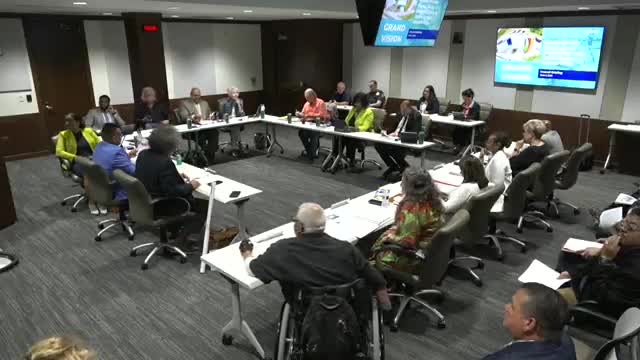
Consultants and city staff on Tuesday gave Grand Prairie City Council a midpoint briefing on an 18-month update to the city’s parks, recreation and open-space master plan, outlining survey results, system assessments and next steps toward a draft plan scheduled for early 2026.
Kendall Howard, the project manager with Time and Associates, told the council the project began in January and that the team had completed a discovery phase that included stakeholder meetings, public workshops and a statistically valid mailed survey. "We exceeded that with 622 completed surveys," Howard said, adding the survey yields a margin of error of plus-or-minus 4 percent.
The update matters because the plan will guide future capital recommendations and investments across Grand Prairie’s park system; the council last updated its parks master plan in 2017. Howard said the final plan will be the city’s blueprint for priorities, implementation and adoption.
Consultants summarized key findings and needs. Among the results cited: 89 percent of respondents "visit a park in Grand Prairie in a typical year," and about 34 percent said they participate in a city program in a typical year. The team reported Grand Prairie has more than 5,000 acres of parkland, and when lake-adjacent parkland is included the city’s parkland-to-population ratio is about 25 acres per 1,000 residents. Howard noted the ratio declines to about 8.5 acres per 1,000 residents when Army Corps of Engineers parkland is excluded.
Howard identified recurring community priorities from public meetings and surveys: more trails and trail connections, upgrades to existing parks and playgrounds, improved sports complexes to attract regional tournaments, and more community meeting spaces. "Trails" and leveraging Grand Prairie’s lake parks were repeatedly raised as assets to capitalize on, she said.
The team also presented access and facility findings: roughly 53 percent of residents live within a 10-minute walk (about a half mile) of a public park; Grand Prairie currently has about 25 miles of paved trails; and the consultants see a need for additional indoor gym, fitness and program spaces at existing facilities.
Ray, identified in the briefing as "service director, Harte Arts and Integration," said staff already have begun implementing pieces of the plan, citing a nature-focused program series and upcoming summer events at Lake Parks. Daniel Woods, identified as the city’s senior project manager, joined Howard in describing outreach to sports leagues, the commission on aging, the parks board (which is serving as the project steering committee) and other stakeholders.
Planned next steps include a tree canopy study, a community health assessment conducted with the University of North Texas, additional public and stakeholder meetings in the fall to review draft recommendations, and compiling a draft master plan for review in early 2026. Howard told the council the team will finalize goals and the needs assessment over the summer.
No formal action or vote was taken during the briefing. Council members asked how youth and school groups had been engaged; Howard said survey and public meeting promotion ran on social media and staff would confirm targeted outreach to sports associations and student groups going forward.
The council is scheduled to receive further briefings and a draft of recommendations during the fall outreach phase; staff and consultants said they will return with draft plan materials for formal review next year.