Get Full Government Meeting Transcripts, Videos, & Alerts Forever!
Get email alerts on the Religion In Public Life topic
No spam. Unsubscribe anytime.
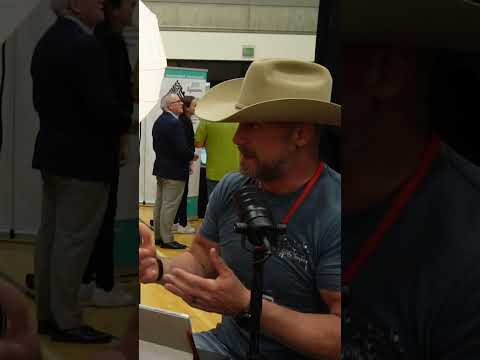
Podcast speakers say removing God harms society, cite Constitution
Summary
Two speakers on the God and Country podcast argued that removing God from public life erodes moral values and said the Constitution assumes a God-fearing populace; the exchange did not propose policy actions or formal votes.
Two participants in the God and Country podcast exchanged views saying American society has lost moral grounding and that people should "put God back" into their lives, citing the U.S. Constitution and the national motto "In God We Trust."
The brief recorded exchange consisted of back-and-forth statements about religion and public morality, with one speaker saying, "Well, I think if we take God out out of society in general, I think we're asking for trouble," and the other replying, "We're asking for a lot of trouble."
One speaker elaborated that "good has to come from something within you, a moral background within you, and that comes from God, your belief in God," and argued that framers wrote the Constitution assuming "a God fearing people." The same speaker pointed to the national motto, saying, "That's why it says 'In God We Trust.'"
The exchange was an expression of opinion and did not include proposals for legislation, formal motions, or administrative direction. No public officials, staff members, or identifiable organizational representatives were named in the transcript; the remarks were offered as personal commentary.
The discussion lasted roughly one minute in the provided transcript and focused on general claims about the role of religion in shaping private morality and, by extension, public order. The speakers did not identify specific policies, legal citations beyond the Constitution, or actions for public bodies to take.
Because the segment was an exchange of personal views rather than a recorded governmental action, there were no votes, motions, or staff directions tied to the remarks.