Get Full Government Meeting Transcripts, Videos, & Alerts Forever!
Get email alerts on the Mining Quarrying topic
No spam. Unsubscribe anytime.
Commission hears hours‑long public hearing on proposed quarry expansion; no final approval after divided votes
Summary
A lengthy public hearing on CUP‑24‑09 for quarry expansion by David Walker and James McRaven produced extensive testimony, technical questions and at least one failed motion to approve; commissioners did not reach a final approval and staff was asked to investigate the stop‑work authority and provide further materials for a continued hearing.
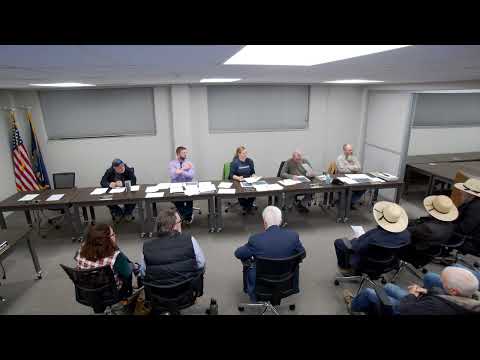
The Dickinson County Planning Commission conducted an extended public hearing on CUP‑24‑09, a request by David Walker and James McRaven to expand mining operations on a large parcel in the southwest quarter of Section 1, Township 13 South Range 4. The hearing drew the largest public turnout of the meeting and lasted multiple hours with technical testimony from the applicant, legal counsel and several nearby residents.
Planning staff summarized the application and the review criteria, and identified multiple outstanding items, including the absence of a current reclamation plan specific to the parcel, a lack of a current bond amount tied to reclamation, an outdated well‑impact assessment (staff noted the most recent materials on wells were about 30 years old) and no submitted proof for some easement approvals referenced by the applicant. Staff cited Article 21 (quarries) requirements in county zoning and listed state statute references addressing excavation setbacks. Staff also recommended multiple potential conditions if approval were considered: updated reclamation plan, a current well‑impact study or third‑party engineer’s report paid for by the applicant, a dust‑abatement plan where the operation is within a quarter‑mile of residences, proof of KDHE or other state compliance where applicable, a site plan prepared by a licensed surveyor, and a reclamation bond acceptable to the county.
The applicant, who described decades of quarry activity on leased lands dating back to the 1970s, presented a detailed packet asserting historic operations, a history of reclamation in other areas of the lease, and contended that earlier administrative approvals during the COVID‑19 period authorized operations. The applicant’s attorney argued the staff’s temporary authorizations carried no explicit time limit and disputed the county’s stop‑work notice issued after the state lifted pandemic restrictions. The applicant also said reclamation work had been done on previously quarried areas and provided materials on blasting practices and prior reclamation photos.
Nearby residents and landowners raised concerns about water supply and quality, vibration and potential foundation damage from blasting, truck traffic on township roads, and the adequacy of state oversight. Residents reported anecdotal well‑level declines and described dust and traffic impacts. Two nearby residents provided first‑hand accounts of pump and well‑level changes and routine truck movements onto township roads.
Commission discussion focused on several contested topics: whether earlier, pre‑zoning operations confer grandfathered rights for continued quarrying (staff advised that new disturbance on a different quarter‑section triggers the CUP requirement), the age and adequacy of submitted well‑impact materials, the need for a current reclamation plan and bond, screening and setback standards (county zoning cites a 100‑foot horizontal setback from road rights‑of‑way and 30 feet from other property lines), and how state licensing and reporting (KDHE and state mining licensing) intersect with county requirements.
During deliberations at least one motion to approve the CUP with a complex set of state‑matrix and staff conditions was moved and seconded but failed on the roll/voice vote. Commissioners discussed continuance to a future meeting to allow staff time to assemble additional records and for the applicant to submit updated studies and documentation; a motion to continue was proposed but at least once failed to receive a second. Staff committed to investigate the county’s stop‑work authority, to assemble correspondence from state agencies, and to clarify which documents were on file with the state. No final approval was recorded during the meeting; the matter remains pending and is expected to return to a future public hearing with additional documentation requested by staff and the commission.