Get Full Government Meeting Transcripts, Videos, & Alerts Forever!
Get email alerts on the Paraeducators topic
No spam. Unsubscribe anytime.
Darien proposal to cut paraeducator roles and use interns for coverage draws sharp criticism
Summary
District administrators presented a budget scenario on Jan. 21 that would reduce the number of funded paraeducator positions at elementary schools and replace some duties with pre-service teacher interns and permanent building substitutes, estimating net savings of roughly $1.0'$1.14 million.
District administrators presented a budget scenario on Jan. 21 that would reduce the number of funded paraeducator positions at elementary schools and replace much of that work with a combination of pre-service teacher interns and permanent building substitutes.
Administrators said the change responds to increased use of paraeducators to cover teacher absences after the pandemic and contended that using interns and building substitutes better aligns with current classroom needs and would save the district "over $1,000,000." Marge and Marjorie (presentation staff) explained that interns are pre-service teachers in certification programs and that the district has previously used staggered intern placements so an intern's 10-week student-teaching block would not leave a school unstaffed throughout the year.
"Our paraeducators really do provide a support role," staff said, "but the operational impact will be relatively minimal because over the past few years ... the paraprofessionals have been pulled to cover classes." Administrators told the board they estimate net savings of about $1.14 million if the change is implemented.
Board members and many public commenters pushed back sharply. Several board members and parents said the proposal risks reducing daily classroom support, weakening continuity for students, increasing teacher workload and raising the risk of burnout. Board member Katie said eliminating long-term, experienced paraeducators "is going against everything that we say makes our schools great." Joan (Joanna) and others raised ratios showing fewer adults per student than in past years.
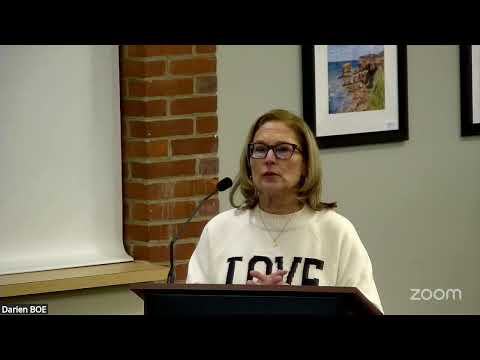
Multiple current paraeducators and parents addressed the board during public comment. Kristen Anderson, an instructional aide with long service in district schools, warned that replacing veteran staff with short-term interns would create a revolving door. "Will eliminating 15 long term dedicated employees and replacing them with free and inexperienced college students save you money? Absolutely. But in 9 months, your free interns will move on and be gone and you will have gotten what you paid for," she said.
Parents and staff also said paraeducators perform non-instructional but essential classroom operations (arrival/dismissal, recess supervision, lunch duty) and help manage students who are not yet identified for special services. Administrative staff responded that some of that coverage already occurs and that principals report paraeducators are often used for substitute coverage more than for assigned grade-level support.
Board members asked for more data on the actual time paras spend covering teacher absences, the projected schedules for interns with their 10-week student-teaching blocks, and the distribution of staffing across schools (for example, Oxbridge's mix of permanent building substitutes and part-time staff). Several asked for alternatives that would preserve experienced paras while realizing savings.
No formal action was taken on Jan. 21. Administrators said they would supply follow-up material on usage, bumping/benefit calculations, and the assumptions behind the estimated savings before further deliberation.