Get Full Government Meeting Transcripts, Videos, & Alerts Forever!
Get email alerts on the Housing Development topic
No spam. Unsubscribe anytime.
D.R. Horton discusses plan for roughly 200 homes in North Tulsa; GTAC policy committee weighs community role
Summary
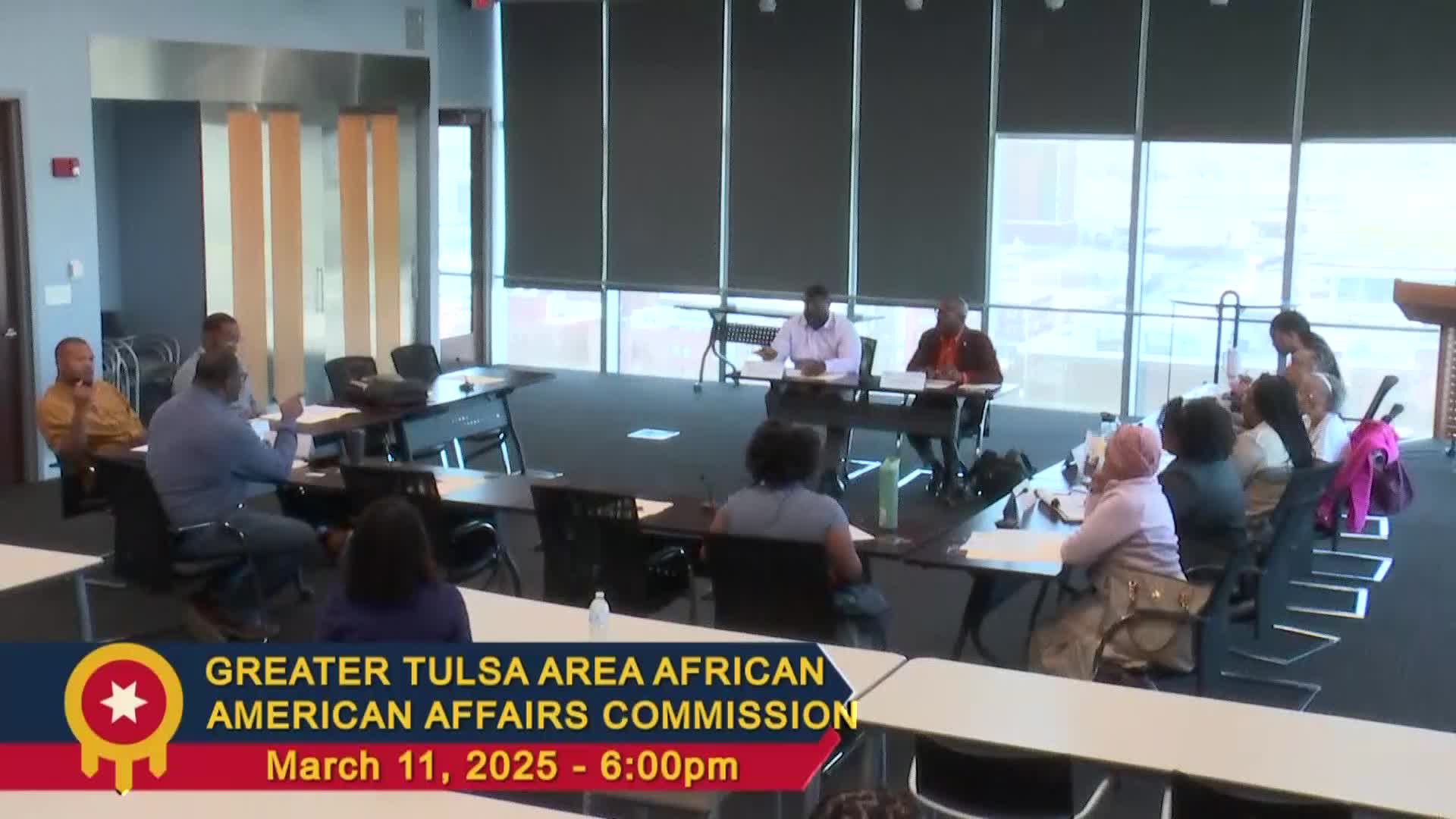
D.R. Horton representatives and members of the Greater Tulsa African American Affairs Commission’s policy committee discussed a proposed development of about 200 homes on land the builder already owns near Apache in North Tulsa, commissioners said during the commission’s March meeting.
D.R. Horton representatives and members of the Greater Tulsa African American Affairs Commission’s policy committee discussed a proposed development of about 200 homes on land the builder already owns near Apache in North Tulsa, commissioners said during the commission’s March meeting.
Commissioner Marquise Dennis, co-chair of the policy committee, told the commission the builder is evaluating feasibility after rising costs pushed their target average sale price above the neighborhood’s market. “Their average price point right now is about $290,000,” Dennis said during committee remarks. He said D.R. Horton is considering whether to develop the site or sell the land.
The discussion focused on whether municipal tools or partners could make the project viable and on potential effects on existing subsidized efforts nearby. Dennis identified the city’s recent mayoral housing allocation — “a $75,000,000” fund approved in the prior mayoral administration, as he described it — and city economic development authority resources as possible avenues to explore for reducing costs. He also noted a nearby development backed by George Kaiser that he said is heavily subsidized, which could complicate price comparability.
City-affiliated staff in the meeting’s discussion (identified by commissioners as having financial expertise) and committee members urged D.R. Horton to refine a written proposal for the commission and for the developer to meet with city permitting and development services staff to clarify fees and feasibility before GTAC considers formal advocacy. “We told our contact… for them to go to the board and refine what they're asking for,” Dennis said.
Commissioners and staff flagged several practical questions the commission would need to answer before any advocacy: the exact subsidy or incentive requested (not specified), how the project would interact with nearby subsidized developments, housing price thresholds for local down-payment assistance programs (not specified in committee remarks), and whether the community wants market-rate or subsidized units in that location.
Committee members estimated a possible 12- to 18-month timeline to build if numbers worked out and the developer moved forward, because the builder already owns the land. Dennis described the potential residents as “middle-income” households and said the project could add households and property-tax revenue to North Tulsa.
No formal motion or vote occurred during the commission meeting on the proposal. Commissioners directed that D.R. Horton return with a refined written proposal and that the policy committee solicit community input and coordinate with city permitting and economic development staff before any formal recommendation to the mayor or city council.
Proponents at the meeting framed the commission’s role as community voice rather than final decision maker: GTAC members said they would provide community feedback to elected officials and city agencies if the developer requested assistance or incentives.
Next steps discussed included: D.R. Horton producing a written request or feasibility memo; the policy committee organizing community input; and coordination with city departments that oversee permitting and economic development funds. Commissioners emphasized that any GTAC involvement would be limited to advising and advocacy, not permitting or direct subsidy decisions.