Get Full Government Meeting Transcripts, Videos, & Alerts Forever!
Get email alerts on the District Operations And Policy topic
No spam. Unsubscribe anytime.
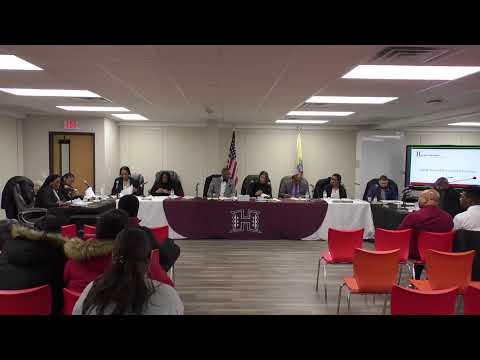
Hillside superintendent outlines safety measures, budget concerns and policy priorities
Summary
Superintendent Glover told the Hillside Board of Education the district will act to reassure immigrant families, urged parents to complete meal-benefit applications, warned of potential state funding cuts, and said students should help craft a district cell-phone policy.
Superintendent Glover told the Hillside Public School District Board of Education on Jan. 21 that the district will take steps to keep schools safe amid recent changes in federal enforcement and that families should report concerns so the district can respond.
Glover said the district has worked with principals and vice principals to prepare for situations involving immigration officials and emphasized that the district intends to be a partner to families, not an adversary. "We are a diverse community," he said. "It is our commitment to make sure all of our students and families still feel safe to come to the events and the activities that we offer."
The update covered several operational priorities: food service and federal funding, possible reductions in state aid, a proposed statewide ban on cell phones under consideration by the governor and Legislature, expanding tutoring and data system upgrades, and staffing shortages including a vacant high school biology position.
Glover urged families to complete meal-benefit applications so the district can continue to receive federal dollars for school meals. He said about "72–73%" of the district's students receive free or reduced-price lunch, and described school meals as a vital source of two daily meals for many students. He warned that "federal legislation is on the horizon" that could affect the district's food programs and noted state proposals that could change how meals are provided.
On budgeting, Glover said the district gets about half its budget from state aid and that expected flat or reduced state funding would affect programs and innovative spaces. "We're being very mindful and fiscally sound in how we prepare our budget for the 25–26 school year," he said.
Glover described a campaign to involve students in local policy decisions: he has asked high school students to propose and help design an updated cell-phone policy and the consequences for misuse. He said students favor progressive discipline rather than immediate suspension for first offenses and noted legitimate classroom and safety uses for phones, including translation tools for English-language learners and emergency contact with families.
He also described district initiatives: an AI-related entrepreneurship program in the middle schools, expansion of after-school tutoring programs across all grade levels, and ongoing recruitment efforts to fill hard-to-staff positions such as the high school biology teacher. "We have been actively recruiting," Glover said; he directed concerned parents to meet with Dr. Bergier for details on continuity plans and supports for students while vacancies are addressed.
Glover concluded with community-facing items: distribution of books to build home libraries, an upcoming stakeholder meeting, and a request that families monitor and complete financial aid or final-aid applications required for graduation under state rules.
Votes and formal motions during the meeting included a motion to move the meeting into the public-comment portion and, later, a resolution to close the public session for an executive session on personnel and litigation matters.