Get Full Government Meeting Transcripts, Videos, & Alerts Forever!
Get email alerts on the Repeal Gun Free Zones topic
No spam. Unsubscribe anytime.
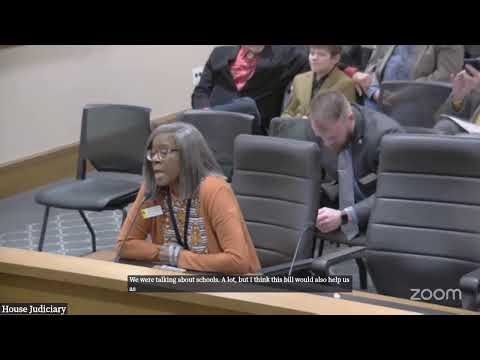
Wyoming Judiciary Committee hears hours of testimony on bill to repeal gun‑free zones; work session set for Monday
Summary
CHEYENNE — The House Judiciary Committee spent its allotted two‑hour hearing Thursday on House Bill 172, the measure introduced by Representative Harrelton that would repeal many existing “gun‑free” restrictions and expand where concealed carry is permitted in state‑owned buildings, K‑12 and public college facilities and some university settings.
CHEYENNE — The House Judiciary Committee spent its allotted two‑hour hearing Thursday on House Bill 172, the measure introduced by Representative Harrelton that would repeal many existing “gun‑free” restrictions and expand where concealed carry is permitted in state‑owned buildings, K‑12 and public college facilities and some university settings.
Representative Harrelton, the bill sponsor, told the committee the text would allow concealed‑carry permit holders to carry in locations currently off‑limits under the cited statutory sections and would remove many state‑level prohibitions on carrying in public buildings. “This opens up state funded facilities, the capital, Herschler, all of those buildings,” Harrelton said while walking committee members through the bill’s sections and the changes they would make.
Supporters urged passage on grounds of self‑defense and deterrence. Mark Jones, national director for Gun Owners of America, said the bill is primarily about constitutional rights and citizens’ ability to protect themselves. “This is a constitutional rights issue. The citizens of Wyoming have a right to defend themselves,” Jones told the committee. Brian Gosch, a lawyer and registered lobbyist for the National Rifle Association, cited data compilations his group uses to argue mass shootings disproportionately occur where guns are prohibited and said other states that have reduced gun‑free zones have not experienced the catastrophic headlines opponents predicted.
Opponents focused on local control, school safety, and operational complications for institutions that host children, vulnerable populations or hazardous materials. Kirk Schmidt, a retired public‑school finance director, and Carrie Murphy, a school board member and parent, said the bill would undercut locally elected school boards and complicate district safety policies. “If guns are allowed in schools, many teachers will leave the profession,” Murphy said, citing input from educators in her district.
Students and school personnel testified against the repeal. Mia Chandler, a junior and student council officer at DuBois High School, said students feel safer with existing gun‑free rules. “Students deserve to feel safe in school,” Chandler said. Several teachers and former school trustees added that carrying in schools would increase the risk of accidental escalation in everyday conflicts and would make law enforcement response more difficult in an active‑shooter situation.
Law‑enforcement and public‑safety officials called for targeted fixes rather than a broad repeal. Alan Thompson, executive director of the Wyoming Association of Sheriffs and Chiefs of Police, asked the committee to clarify penalty language that could accidentally shield people removed for disruptive behavior simply because they also carried legally. Dan Shannon of the Department of Corrections asked the committee to add the department to the bill’s list of covered facilities so parole‑office and corrections locations — where staff regularly interact with formerly incarcerated people — are treated consistently.
State colleges and the University of Wyoming described internal processes and recommended tighter exceptions. Erin Taylor, representing the Wyoming Association of Community College Trustees, said community colleges would want clear rules on dormitories and childcare centers and said institutions may need resources if they are required to account for permit holders on campus. Mike Smith of the University of Wyoming said the university’s board rejected a similar change last year after public outreach and suggested the bill’s language on open carry be broadened so institutions retain authority to prohibit open carry across campus facilities rather than only during governing‑body meetings.
Several witnesses urged the committee to preserve or expand language that allows local governments, school boards or other entities to consult with or seek approval from local law enforcement before authorizing carrying on their premises. Warnings about conflicts with federal law also surfaced: committee members and some witnesses pressed the sponsor on how the measure interacts with the federal Gun‑Free School Zones Act of 1990 and other federal restrictions; the sponsor responded that the bill makes distinctions for state‑issued concealed carry permits and that federal property or federally controlled facilities remain governed by federal law.
The committee did not vote on the bill. Chairman Wauschick closed public comment and scheduled a bill‑work session for the committee’s next meeting day. “Over the weekend, please read the materials that folks have provided,” he said. The chair instructed members to prepare amendment language for Monday, when the committee will begin working the bill as its first order of business.
The hearing included organized testimony on time limits established by the chair: a sponsor presentation, 30 minutes for proponents, 30 minutes for opponents, followed by state‑agency and committee questions. Witnesses on both sides asked the committee to consider narrower amendments: proponents sought clarification of the concealed‑carry carve‑outs and the definition of “volatile or explosive materials,” while opponents and several state agencies urged preservation of local control or clear, limited exceptions for sensitive settings such as childcare centers, residence halls, behavioral‑health facilities and correctional parole offices.
The committee’s next formal work session will determine whether the bill is amended, advanced out of committee, or tabled.