Get Full Government Meeting Transcripts, Videos, & Alerts Forever!
Get email alerts on the Land Use topic
No spam. Unsubscribe anytime.
Wyoming committee rejects statewide cap on development exactions, approves technical amendment
Summary
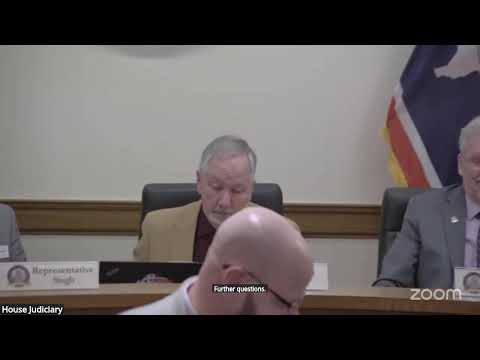
The House Judiciary Committee voted 3‑6 not to advance House Bill 197, a proposal that would have set statewide limits and procedures for exaction and mitigation fees imposed on new development, including a 4% cap and a process for appeals.
The House Judiciary Committee voted 3‑6 on Wednesday to not advance House Bill 197, a measure that would have defined and limited how local governments impose exaction and mitigation fees tied to residential and commercial development.
Representative Richard Davis, sponsor of HB197, said the bill seeks "to define and clarify the process to be used when extraction and mitigation are used in the permitting process." He told the committee the measure would provide a concrete appellate process and a cap so developers could have predictability about costs.
The bill’s key provisions, as presented in committee, would: define exaction/mitigation fees and require a nexus study; create an appeal process for parties contesting a fee; set a square‑footage threshold for applicability (the bill text raised a threshold to 3,000 square feet); and cap mitigation fees at 4% (or the lesser amount determined by the study). Representative Davis described the 4% figure as a policy cap that "gives assurances" to developers while allowing a nexus study to determine proportionate fees.
Committee members raised two consistent concerns. Representative Chesnick and others asked whether fees collected would be required to be spent on infrastructure or housing projects that mitigate the development’s impact. Representative Chesnick: "If the purpose of this bill is to help promote affordable housing, we ought to have some requirement that the expenditure of these funds is limited to things that help make housing affordable." Representative Davis pointed to language in the bill he said directs funds to be used to "provide or offset affordable or workforce housing costs," and said the sponsor could work on an amendment to make expenditure requirements clearer on the floor.
Witnesses presented competing perspectives. Jonathan Downing, appearing for a Wyoming landowner, described exactions as a long‑standing local financing tool but argued fees had grown in some places without direct voter approval: "Exactions are fees. Some people would call them taxes that are collected by governing bodies, not necessarily voted by the people within a community," he said. James Manley of the Pacific Legal Foundation framed the bill as ensuring constitutional compliance following the U.S. Supreme Court’s recent line of cases: "The only way that an exaction can be constitutional is if it's mitigating some impact that the development is having," he told the committee, citing the essential‑nexus and rough‑proportionality tests from the Court’s jurisprudence.
Local officials from Teton County and the town of Jackson described how mitigation fees are currently used in their jurisdictions to finance affordable housing projects. Nick Agopian of the Teton County Board of County Commissioners said the county’s nexus studies target fee revenue to projects and noted the county is "on track for 1,700 units" of affordable housing. Town of Jackson representatives said the fee is one tool among others, including a special‑purpose excise tax, that the community uses to produce housing for its workforce.
Committee action: Members adopted an amendment (moved by Representative Schuster; seconded by Vice Chair Singh) replacing the word "reasonably" with "roughly" in several places in the bill to align statutory language with the rough‑proportionality standard described in Supreme Court decisions. A subsequent amendment to strike the new statewide authorization language failed for lack of a second. The committee then voted on the bill; the tally reported in committee was 3 ayes and 6 noes, and HB197 did not pass out of committee.
Supporters of the bill described it as a compromise intended to provide sideboards that would ensure fees meet constitutional tests and offer predictability to developers. Opponents and some committee members said the proposal would create a new statewide policy that limits local home‑rule authority and that more work was needed on how collected funds must be spent.
The committee record shows lawmakers plan to continue work on the measure’s details if the sponsor pursues it on the floor or in subsequent sessions. For now, HB197 will not move forward from committee.