Get Full Government Meeting Transcripts, Videos, & Alerts Forever!
Get email alerts on the Workforce Housing Development topic
No spam. Unsubscribe anytime.
Council approves nonbinding MOU with White Mountain Advisory Group to study workforce housing project
Summary
Show Low approved a nonbinding memorandum of understanding with White Mountain Advisory Group to begin a 60-day due-diligence period on a proposed modular workforce housing project; the MOU can be terminated by either party with 30 days' notice.
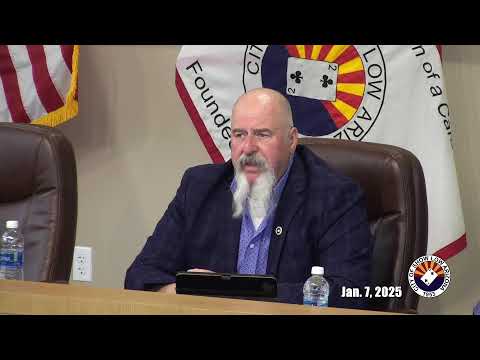
The Show Low City Council unanimously approved a nonbinding memorandum of understanding (MOU) with the White Mountain Advisory Group to begin due diligence on a proposed workforce housing development.
Jim Hammett of the White Mountain Advisory Group told the council the proposal is a modular rental housing project intended to serve educators, first responders, health-care workers and hospitality and service employees. Hammett said the project would be built on land at East Wolford and Eighth Street that is currently zoned as a planned unit development and is zoned for 50 units; he also outlined a presentation that described a larger, 150-unit rental project and noted the final unit count would be determined through feasibility work.
Hammett described a $35 million development of one-, two- and three-bedroom units using modular construction to speed timelines and reduce costs. He said the team is working with Zenni Homes (a modular manufacturer) and Ironside Engineering, and that the modular factory being used was opening in Taylor (not on-site in Show Low), which reduces transportation costs compared with a more distant manufacturer. Hammett said the development team projects an estimated $70 million of secondary economic impact, approximately 320 direct and indirect jobs related to the project, and about $1.6 million in project-related sales tax revenue; he attributed those figures to the project team’s market and economic analysis.
City staff explained the MOU is nonbinding, would provide a 60-day window for due diligence (feasibility study, market study, preliminary design and financial underwriting), and that either party may terminate the MOU with 30 days’ notice. Staff and Hammett described potential risk-mitigation approaches, including a build-to-suit leaseback model and employer commitments to reduce the city’s financial exposure.
Councilman Joe moved to approve the MOU with White Mountain Advisory Group; Councilman Hatch seconded. The motion passed unanimously. Councilmembers emphasized that the MOU begins feasibility work and does not commit city funds or finalize development approvals; subsequent planning approvals and financing commitments would be required before the project could proceed.
Hammett said the MOU would start the 60-day study period and that the advisory group would return with findings and any recommended agreements for council consideration at the conclusion of that period.