Get Full Government Meeting Transcripts, Videos, & Alerts Forever!
Get email alerts on the Budget topic
No spam. Unsubscribe anytime.
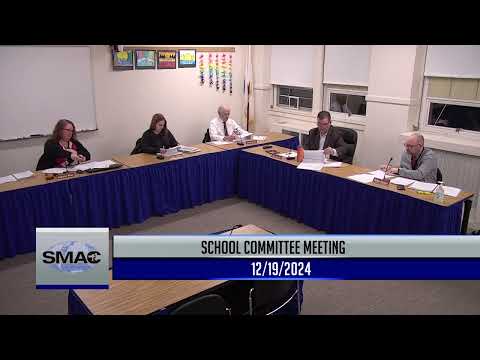
Stoughton committee recommends 3.8% FY2026 school budget increase; approves three warrant articles as gap remains
Summary
The Stoughton School Committee on Dec. 19 recommended a FY2026 budget with a 3.8% increase, approved three warrant articles totaling $719,726, and was warned a remaining $1,060,000 gap could require cuts equivalent to roughly 14–30 full-time positions if additional state or local offsets do not materialize.
Dr. Baiada, superintendent of Stoughton Public Schools, presented a school-based FY2026 budget recommendation on Dec. 19 that he said would go forward to town officials as a 3.8% increase and outlined a new school-level budget format the district will use to show expenditures by building.
The recommendation sets the district’s preliminary FY2026 budget at $65,257,429 and reduces a previously presented increase down from figures the superintendent said began near 7.4% and then 5.5% to the 3.8% figure the town manager and select board are asking the schools to send forward. "We have put together a school committee budget that will go forward as a recommendation of a 3.8% increase," Dr. Baiada said.
The superintendent told the committee the recommendation leaves a remaining gap of approximately $1,060,000 between the district’s preferred increase and the number the town is likely to forward; he said that gap is “predominantly gonna be in personnel” and estimated the million‑dollar-plus reduction could equate to roughly 15 full‑time equivalents (FTEs) for each $1,060,000 depending on average salary assumptions. "If you take a million 60,000 and you say on average ... the average is 65,000, you can calculate that to about 15 FTEs," he said.
Why it matters: the committee repeatedly noted that staffing is the single largest portion of the budget and that reductions to positions or programs carry direct risks to classroom supports and services. Committee members pressed for clarity about where cuts would fall and for continued work to identify offsets and state funding that could restore positions.
What’s in the budget and how it’s presented
Dr. Baiada described a transition to a school‑based budget template that breaks expenditures down by school (he used the Jones Early Childhood Center as an example) and by account numbers. He said the format is intended to improve transparency, allow per‑school comparisons, assist short‑ and long‑term planning, and show full‑time equivalent (FTE) staffing counts by school and district office. The presentation lists offsets such as circuit breaker funding, shelter aid, the IDEA grant, preschool revolving accounts and other anticipated savings; the superintendent said offsets should be shown explicitly so the public knows which staff or functions are funded by grants rather than local levy.
Transportation fees and offsets
The superintendent and committee discussed the possibility of fees (for transportation, athletics or activities) as one way to offset costs. Dr. Baiada cautioned that fees must be placed into restricted revolving accounts for their stated purpose, and that students eligible for free and reduced‑price lunch cannot be charged for transportation. He also noted the committee would need to consider waiver or family‑plan policies to avoid disproportionate impacts on low‑income families.
Enrollment, specialized needs and state aid timing
District staff cited enrollment growth projections from NESDAC and said Stoughton’s enrollment is expected to rise in coming years (the superintendent referenced a potential long‑term increase toward about 4,200 students from current levels near 3,800). Committee members and staff said that rising enrollment, growing ELL and special‑education needs, and state labor market pressures for educators make staffing decisions especially consequential. The superintendent and other staff emphasized that the district cannot know final state Chapter 70 / Student Opportunity Act (SOA) allocations until the House budget (House 1) is released in January; they said the committee could adopt the Dec. 31 charter deadline budget now and adjust if additional state funding arrives.
Committee concern and next steps
Several school committee members urged caution about cuts that could affect K–3 class sizes and core services. Armando, a committee member, asked whether proposed cuts could reduce academic achievement; Dr. Baiada and other members stressed K–3 staffing as a high priority to protect. Committee member Lindsay summed up the tension: the line items in the detailed template reflect a 5.5% increase in needs, but the committee was being asked to forward a 3.8% number to town officials and to identify where reductions should occur.
The committee set a special meeting for Dec. 30 to dig further into line items and asked staff to provide additional detail in advance. The superintendent said the administration will continue to seek state and other offsets and that the committee and the public will have opportunities to respond and advocate at town meeting and through finance channels.
Votes at a glance
- Firewall for district technology: $168,338 — Motion by Lindsay (school committee member); second by Armando (school committee member). Roll call vote 5–0; outcome: approved to go to town meeting.
- Wireless access points (districtwide): $461,388 — Motion by Lindsay; seconded by Scott. Roll call vote 5–0; outcome: approved to go to town meeting.
- Redistricting consultant: $90,000 — Motion by Lindsay; seconded (recorded by Scott). Roll call: three recorded as “aye,” two as “I”/aye in roll call; committee announced final tally 5–0; outcome: approved to go to town meeting.
What the committee approved tonight are warrant articles to appear at upcoming town meeting; the committee did not finalize programmatic cuts or permanent staffing reductions. Dr. Baiada and committee members said they would present more granular information and options at the Dec. 30 special meeting and will update the committee after the state’s House 1 allocation is public in January.
Ending
The committee adjourned with plans for another public hybrid meeting on Dec. 30 to continue line‑by‑line review and to allow public comment before final votes and warrant placement for town meeting. "We are meeting our local statutory requirements ... and would continue to evaluate those sources of funds as we get more information," a committee member said.