Get Full Government Meeting Transcripts, Videos, & Alerts Forever!
Get email alerts on the Traffic Safety Criminal Justice topic
No spam. Unsubscribe anytime.
Committee advances bill to allow limited ignition-interlock licenses for some aggravated-homicide-by-vehicle convictions
Summary
The Labor, Health & Social Services Committee on Jan. 24 advanced Senate File 71, a bill that would allow some people convicted of aggravated homicide by vehicle to obtain an ignition-interlock restricted driver’s license after completing the statutory revocation period.
The Labor, Health & Social Services Committee on Jan. 24 advanced Senate File 71, a measure that would permit people convicted of aggravated homicide by vehicle to obtain an ignition-interlock restricted license after completing the statutory period of revocation.
Sponsor Senator Brennan said the bill is “really a criminal justice reform bill,” and summarized the proposed change as authorizing “persons convicted of aggravated homicide by vehicle to be issued an ignition interlock restricted license” after the revocation period ends. She told the committee the bill corrects a 2019 drafting change that, in practice, prevented some people who blew 0.15 blood-alcohol concentration (BAC) or greater from ever obtaining a restricted interlock license.
Misty Zimmerman, identified to the committee as a manager with Whitehat Driver Services, described how Wyoming’s ignition-interlock program operates. She said a conviction and the arrest BAC determine whether the interlock requirement applies and explained the practical steps after conviction: the device must be installed in the vehicle before the state issues the restricted license, the driver must blow into the device to start the car and comply with rolling retests, and the restriction attaches to the driver’s license (so driving a rental vehicle would require compliance unless the trip is for approved work-related duties).
Supporters framed the bill as restoring a path back into lawful driving and employment for people who have completed their revocation term. Former state representative Mr. Lindholm, speaking on behalf of Americans for Prosperity, said the policy “underscores the seriousness of causing a loss of life” while allowing for restoration, and described the change as consistent with restorative-justice goals.
Committee members asked operational questions the Department of Motor Vehicles and driver-service providers answered, including whether the program has technological safeguards to detect third-party breath samples (staff said state statute currently lacks a mechanism to detect a person providing another’s sample) and that the department’s practice is to notify people they must install the device after conviction. Committee members also sought clarification that the change applies specifically to aggravated homicide by vehicle and not broadly to all DUI offenses; staff confirmed the bill is limited to that offense as drafted.
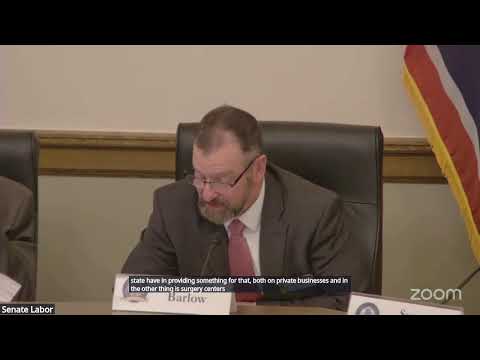
After public comment closed, Senator Scott moved the bill. The committee conducted a roll-call vote and Chair Barlow reported five ayes; the measure was advanced for further consideration. Senator Steinmetz provided a proxy aye.
The bill text as presented includes an effective date of July 1, 2025, and refers to existing Wyoming statutory provisions governing revocation periods and ignition-interlock licenses.
Votes at-a-glance: Senate File 71 — Moved by Senator Scott; committee roll-call reported 5 ayes; outcome: advanced (reported out of committee).
The sponsor indicated she will introduce the bill on the floor when it reaches Committee of the Whole.