Get Full Government Meeting Transcripts, Videos, & Alerts Forever!
Get email alerts on the Gaza Humanitarian Access topic
No spam. Unsubscribe anytime.
U.N. says most planned aid movements in Gaza were blocked or impeded; civilians face critical shortages
Summary
OCHA reported that Israeli authorities facilitated only 7 of 22 planned UN humanitarian movements in Gaza yesterday; U.N. agencies warn of critical shortages of food, water and sanitation and continuing displacement.
The United Nations said Monday that humanitarian access in Gaza remained severely constrained, with the U.N. Office for the Coordination of Humanitarian Affairs (OCHA) reporting Israeli authorities facilitated only 7 of 22 planned U.N. humanitarian movements on a recent day.
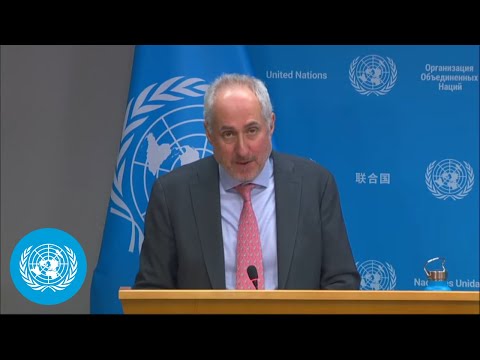
"Only 7 of the 22 UN planned humanitarian movements were facilitated by Israeli authorities. 6 were denied outright, 5 were impeded, and 4 were canceled due to security and logistical challenges," U.N. Spokesperson Stéphane Dujarric said during a briefing. He cited OCHA figures and said U.N. agencies continue to press for safe, swift and scaled delivery of life-saving assistance across the Gaza Strip.
The U.N. warned that ongoing hostilities and evacuation orders are displacing civilians. Dujarric said an Israeli military evacuation order in central Gaza included the An Nusrat area in the Al Mufti neighborhood and affected an estimated 4,100 people. The area under evacuation, according to U.N. partners cited at the briefing, included residents living in and around two displacement sites managed by local partners and several service points: three medical points, two water delivery points and two temporary learning spaces.
A U.N.-run survey of nearly 2,500 households found that two-thirds of households reported having been displaced at least once in the previous 60 days, and humanitarian partners report critical shortages of food, water and sanitation across the strip. Dujarric said that after 15 months of war, "less than a fifth of school-aged children in Gaza have access to some form of learning." He urged that "civilians must be protected whether they leave or stay" and said those fleeing fighting must be allowed to do so safely and be able to return voluntarily when conditions permit.
The U.N. humanitarian coordinator for the occupied Palestinian territory was cited as visiting Gaza City and southern Gaza, including a factory producing furniture for temporary learning spaces. Dujarric repeated the U.N. call for parties to enable unhindered delivery of humanitarian assistance and for protection of civilians and civilian infrastructure.
No new commitments by member states to increase deliveries were announced at the briefing.