Get Full Government Meeting Transcripts, Videos, & Alerts Forever!
Get email alerts on the Regional Economy topic
No spam. Unsubscribe anytime.
Central Ohio forecast: weak job growth, experts say racial inclusion is major economic drag
Summary
Regenomics founder Bill Lafayette told the Columbus Metropolitan Club that Central Ohio is likely to add about 4,500 jobs in 2025 (0.4%) and ranks last among large U.S. metros on racial and ethnic inclusion; he urged a task force and targeted workforce policies.
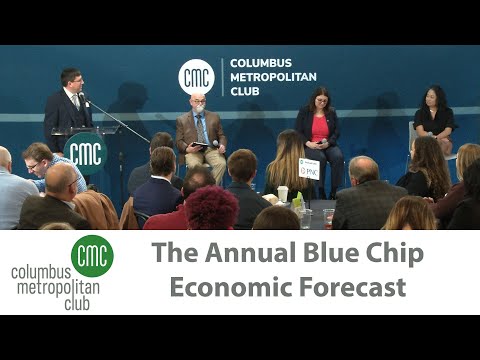
Bill Lafayette, owner of Regenomics, told a Columbus Metropolitan Club forum that his 2025 Regionomics Columbus Economic Forecast projects a gain of about 4,500 jobs — roughly 0.4% growth — for Central Ohio's roughly 1.1 million–job economy.
"This year's forecast is for a gain of a measly 4,500 jobs in our 1,100,000 plus economy, 0.4%." Lafayette said, adding that recent years have shown growth well below national averages and that the region's labor force problems increasingly reflect a mismatch between employer needs and applicants' skills.
Lafayette said local employment growth has lagged national trends, and he flagged a separate long‑term measurement: when comparing Central Ohio to 53 other very large U.S. metropolitan areas, the region ranked last — 54th — on measures of inclusion for people of color. "The problem lies in the availability of our region's economic benefits to people of color," he said.
Why it matters: slower job growth and poor distribution of economic gains reduce household incomes and limit the region's ability to fill openings created by retirements and expansion. Lafayette said improving inclusion could materially raise employment and reduce poverty over a decade, although he cautioned his numeric experiment "relies on a barrel full of assumptions." He recommended a community task force focused on improving economic inclusion as a step toward higher employment and broader prosperity.
Details from the forecast and panel: Lafayette said the unemployment rate through last November averaged about 4%, up from roughly 3.1% the prior year, and that online job postings in late October and early November were about 21% higher than the same period in 2023. He also pointed to a notable sector decline: Central Ohio has lost more than 10,000 insurance jobs since 2018 — about a 25% drop over six years — a trend Lafayette said he could not fully explain from public data.
Panelists echoed concerns about workforce quality and access. Dr. Joyce Chen, professor at The Ohio State University, and Kathy Basjancic, senior vice president and chief economist for Nationwide Mutual, both called for stronger ties between education and employers and for addressing barriers such as childcare and transportation that keep people from taking jobs.
Lafayette said practical steps include ensuring low‑income households claim available federal and state benefits and expanding targeted occupational analyses and short‑term training for jobs that require a high school diploma plus certification.
The forum did not include formal votes or policy commitments. Panelists and the forum host said they expect continued debate among local employers, educators and civic leaders about how to coordinate training, benefits outreach and business‑education partnerships.
Ending: Lafayette urged local leaders to "get together and develop a bold goal for improvement" on inclusion; he said the region has time to act but should "forecast early and often" as economic and national policy changes unfold.