Get Full Government Meeting Transcripts, Videos, & Alerts Forever!
Get email alerts on the Long Term Care Nutrition topic
No spam. Unsubscribe anytime.
Committee holds hearing on bill to require dietitians and recognize clinical dietary managers in long-term care
Summary
Representative Schofield introduced House Bill 11 as a hearing before the Human Relations & Aging Committee, saying the measure aims to improve nutrition and meal oversight in long-term care facilities by requiring licensed dietitians and qualified directors of food and nutrition services.
Representative Schofield introduced House Bill 11 as a hearing before the Human Relations & Aging Committee, saying the measure aims to improve nutrition and meal oversight in the state's long-term care facilities by requiring each facility to employ a licensed dietitian and appoint a qualified director of food and nutrition services.
"Recognizing that proper nutrition is critical," Representative Schofield said in opening remarks, and described the bill as intended to raise standards of care and to address what she called a growing need for nutritional oversight across long-term care settings. She said the state has approximately 357 long-term care facilities serving more than 44,000 residents, and that roughly 2,500 licensed dietitians are currently registered in Georgia.
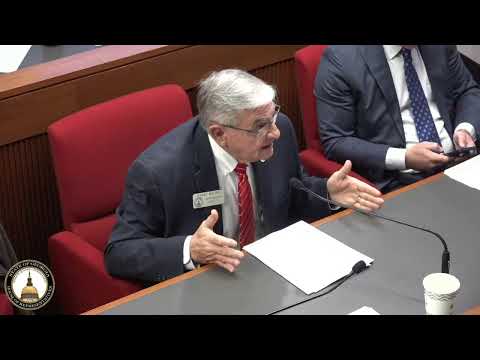
Regina St. Clair, introduced to the committee as representing the Georgia Association of Nutritional Food Service Professionals and speaking as a certified dietary manager (CDM), told the committee that CDMs combine clinical and operations responsibilities and that adequate training matters. "Nutrition is healing," St. Clair said, describing the CDM role in menu planning, sanitation and resident assessments. She said CDM credentialing typically requires about 120 training hours plus a proctoring requirement.
Members raised questions about which facilities the bill would cover and whether existing rules already require nutritional standards. Representative LaHood cited assisted-living rules (referencing existing state regulations for assisted living) that already require three meals daily, menu planning and emergency food supplies, and suggested enforcement of current rules might address some problems the bill seeks to fix.
Representative Donahue and other members recounted problems observed during the COVID-19 pandemic, including reports that some residents did not receive meals when facilities were understaffed or when visitors could not enter. Witnesses and members said staffing shortages, vendor delivery practices and enforcement lapses all contribute to inconsistent nutrition outcomes.
Schofield and proponents emphasized the bill is not intended to impose a single approach for every site but to raise clinical nutritional oversight and to recognize CDMs and qualified directors alongside dietitians. Members asked the Department of Community Health (DCH) to provide rule citations and enforcement data and requested fiscal-impact analyses showing both the immediate cost to facilities and potential downstream savings from improved patient outcomes.
No committee vote was recorded at the hearing. Chairman Petrie and other members asked for further information from DCH on current regulatory requirements and for additional data on staffing impacts and cost and outcome tradeoffs before the committee proceeds.