Get Full Government Meeting Transcripts, Videos, & Alerts Forever!
Get email alerts on the Public Safety Missing Persons topic
No spam. Unsubscribe anytime.
Committee hears bill to create autism-specific missing-persons alert
Summary
Representatives and state law-enforcement officials discussed House Bill 465, which would create an autism-specific missing-persons alert tied to the Georgia Bureau of Investigation and existing alert networks; the committee asked staff to work with the GBI to refine language and meet early next week for a vote.
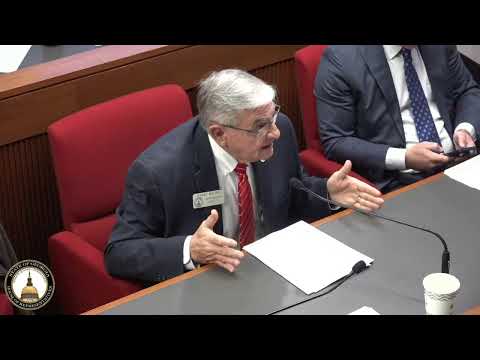
Representative Gilliard presented House Bill 465 to the Human Relations & Aging Committee as a hearing, saying the proposal is aimed at improving searches for missing people who have autism and related conditions.
“This bill is very personal to me,” Representative Gilliard said, describing family experience and citing recent deaths of missing people with autism that he said illustrated the difficulties searches face. He told the committee the bill would create an autism alert system patterned on existing missing-persons alerts and use established networks to disseminate information quickly.
The bill would give the Georgia Bureau of Investigation (GBI) authority to activate an autism-specific alert and would use private-sector networks — including the Georgia Lottery Corporationwhich the bill referencesto push alerts to convenience stores and other high-visibility points, Representative Gilliard said. He described cases including a church-camp disappearance and local drownings that he said highlighted the urgency of faster, more tailored responses.
Robbie Bigham, special agent in charge with the GBI, told the committee the state already uses an alert system for missing endangered persons and that the existing program has been used frequently. “For fiscal year 2025 so far since July 1, wehave done over 75 alerts,” Bigham said, and he described how the current system categorizes activations (for example, missing disabled adults or juveniles) but does not retain diagnostic classifications in a searchable database for privacy reasons.
Committee members asked about training for local law enforcement and whether a separate autism-specific program would add value over expanding public awareness of current alert categories. Bigham said much of the benefit depends on outreach and marketing: agencies and the public must know the alert capability already exists under the missing/endangered-persons category and what situations qualify.
Senator James and other legislators recounted personal and constituent experiences with autism and law-enforcement encounters, including several speakers who urged provisions for training and public education. Several members also noted the vulnerability of people with autism to water-related risks and to exploitation.
Chairman Petrie closed the hearing by asking staff and GBI to work on language clarifications raised during questions (for example, references to "the bureau" and the director) and said the committee would meet early next week to consider a vote after those edits. The hearing record does not show a committee vote at this session.
The committee did not take a final vote; the bill remains in committee pending technical edits and a follow-up meeting with GBI.