Get Full Government Meeting Transcripts, Videos, & Alerts Forever!
Get email alerts on the Immigration And School Safety topic
No spam. Unsubscribe anytime.
Grand Rapids public commenters, students press board to declare district a 'sanctuary'; superintendent outlines school protocols
Summary
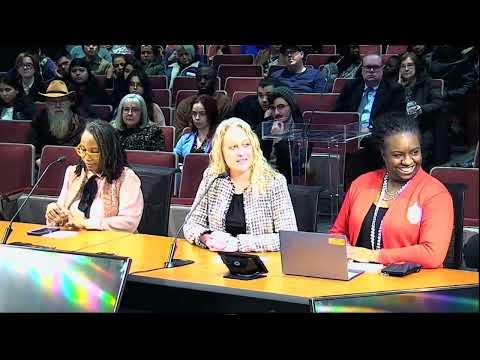
At its Jan. 2 meeting, the Grand Rapids Public Schools (GRPS) Board of Education heard a string of public comments urging the board to declare the district a sanctuary for immigrant families and to strengthen school safety and communications.
At its Jan. 2 meeting, the Grand Rapids Public Schools (GRPS) Board of Education heard a string of public comments urging the board to declare the district a sanctuary for immigrant families and to strengthen school safety and communications.
Students, parents, teachers and community advocates called on the board to adopt policies that would limit the district’s cooperation with federal immigration enforcement and to ensure that families and staff receive clearer guidance and more consistent communication. Student speakers from several GRPS schools asked the board to “create a safe place” for families regardless of immigration status and said fear of deportation has harmed student attendance and well-being.
The board did not vote on a formal sanctuary resolution during the meeting. Instead, Superintendent Dr. Lillian Robbie gave a detailed overview of current district protocols for handling encounters with federal agents and described steps the district has taken to communicate with families and staff.
Robbie, identified in meeting materials as the superintendent of Grand Rapids Public Schools, said the district has distributed a letter to families and a guidance document to staff describing what to expect if someone comes to a school building. She said school staff are instructed to verify identification, keep visitors in school lobbies while staff follow established protocols, and not to release student or staff information except to a parent or legal guardian. Robbie said the district is seeking additional legal guidance and coordinating with local and state elected officials and law enforcement to clarify procedures.
Several speakers referenced a 2021 memorandum that the superintendent said describes “areas of protection” for schools and similar facilities; speakers asked the board to consider a broader public discussion and to draft board-level policy clarifying how the district will respond in various scenarios, including whether district property adjacent to school buildings (for example, nearby parks) would be covered.
Board President Kim Davis thanked speakers and said the board will continue the conversation at an upcoming working session later in the month. Several board members said they intend to schedule a longer, public work session to map out scenarios, identify gaps in communication and determine next steps.
Public comment also included a cluster of related concerns: requests for clearer emergency-communication protocols (including how “code” drills and real incidents are communicated to families), repeated calls to address chronic teacher turnover and pay, and appeals for more support for students with disabilities and for improved attendance enforcement.
Speakers who identified themselves as teachers or school staff described heavy workloads related to IEPs and other paperwork and urged the district to streamline processes so staff can focus on instruction. Parents described instances where they learned about incidents from their children rather than from school officials and urged better notification practices.
The board did not take formal action on any new sanctuary policy at the meeting. Members directed staff to continue coordinating legal review and communications and to place a more detailed discussion on the agenda for a future work session, according to remarks from the superintendent and board leadership.
The public-comment period and the superintendent’s remarks framed the issue as an immediate operational priority for the district as families prepare for potential federal policy changes. Board members said they view clearer protocols and active communication with families as the next steps before any formal board policy would be drafted or adopted.