Get Full Government Meeting Transcripts, Videos, & Alerts Forever!
Get email alerts on the Vision 2030 Planning topic
No spam. Unsubscribe anytime.
Council plans next steps for Vision 2030: bonding, sewer rates and priority for police and fire projects
Summary
Indianola council members discussed Vision 2030 implementation, requested a bonding-capacity briefing from financial advisor Michael Maloney on Jan. 21, and asked staff to prepare sewer-rate shortfall figures and property inventories; members emphasized keeping police and fire station projects prioritized.
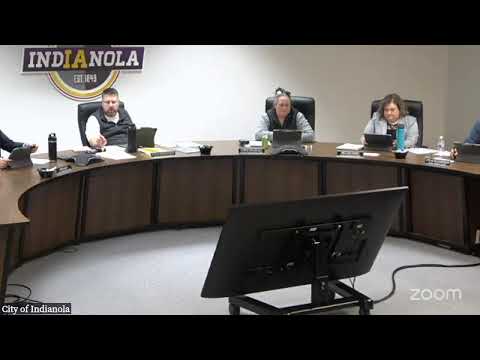
The Indianola City Council discussed Vision 2030 priorities on Jan. 6 and asked staff to arrange a briefing with financial advisor Michael Maloney for the council’s Jan. 21 meeting to clarify bonding capacity and revenue options.
Council members identified sewer-rate shortfalls, outstanding development agreements, and capital needs for public safety as central issues for the Vision 2030 plan. Interim City Manager Wade said staff will assemble debt-levy information and the city’s outstanding development-agreement obligations for the briefing. Several council members said they want a public-facing process — either a study session or open meetings — so residents can review options and ask questions before the council advances projects.
Public-safety priority and funding options Council member Christina emphasized that the original impetus for Vision 2030 was replacing the fire and police stations and urged keeping those projects at the front of the plan. She asked that staff present a full range of financing options — bonds, grants, TIF, and other sources — and asked Michael Maloney to show what could be afforded under current debt capacity.
Environmental due diligence and property inventory Council members also raised site-specific issues. Staff and council recalled that a Phase I environmental assessment previously done for the county yard/property is valid for 180 days and that a Phase II would dig deeper if contamination is suspected. Council members requested an updated list of city-owned parcels so the Vision 2030 discussion can consider all available locations and options.
Next steps Council members asked staff to compile updated debt and development-agreement schedules, prepare sewer-rate shortfall calculations and present bonding-capacity scenarios at the Jan. 21 meeting. Several members recommended holding a study session or public meetings so residents can review project trade-offs before the council finalizes decisions on bonds or other funding mechanisms.