Get Full Government Meeting Transcripts, Videos, & Alerts Forever!
Get email alerts on the Magnet Schools topic
No spam. Unsubscribe anytime.
Wake County presentation emphasizes magnet schools as a tool for socioeconomic integration and opportunity
Summary
Wake County Schools staff reviewed research on the academic and civic benefits of magnet programs, highlighted local examples (Dillard Drive and Wake Forest magnet schools), and discussed federal Magnet Schools Assistance Program funding, rising free-and-reduced-lunch rates, transportation challenges and program evaluation.
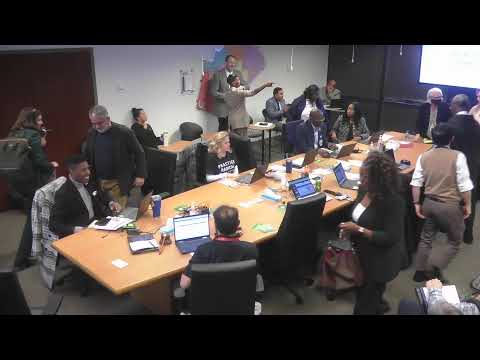
Wake County Public School System staff told the Student Achievement Committee on Jan. 22 that magnet schools remain a district tool to reduce high concentrations of poverty and promote socioeconomic integration, while also offering specialized academic programs that attract families and boost student opportunity.
In a presentation to the committee, Dr. Lang, a Wake County Schools staff member, said the district’s magnet objectives (approved by the board in 2013) are intended to balance schools by income and expand access to experienced teachers, low student‑teacher ratios, advanced coursework and extracurriculars. "Magnet programs are part of that. They're not the answer. They're not the problem. They're a tool," Dr. Lang said.
The presentation combined national research with local data and voices from district schools. Adeline, a fifth‑grade student at Dillard Drive Magnet Elementary School, described student activities tied to the school’s global studies program and said the magnet experience had broadened her perspective. "We also have GLOW. GLOW stands for global awareness, observe the wonder, and GLOW is going to advocate for ourselves and others," she told the committee. Principal Shell Smith of Wake Forest Magnet Elementary School described an enrollment increase after turning the school into a magnet and said the program has changed classroom practice: "It's the kind of environment where students are empowered to think critically," Smith said.
Why it matters: Wake County staff framed magnet programs as a voluntary way to bring families to schools with specialized curricula, which can shift school demographics and add resources to high‑poverty campuses. Staff cited district free‑and‑reduced‑lunch figures to show rising economic need across the system: Dillard Drive was reported as 43% free‑and‑reduced lunch in 2021–22 and 54% in 2024–25; Wake County’s district average was reported as about 24.6% in 2021–22 and 34.8% in 2024–25. The presenter said the number of schools above the district average rose from 85 in 2021–22 to 102 in 2024–25.
Presentation highlights and local examples - Dillard Drive Magnet Elementary: staff brought a fifth‑grade student to speak about global studies and the school’s focus areas; presenter noted the school entered a nexus grant and became a magnet in 2021–22. - Wake Forest Magnet Elementary (principal Shell Smith): principal Smith said the school exceeded a five‑year enrollment goal within two years of becoming a magnet, adding more than 100 students and returning some students who had left for charter schools. - Awards and recognition: staff listed a number of national magnet awards in the district’s portfolio, including schools designated as "schools of excellence" and "demonstration" sites that host outside visits.
Funding and federal grant context Staff reminded the committee that magnet programs in Wake County have been supported sometimes by the federal Magnet Schools Assistance Program (MSAP) grants, but said there is no MSAP competition scheduled for 2025 and funding cycles vary. Dr. Lang said MSAP grants are intended to seed new magnet programs, not to be their sole long‑term funding source, and noted local district and community contributions are part of program sustainability.
Operational constraints and challenges Staff discussed operational issues that affect magnet program design and access: district growth, traffic and transportation. Dr. Lang noted a long‑standing bus‑route decline and said, "We have kids riding buses for an hour and a half each way, and that's that's not okay," and urged the committee to consider what large districts with similar growth are doing about routing and capacity. The presentation also cited a decline in the number of bus routes (from about 1,100 at one point to roughly 600), which staff said affects travel time even when drivers are available.
Evaluation and program fidelity Committee members asked how the district evaluates whether a magnet theme is implemented across a school. Principal Smith described a five‑year implementation plan, use of specialists (world language, STEM coaches who split time between students and teachers), internal surveys, outside review visits and application cycles tied to national merit awards. Metrics used, she said, include time and theme (how fully the magnet theme is integrated into core subjects) and access (whether students receive the program throughout the day or year).
Legal and historical context Staff briefly placed the magnet work in the history of school desegregation, noting that the district moved away from race‑based assignment toward socioeconomic status as a means to promote integration. Dr. Lang referenced national research showing links between socioeconomic integration and improved academic and civic outcomes.
Committee response and next steps Board members asked for additional detail on program mechanics, student assignment links, voluntary busing versus assigned diversity busing, and how the district decides when to refresh a magnet curriculum. Staff said this discussion should continue in future committee meetings and offered to provide follow‑up materials and data.
The committee did not take votes on policy changes or program approvals during the presentation; the session concluded with the committee chair thanking presenters and attendees.