Lifetime Citizen Portal Access — AI Briefings, Alerts & Unlimited Follows
Puerto Rico committee debates bill to set mandatory bail minimums for violent crimes
Loading...
Summary
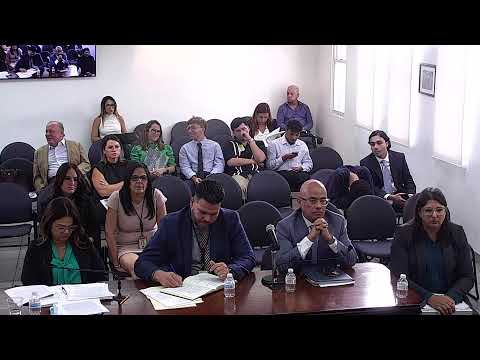
The House of Representatives' Judiciary Committee held a hearing June 3 on Project P. de la C. 5-19, a bill titled the "Ley de Fianza Segura" that would establish mandatory minimum bail amounts for certain violent crimes and require the Office of Court Administration (Oficina de Administración de los Tribunales, OAT) to publish judicial reference guides within 90 days of enactment.
The House of Representatives' Judiciary Committee held a hearing June 3 on Project P. de la C. 5-19, a bill titled the "Ley de Fianza Segura" that would establish mandatory minimum bail amounts for certain violent crimes and require the Office of Court Administration (Oficina de Administración de los Tribunales, OAT) to publish judicial reference guides within 90 days of enactment.
OAT Director Sigfrido Figueroa read portions of the bill and highlighted an exception included in the draft: "En circunstancias excepcionales, el tribunal podrá imponer una fianza inferior a las establecidas en esta ley, siempre que se le demuestre mediante evidencia clara, robusta y convincente, que el imputado no representa riesgo de fuga ni peligro para la comunidad, para las víctimas o para los testigos." He and OAT staff warned the provision, as drafted, could effectively shift the burden of proving exceptional circumstances onto defendants.
That inversion of burden was a central concern among witnesses. OAT noted in its written and oral testimony that "La norma propuesta invertiría el deber de cumplir con el peso de la prueba en un procedimiento criminal, responsabilidad que bajo la doctrina constitucional de presunción de inocencia le corresponde al Ministerio Público." The office urged the committee to clarify the language so that the constitutional presumption of innocence and existing procedural safeguards are preserved.
Officials from the Department of Correction and Rehabilitation and the Department of Justice generally acknowledged the bill's public-safety goals but urged technical and procedural changes. Pedro Vargas Echeverría of the Department of Correction told the committee that the agency supports a uniform approach to bail but asked for clearer guidance on what counts as the "circunstancias excepcionales" that would allow a judge to set a lower amount. He also provided current program data: "tenemos un total de 1252 personas bajo la supervisión de PSAJ de los cuales solamente tenemos 10 prófugos," a figure the department said it could update with further breakouts if the committee requested them.
Witnesses raised several concrete consequences and implementation issues the committee should weigh: the bill's article 4 lists the felonies that would trigger fixed amounts (including first‑ and second‑degree murder, aggravated assault, specified sexual offenses against minors, kidnapping, aggravated robbery and certain major drug and weapons violations); article 10 would bar the program that posts or defers bond from covering those fixed bails or accepting the current 10% partial payment except as a special law provides; and article 9 tasks OAT with publishing a mandatory reference compendium within 90 days and an educational instrument within 30 days.
Multiple presenters stressed operational gaps and asked for data before a final vote. OAT and the Department of Correction said there is no single, definitive dataset proving that existing bail practice systematically fails to secure appearance; OAT recommended that the Legislature request or review empirical evidence showing a demonstrated problem before altering the framework of judicial discretion. Committee members pressed agencies for statistics on failures to appear and alleged crimes committed while on release; department officials said they could provide more detailed figures within 7–10 days.
Speakers also raised process and separation‑of‑powers questions. OAT explained it regularly distributes training and educational material to judges but does not impose binding monetary schedules, and cautioned that requiring the OAT administratively to issue mandatory, binding monetary guides could raise constitutional and institutional questions about who sets substantive procedural rules for the courts.
Committee members asked whether the bill would produce a measurable deterrent effect. Justice Department witnesses and correction officials said that sentencing and enforcement policies drive deterrence more than pretrial bail levels, although they acknowledged that highly publicized mandatory bails could have some general deterrent effect.
No formal vote was recorded during the hearing; legislators directed agencies to submit follow‑up documents and data and signaled an interest in clarifying article 5 (the exception clause), the list of offenses in article 4, and the treatment of deferrals and the 10% option in article 10. The committee recessed after the late‑morning session and scheduled a second panel for the afternoon to continue gathering testimony.
The hearing record shows active engagement from multiple branches' representatives, who recommended technical redrafting, further data, and defined examples of the exceptional circumstances that would justify a court departing from any statutory minimums. The committee said it will accept supplemental written recommendations from agencies and staff as part of the bill's continued consideration.