Get Full Government Meeting Transcripts, Videos, & Alerts Forever!
Get email alerts on the Streets Pavement topic
No spam. Unsubscribe anytime.
Brawley council reviews street assessment, outlines multi‑year maintenance approach
Summary
City officials heard a consultant'led pavement assessment for roughly 21 miles of streets and discussed phasing, estimated costs and funding sources; staff will return with a detailed funding plan in about 30 days.
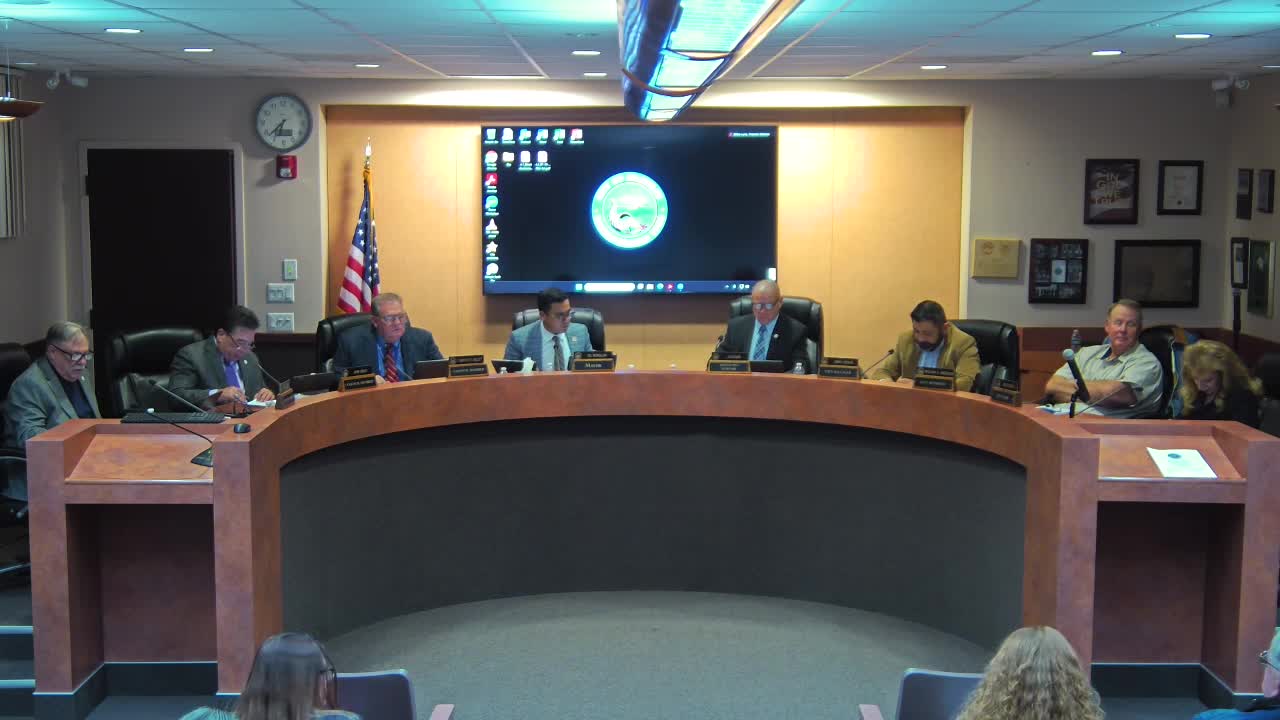
The Brawley City Council on Jan. 21 received a citywide pavement assessment and preliminary multi‑year plan that identifies maintenance and rehabilitation needs across roughly 21 miles of streets and outlines funding and phasing options.
Consultant Jack Holt, who led the assessment presented at the council's meeting, said the review divided street sections into routine maintenance and progressively worse rehabilitation categories and attached unit costs for each treatment. "In any street system you want to stress your maintenance sections and keep those maintenance sections because it's about 10 to 1 cost between a maintenance section and a rehabilitation section," Holt told the council, explaining why earlier and regular upkeep is less expensive than delaying work until pavements fail.
The report covered about 21 miles in the east side study area. It estimated approximately 3.65 miles in "best" condition (work: SS‑1h oil coat and limited crack sealing), about 11.2 miles in moderate condition that would need crack sealing plus a slurry seal, roughly 3.5 miles approaching rehabilitation that require localized cut‑out and repaving, and about 3 miles in severe condition likely requiring full reconstruction. Holt gave approximate cost ranges discussed by staff: roughly $200,000 for the best sections, about $745,000 for the moderate group, about $980,000 for the sections approaching rehabilitation, and multi‑million dollars (on the order of $7.5 million) for the worst segments. He stressed these are program planning estimates and that specific designs would refine costs.
City Manager Ram Duran and Public Works Director Ron Medina said the report identifies which streets can be preserved with maintenance treatments (seal coat, crack seal, slurry) and which require more extensive work (grind/overlay or full removal and rebuild). Duran said the city intends to phase work over multiple years and noted the council previously programmed funding to begin this effort. "We are programming for the next phase for next year, another ... $1,500,000," Duran said in the meeting when reviewing options to fund phased maintenance.
Finance Director Silvana Biesung also briefed the council on funding sources. She told the council the city can use a mix of Measure D (local) funds, SB 1 funds, STBG (Surface Transportation Block Grant) allocations and other grants; she noted the city currently has about $9 million in Measure D funds that can be used to match grant‑funded rehabilitation projects. Staff additionally said some specific rehabilitation projects already have outside funding in play, including a federally funded STBG award of about $600,000 programmed for a B Street rehabilitation design.
Council members asked technical and financial questions about treatment types (SS‑1h oil coat versus slurry seal and when to remove and replace pavement), useful life after treatment (consultant: roughly three to five years for maintenance treatments before reapplication), and how truck routes or heavy‑traffic streets require thicker pavement sections. Jack Holt and Ron Medina described a menu of options used across segments: SS‑1h (an economical oil fog/seal), slurry seals (sand‑and‑binder mix that lasts longer and smooths surface), crack sealing, localized cut‑out/repave, and full removal and replacement with a Class 2 base for the worst sections.
Council direction and next steps: council members asked staff to return with a clearer, itemized funding plan and prioritized phasing. City staff said they will return to council with a more detailed plan and a list of streets tied to funding sources within about 30 days. Staff also identified B Street and Best Road among corridors with larger rehabilitation needs and said those streets will be targeted for alternative funding sources given their higher cost and truck traffic impacts.
Ending: The presentation was the first phase of a citywide evaluation; council members said they want the expanded report back for budget planning and to set a predictable maintenance schedule so salvageable streets remain in good condition rather than deteriorating into costly rehabilitation projects.