Ohio House panel hears sponsor testimony on bill to remove APRN contract requirement
Loading...
Summary
The Ohio House Medicaid Committee held a hearing on House Bill 508, which would phase out the Standard Care Arrangement (SCA) for advanced practice registered nurses (APRNs) after 5,000 hours of practice; sponsors said the change would increase access in rural and underserved areas while preserving licensure and oversight.
The Ohio House Medicaid Committee heard sponsor testimony on House Bill 508, the Better Access to Health Care Act, which would end Ohio’s requirement that advanced practice registered nurses (APRNs) maintain a signed Standard Care Arrangement, or SCA, with a physician or podiatrist after the APRN completes 5,000 hours of post-licensure, post-certification practice.
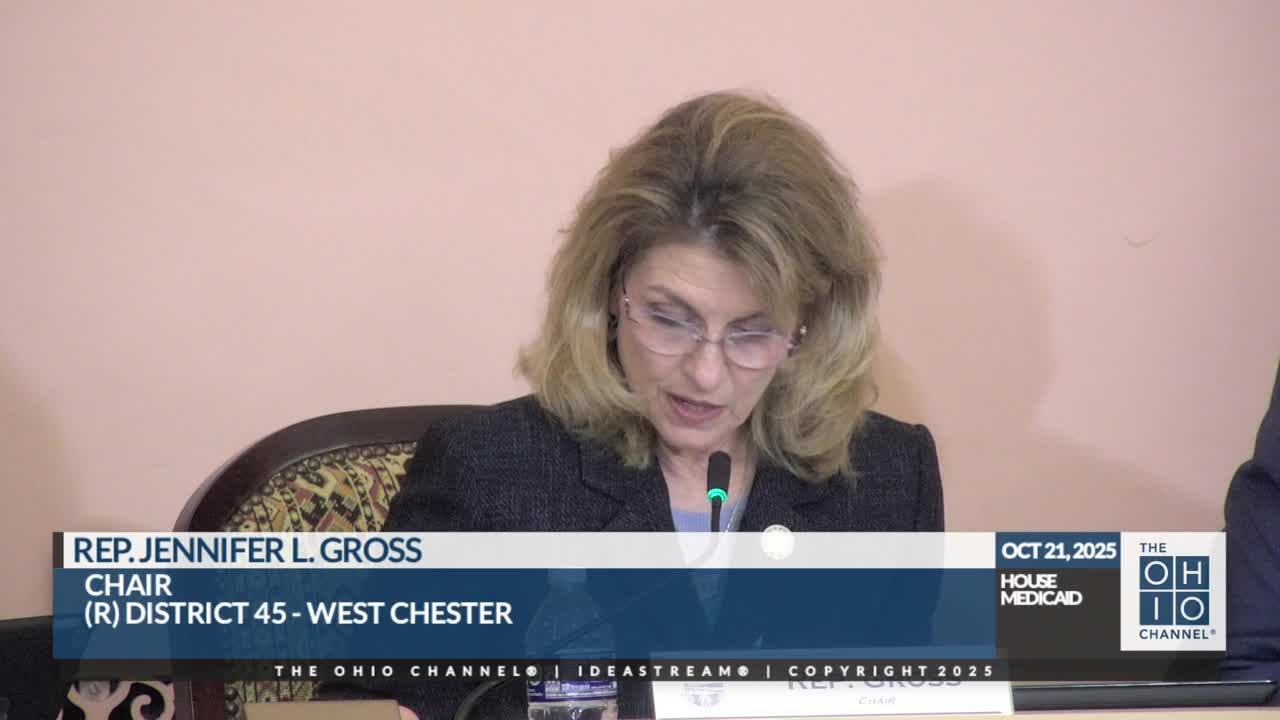
Representative Gross, sponsor of the bill and chair of the committee for the hearing, told the committee the SCA “functions as an outdated administrative formality” that can cost APRNs “hundreds to thousands of dollars each month” without improving patient safety. “This legislation does not expand the scope of practice for APRNs,” Gross said. “It preserves all patient protections while empowering qualified professionals to practice without an unnecessary burden and cost.”
Representative Baker, a co-sponsor, said the bill is intended to improve access to care in rural and underserved communities. “In one word, it’s access,” Baker said, noting that APRNs hold advanced graduate degrees, national certification and thousands of hours of clinical training. She and Gross said other states that removed SCAs saw expanded access without higher malpractice rates.
Committee members asked questions about practical effects and safeguards. Representative Hall asked whether SCAs limit patient panels or the ability of APRNs to practice part time; sponsors said the paperwork and fees can make part-time practice uneconomic and that a physician may limit how many APRNs a single SCA can encompass (the sponsors noted a physician can carry up to five nurse practitioners and five physician assistants). Representative Lett asked how the 5,000-hour threshold was selected; sponsors responded that the number was a conservative compromise compared with other states’ approaches and that the hours refer to practice under an SCA rather than supervised training.
Committee members raised potential market effects. Representative Hall asked whether health systems might replace primary care physicians with APRNs because APRN care typically costs less. Sponsors said they did not expect that change to worsen the primary care shortage and argued APRNs frequently extend physicians’ capacity; they pointed to Ohio’s temporary suspension of the SCA during the COVID-19 pandemic as evidence APRNs provided safe care when the requirement was removed.
Sponsors and witnesses cited several policy and data points during testimony: that 27 states and three U.S. territories have removed SCAs for APRNs; that Medicaid reimburses APRNs at about 85% of the physician rate (a correction made during testimony); and a Department of Health and Human Services figure that Ohio faces an estimated shortage of about 1,200 primary care providers affecting 57 of 88 counties. Sponsors also said removing the SCA could improve Ohio’s competitiveness for federal rural health transformation funding under Centers for Medicare & Medicaid Services scoring criteria.
No formal committee vote was recorded during the hearing. The committee adjourned after testimony and a brief question-and-answer period. Further testimony from additional proponents and possibly opponents was anticipated as the bill moves through the legislative process.
The hearing transcript records sponsor testimony, member questions and committee procedural remarks; it does not record a final committee action on House Bill 508.