Get Full Government Meeting Transcripts, Videos, & Alerts Forever!
Get email alerts on the Economic Development Funding topic
No spam. Unsubscribe anytime.
Cascade economic development group seeks $20,000 annual funding and presses for earlier city involvement on state leads
Summary
The Cascade Economic Development Corporation requested remaining FY24 funds and the approved FY25 allocation, and asked for a $20,000 request for FY26; members discussed vetting, confidentiality and when the city should be involved for state‑level economic leads.
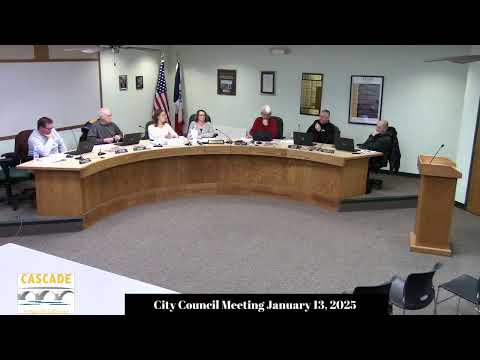
Ken McDermott, president of the Cascade Economic Development Corporation (CEDC), asked the City Council on Jan. 13 to release remaining funds approved in fiscal year 2024 ($17,500 approved; CEDC reported it received $10,000 and requested the balance) and to provide the previously approved $20,000 for fiscal year 2025. McDermott also requested a $20,000 allocation for fiscal year 2026, the same amount the CEDC has received in recent years.
McDermott outlined the CEDC’s role: vetting business leads, working with the Eastern Iowa Council of Governments (ECIA) for grant writing and research, and preparing sites in the industrial park (including proposed excavation to make lots shovel ready). He said the CEDC has partnered with ECIA and Maquoketa Valley REC on past projects and noted that about $1.4 million in grants has benefitted local projects, including industrial park infrastructure, a housing needs assessment, a downtown plan and park Wi‑Fi installations.
The discussion focused on process for bringing business leads to the council. McDermott and other CEDC members said they typically vet leads before involving the city, citing confidentiality agreements and competitive recruitment. Several council members agreed the city should be involved earlier for state‑level leads provided through programs such as Prosperity Eastern Iowa, because those leads commonly require a ready incentive package and consideration of utility capacity and zoning. McDermott said CEDC is willing to provide regular updates to the city and work with the city administrator and mayor when incentives are under consideration.
Councilmembers asked about workforce capacity and commute sheds; CEDC noted that many jobs can draw from a 15–30 minute drive time and that the organization considers regional labor availability when vetting prospects. McDermott offered to provide the city with updates and described CEDC’s process for assessing leads received via partners such as ECIA.
McDermott closed by reiterating the funding request and asking the council to continue the partnership model the CEDC has followed.