Get Full Government Meeting Transcripts, Videos, & Alerts Forever!
Get email alerts on the Public Safety Millage topic
No spam. Unsubscribe anytime.
Residents, former officials urge caution and study before resubmitting Eaton County public safety millage
Summary
Multiple residents and former officials urged Eaton County commissioners to delay or study a proposed public safety millage after its defeat in November, citing alternative revenue sources and concerns about timing; supporters said immediate action is needed to fund sheriff, prosecutor and courts.
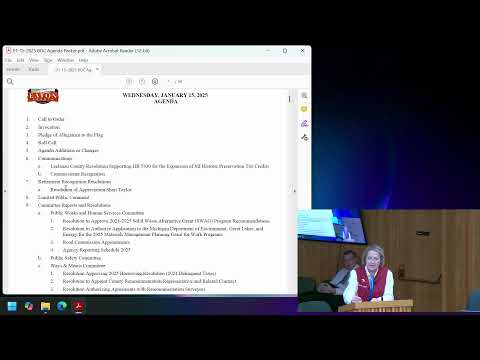
Several residents and former officials used the board's limited public-comment periods on Jan. 15 to press contrasting views about a proposed Eaton County public safety millage that the county placed on the November ballot and voters rejected.
Dr. Dave Purcell, a Charlotte resident, told commissioners he believes resubmitting the measure at the May election would be premature. "Five months later, I don't think it's a good idea," he said, adding that the county should "table this thing, study it for a year, let new people have their voice." Purcell urged commissioners to examine other incoming revenues — including state revenue sharing, opioid settlement funds, cannabis revenue and Department of Corrections payments — before placing the question again.
Retired commissioner Louis M. Barber Rogers said he supports the millage, calling public safety funding a county priority and urging commissioners to campaign for passage. "The millage is needed," Rogers said, noting the county's proximity to Lansing and the workload of county staff.
Scott Brooks, a retired sheriff's deputy who led a regional active-violence grant effort, thanked the board for past support of public-safety grant applications and reported federal funds have enabled distribution of medical kits to schools and patrol vehicles. "Thank you very much for the board's support," Brooks said.
Marsha Howe, a Windsor Township precinct delegate, urged commissioners not to delay. She said prior statutory wording limited how the county could describe the request and that the board now has the opportunity to present clearer language. "It is critical that we get this money. We cannot wait down the road," Howe said.
Supporters and opponents also framed the debate around timing and strategy. Several commissioners pointed the public to the county website for background materials and past meetings, and some encouraged residents to review recorded committee sessions from 2023. Chairman Mott and several commissioners emphasized the availability of more detailed departmental presentations and budget documents online.
No formal vote on a new millage occurred at the meeting; speakers addressed the board during two limited public-comment periods that the commissioners reserved for three-minute statements. Commissioners did vote separately to schedule a special meeting on Feb. 6 to fill a vacant commissioner seat created by a resignation (see separate article). The transcript does not record a board vote to re-place the millage on the May ballot during this Jan. 15 meeting.
Ending
Public comments on Jan. 15 showed both local support for additional public-safety funding and concern about timing and messaging after the November defeat. Commissioners directed the public to county resources for background information; no formal action to resubmit the millage was taken during the meeting.