Get Full Government Meeting Transcripts, Videos, & Alerts Forever!
Get email alerts on the Zoning topic
No spam. Unsubscribe anytime.
San Benito County planners propose Title 25 changes to speed permitting for small tourism businesses
Summary
County planner presented proposed amendments to Title 25 to allow certain tourism-related commercial uses by right up to 5,000 sq ft, add administrative permits between 5,000–10,000 sq ft, and add architectural design guidance; committee recommended adding design‑review when projects deviate from suggested styles.
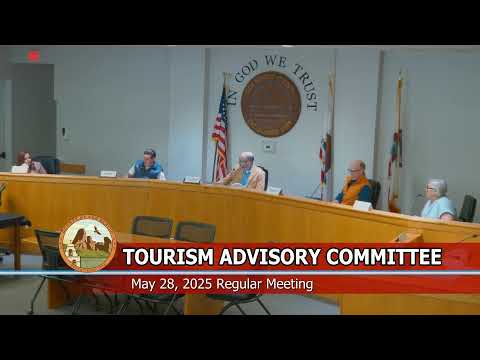
Ariel Goodspeed, principal planner for San Benito County, told the Tourism Advisory Committee on May 28 that staff is proposing amendments to Title 25 of the county zoning code to streamline permitting for small tourism-related commercial uses in unincorporated areas.
Goodspeed said the proposal would allow certain uses — including bed-and-breakfasts, hotels or motels, breweries or distilleries with tasting rooms, off-site tasting rooms, and small event venues — to be permitted without a planning application up to 5,000 square feet when events produce fewer than 100 people or 100 vehicle trips; uses between 5,000 and 10,000 square feet would require an administrative use permit (director approval); uses above 10,000 square feet would continue to require planning commission review. "I'm here today to go over a few of the zoning code amendments that are being brought to planning commission," Goodspeed said.
Why it matters: committee members said the changes are intended to support agricultural‑zone commercial uses that promote tourism while containing environmental and traffic impacts. Members repeatedly referenced California Environmental Quality Act (CEQA) screening and vehicle‑miles‑traveled (VMT) thresholds when discussing what could be approved ministerially without triggering further environmental review.
Key details and limits
- Thresholds and permits: proposal increases the by‑right threshold from 2,500 to 5,000 square feet; 5,000–10,000 sq ft would need an administrative use permit; >10,000 sq ft requires planning commission review. - Trip and VMT screening: staff said the screening rationale considered CEQA exemptions and VMT rules; Goodspeed explained that the county used a 100‑trip buffer (staff noted a state VMT trigger of about 10 trips) to avoid inadvertently triggering a VMT analysis. - Design and standards: planning staff proposed adding non‑prescriptive architectural guidance to keep developments consistent with the county’s heritage. Goodspeed presented three illustrative styles for guidance: early farmstead, working cattle/horse ranch, and old California village; staff said existing requirements for parking, public works, fire and water remain unchanged. - Uses excluded or remaining discretionary: shooting ranges will continue to require a conditional use permit; temporary large events are available through a separate temporary‑use permit (staff noted an existing limit of either 10 or 12 events per year but did not provide a definitive number in the meeting). - Existing allowances: the planner said the code already permits certain forms of short‑term lodging (for example up to nine campsites under current rules) and that some camping and glamping uses are already addressed in code adopted last year.
Committee action and next steps
Committee members discussed whether the three illustrative architectural styles should be mandatory or advisory. Commissioner Zenger said he supported having standards but asked whether they would be required or only suggestions; Goodspeed answered they could be written as either mandatory standards or as triggers requiring design review.
The committee voted unanimously to recommend the zoning amendments as presented with one addition: when applicants propose architecture that departs from the three recommended styles, those proposals should be subject to design review by the planning commission. The committee recorded a unanimous roll‑call vote in favor.
What was not decided or remains unclear
- The exact phrasing and legal status of the proposed architectural guidance (mandatory standard vs. guideline that triggers design review) will be finalized by staff and county counsel before planning commission consideration. - The precise annual limit in the code for temporary‑use events was stated in the meeting as “either 10 or 12” times per year; staff indicated the number will be confirmed in drafting.
The planning department will take committee feedback to the planning commission at a special meeting on June 4; if the planning commission moves the amendments forward, the board of supervisors would consider them at its second meeting in June.