Florida Senate committee hears district plans for AI in K-12, flags privacy and training needs
Loading...
Summary
A Florida Senate education committee heard a panel on artificial intelligence in K–12 classrooms, where a University of Florida researcher and superintendents described efforts on AI literacy, data protections and teacher training. Lawmakers pressed for guardrails, research on academic impact and standards for teacher certification.
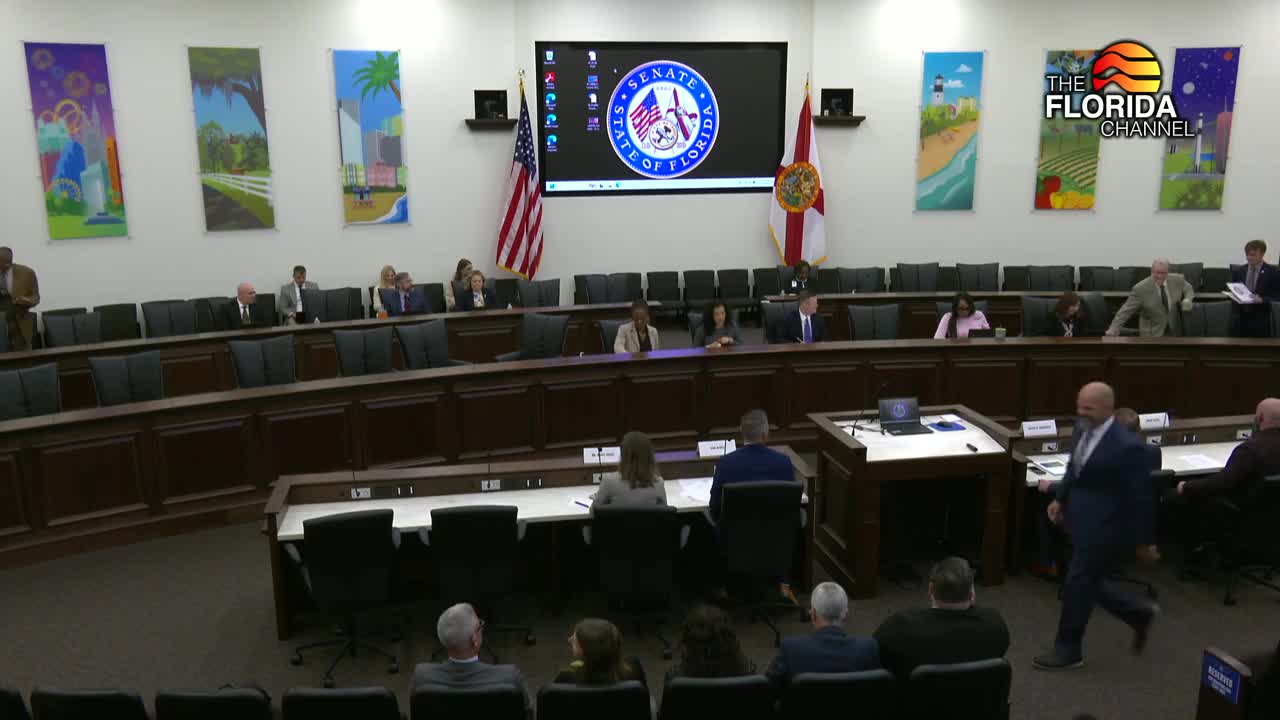
TALLAHASSEE — The Florida Senate Committee on Education Pre-K to 12 on a panel discussion took up the use of artificial intelligence in K–12 schools, hearing an overview from a University of Florida researcher and implementation details from large school districts that have adopted policies, pilots and teacher training programs.
Dr. Maya Israel, a professor in the College of Education at the University of Florida, told the committee that AI systems “typically require human intelligence” and that “the human oversight is what guides the development of this AI, and human oversight is what is required in order for us to make sure that these are used in an ethical and safe way.” Israel said the Florida K–12 AI Task Force has produced guidance documents and professional-development resources intended to help districts balance opportunities and risks.
The committee also heard from Van Ayers, superintendent of Hillsborough County Public Schools; Kevin Hendricks, superintendent of Pinellas County Schools; and a representative from FSU INSPIRE who described a regional workforce-focused institute. Ayers described a district policy (school board policy 2130) and an internal implementation guide that limit student access to generative AI and set classroom expectations. “Students below the eighth grade are prohibited from accessing Gen AI tools on school devices or network, with the exception of district educational tools that incorporate AI technology,” Ayers said, describing the district’s staged approach to allowing AI use with teacher permission and vetted applications for older students.
Hendricks said districts must protect student data and teach digital responsibility. “If you really want to know if students know the material, you should have them write it or speak it,” Hendricks told the committee when senators raised concerns about academic integrity.
Panelists described several district- and vendor-led pilots and training efforts. Hillsborough reported a pilot of an application called Magic School with roughly a 117% increase in teacher users since June and nearly 4,000 teacher users overall; the district said it is a Microsoft (M365) district and is piloting CoPilot in six schools. Hillsborough also reported about 600 students enrolled in state-approved AI courses across eight schools and plans for summer teacher “AI academies” that aim to credential 800–1,000 teachers. Pinellas described teacher professional learning tied to Bloom’s Taxonomy and a governance process that restricts tools that raise data-privacy concerns.
Lawmakers repeatedly asked how state or local guardrails should be set, whether legislation is effective given students’ off-campus access to AI tools, and what evidence exists that AI improves academic performance. Israel and the superintendents said research on learning outcomes remains limited and that many studies are small or still under way; Israel said researchers are “racing” to ask longer-term questions about learning, metacognition and mental-health impacts.
FSU INSPIRE’s representative urged greater industry–education alignment and described efforts to train teachers and build applied research capacity in Northwest Florida. “All models are useful. All models are wrong. Some are more useful than others,” the speaker said, arguing that teachers need practical understanding of how models are built and fed data.
The committee did not take statutory action during the panel; senators asked departmental and district representatives for more information about standards, funding for teacher training and safeguards for student data. The meeting ended with a routine motion to adjourn, which was adopted.
The task force materials and district implementation guides cited during the panel are being updated as AI tools evolve; senators indicated they expect follow-up briefings and additional data on pilot outcomes, privacy safeguards and proposed teacher credentialing.