Bedford County committee OKs creation of decentralized wastewater oversight board after months of concern
Loading...
Summary
The Rose Legislative Committee voted to create a seven-member Decentralized Wastewater System Board with a one-year term to review plans, set qualifications for utility districts and return duties to the county commission. Members and detailed guidelines will be proposed by the county mayor and reviewed in one year.
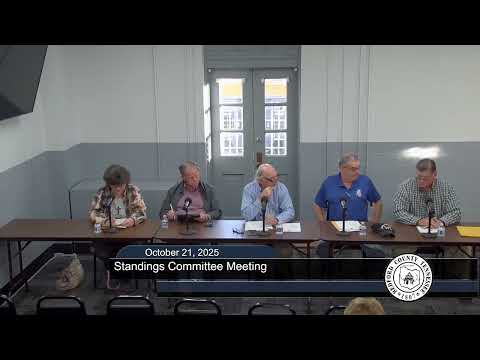
The Rose Legislative Committee in Bedford County voted to establish a seven-member Decentralized Wastewater System Board on a one-year term Friday, directing the county mayor to submit a slate of nominees and ordering the planning commission to draft duties and responsibilities for the new board.
The action came after a lengthy discussion led by Mister Yockey, representing the planning commission, who described two parallel efforts: revisions to subdivision regulations and formation of a board to review plans for decentralized or alternative wastewater systems. "I'm representing the planning commission," Yockey said while explaining the proposal and how the board would review final plats and maintenance reports for decentralized systems.
Committee members said the change is intended to give the county more oversight over utility districts that operate decentralized systems and reduce the current situation in which a developer can select the company that will operate a system without county approval. "Under the current system, the developer picks who they're gonna use," a commissioner said. "This board would review their plans through a third party, and that person is held responsible for building those specifications." The committee also discussed recent failures reported in Mount Juliet and Wilson County and said those events informed calls for stricter qualifications.
Concerns raised during the meeting included who would set technical specifications and the financial responsibility if a system failed. Speakers repeatedly said the board should require professional engineering review and develop RFQ-style guidelines to shortlist qualified utility districts. "We have to make sure that the maintenance reports and repair reports ... comes back to this board for review and filed away," Yockey said. Another member asked what would happen if a utility district failed: "If it does fail ... I just don't want it coming up being the taxpayers of Bedford County," the commissioner said.
Committee members discussed board size, qualifications and composition at length. Some members suggested five members might be easier to staff; others argued for seven to ensure quorums and diverse viewpoints. Eventually the committee approved a motion to form a seven-member board, to be appointed by the mayor for one-year terms, with the planning commission to clean up subdivision regulations and present duties and responsibilities back to the county commission. The committee agreed the board should be able to call in professional engineers or other technical experts as needed.
The committee also discussed implementation details the board should set, including whether minimum acreage or "perk" (perc) requirements apply and how homeowners associations, utility districts and developers would share financial responsibility. Speakers emphasized that, once a utility district takes ownership of a decentralized system, it would be the owner of that system — though members also acknowledged that legal or bankruptcy outcomes could complicate long-term responsibility.
The motion passed after a voice vote. Committee members instructed the mayor's office to assemble and submit nominees and asked that the planning commission finalize recommended duties and return them to the county commission for approval. The committee said it will review the board’s structure and appointments after one year.
Votes at the meeting also approved routine agenda items, including approval of the Rose Legislative Committee minutes for Sept. 16, placement of Oct. 14 commission minutes on the Nov. 11 commission agenda, acceptance of a veterans report and clinic report summaries, and placement of notary applicants on the Nov. 11 commission agenda. Those motions were approved by voice vote with no recorded roll-call names in the transcript.
The decision shifts decentralized wastewater oversight toward a standing review body intended to set qualifications for utility districts and monitor maintenance and repairs. The committee directed staff and the mayor to return with a slate of nominees and a draft of duties and responsibilities for the new board within the coming month, and scheduled a one-year review of the board’s charter and performance.